Adani Ports: The ₹16,000 Crore Bet That Could Be A Game Changer For India
Alex Smith
1 month ago
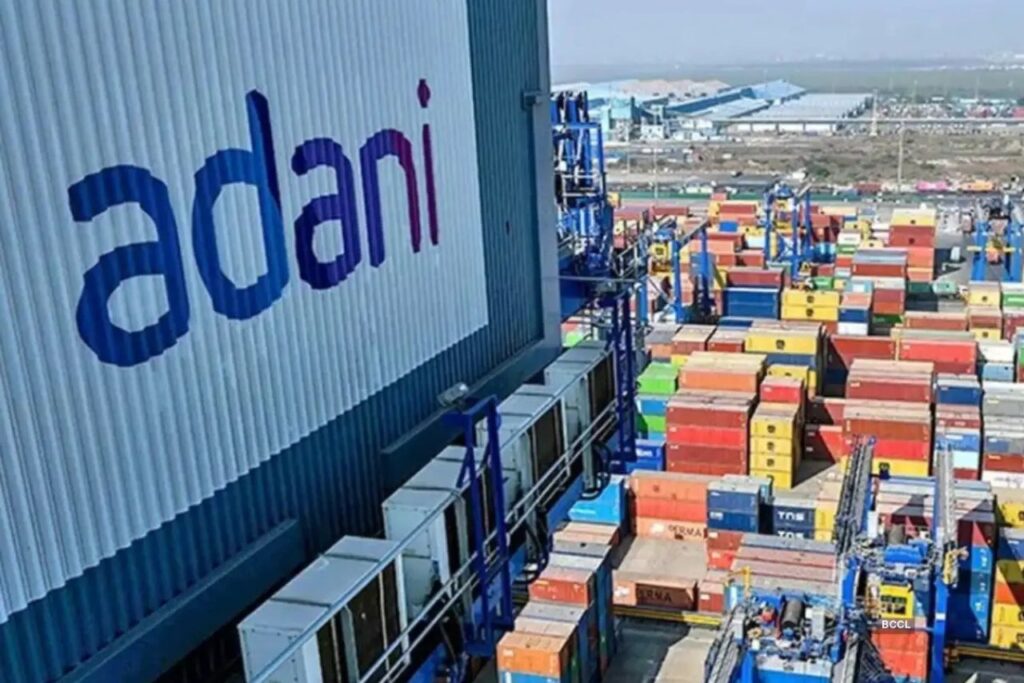
Synopsis: Adani Ports is making one of its biggest long-term bets through a project that could change how India handles global cargo movement. But is this just another infrastructure expansion, or could it become the shipping and logistics gateway India has been missing for decades?
For decades, a large part of India’s container transshipment story has not been fully controlled from Indian shores. Cargo linked to India has often moved through global hubs such as Colombo, Dubai and Singapore before reaching its final destination. That is the gap Adani Ports and Special Economic Zone Limited is now trying to address through Vizhinjam, a deep-water transshipment port in Kerala that could become one of the most important maritime assets in the country’s logistics map.
The story is not just about one more port being added to India’s coastline. It is about whether India can build a globally competitive shipping hub close to one of the busiest international sea routes, and whether Adani Ports can use that location to strengthen its long-term growth engine. The company has announced a Rs. 16,000 crore Phase II expansion at Vizhinjam, aimed at taking the port’s capacity from 1.6 million TEUs to 5.7 million TEUs over time. Management said the capex will continue until FY29, with payments expected until FY30.
Why Vizhinjam Matters
Vizhinjam International Seaport, located near Thiruvananthapuram, is India’s first deep-water transshipment port and is positioned close to the heavily used east-west international shipping channel. The port is around 10 nautical miles from the Suez-Far East and Far East-Middle East routes, has a natural depth of 24 metres, and can handle ultra-large container vessels exceeding 24,000 TEUs. This makes it very different from a normal coastal port.
In simple terms, Vizhinjam is like a highway-side mega logistics hub, but for ships. Large global vessels do not like taking long detours because every extra nautical mile means more fuel, more time and more cost. A port located close to the main shipping route therefore has a natural advantage. This is why the “India’s own Singapore” angle becomes relevant. Singapore became a major global hub not because of the size of its domestic market alone, but because of its location, efficiency, bunkering ecosystem and ability to act as a transfer point for global cargo.
The Rs. 16,000 Crore Expansion Plan
The Rs. 16,000 crore Phase II plan is the core of this story. Management said this expansion includes the extension of the breakwater, equipment, and the wider ecosystem needed to run the port. It is not just about adding cranes and berth space. It is about preparing Vizhinjam to handle much larger volumes, improve efficiency and attract international shipping lines.
The capacity expansion is significant. From the current 1.6 million TEUs, the company plans to add 4.1 million TEUs, taking total capacity to 5.7 million TEUs. The expected cash flow plan mentioned by management includes 90 million in FY26, 350 million in FY27, 700 million in FY28, 550 million in FY29 and 63 million in FY30. Management also clarified that these are estimates spread over multiple years and could vary.
Vizhinjam is also being developed as an automated port. APSEZ describes Vizhinjam as India’s first automated port, with the highest Gross Crane Rate in India and an indigenously developed Vessel Traffic Management System. The company’s technology layer includes port operations management, real-time rake tracking, terminal operating systems, fleet management, a port community system and a strategic command centre.
This matters because port economics improve sharply when assets are used efficiently. Faster crane movement, lower waiting time and better vessel handling can allow a port to process more cargo without always needing proportional physical expansion. Management also said that through technology and efficiency, the company is delivering 20 percent to 30 percent more than nameplate capacity in some contexts.
More Than Just A Port
The real reason Vizhinjam could become a growth driver is that Adani Ports is not looking at it as a standalone port. The company is building itself as an integrated transport platform connecting “shore-to-door”. APSEZ has 15 multi-commodity ports, 4 international ports, a logistics network covering 95 percent of India’s hinterland and 247 marine vessels, including tugs, dredgers, offshore support vessels and workboats.
This means the company wants to earn from multiple parts of the cargo journey. A ship can come to the port, containers can be handled, cargo can be moved inland through road or rail, warehousing can be used, and marine services can support vessel movement. That is a much deeper business model than simply charging for loading and unloading cargo.
The logistics network is also important. APSEZ says its network covers 95 percent of India’s hinterland, with 12 multi-modal logistics parks, 3.1 million square feet of warehouses, 68 container rakes, 54 bulk rakes, 7 agri rakes, 3 automobile rakes and more than 25,000 owned plus managed trucks.
Over time, this network can help ports like Vizhinjam move beyond only transshipment and support EXIM cargo as well. In the Q3 earnings call, management said Vizhinjam is currently positioned mainly as a transshipment port, but road connectivity exists and the company is evaluating and implementing rail connectivity. Management added that as the market develops, the port should be able to handle EXIM cargo as well.
LNG Bunkering Adds Another Layer
One of the most interesting parts of the Vizhinjam plan is LNG bunkering. Management said the company has signed an MoU with BPCL for LNG bunkering and that this will be a ship-to-ship bunkering facility. The reason this matters is simple. If cleaner-fuel ships are operating on international routes, they need reliable refuelling points. If Vizhinjam can offer that service close to the international channel, it becomes more useful for global shipping lines.
Management explained that LNG bunkering options on the international channel are limited, with Jebel Ali being a key location and Colombo still struggling. Vizhinjam’s ship-to-ship bunkering facility, located close to international waters, could encourage shipping lines to bring LNG-capable vessels on this route. BPCL is expected to bring LNG from the nearby Kochi plant.
This turns Vizhinjam from a plain container terminal into a broader maritime service hub. A ship could transfer containers, refuel, use marine services and continue its journey with limited deviation. That is why Vizhinjam is being seen as much more than a normal port project. The broader aim is to build a larger maritime ecosystem that can compete with major global shipping hubs such as Singapore, Dubai and Colombo.
How It Fits Into Adani Ports’ Bigger Ambition
Vizhinjam is only one piece of APSEZ’s larger Ambition 2031 plan. The company wants to grow from 500 million metric tonnes of cargo to 1 billion metric tonnes. Marine vessels rising from 136 to over 200, trains and tracks increasing from 132 rakes to 200 rakes, MMLPs (Multi-Modal Logistics Parks) rising from 12 to 16, warehouses expanding from 3.1 million square feet to 12 million square feet, and owned trucks rising from 937 to 2,000, along with more than 40,000 trucks on its in-house platform.
In the Q4 earnings call, management said FY26 revenue grew by 25 percent, EBITDA grew by 20 percent and PAT grew by 16 percent. Domestic ports handled 451 million metric tonnes, with revenue and EBITDA growing 13 percent and 14 percent, respectively, while market share stood at 27.1 percent. Logistics revenue grew 55 percent and marine revenue grew 134 percent.
The future plan is aggressive. APSEZ is targeting FY31 revenue of Rs. 91,500 crore and EBITDA of Rs. 52,000 crore, compared with FY26 revenue of Rs. 38,736 crore and EBITDA of Rs. 22,851 crore, as per its Ambition 2031. The company is therefore not just expanding for size, but trying to build a larger, more integrated transport platform.
Capex is being accelerated across key assets. Management said it is investing in Mundra because the port is heavily utilized and CT5 is coming up, Dhamra because of Rail-Sea-Rail cargo movement, Hazira because of liquids, and Vizhinjam because it is already at 100 percent capacity. Management also said Phase II at Vizhinjam has already been kicked off with an automated terminal approach.
The Risks Are Real
The opportunity is large, but this is not a risk-free story. The first risk is execution. A Rs. 16,000 crore project spread over several years needs timely completion, strong customer adoption and smooth commissioning. If volumes are slower than expected, returns can take longer to show up.
The second risk is competition. Vizhinjam is expected to compete with Colombo, Salalah, Jebel Ali and Singapore. These are established hubs with existing shipping relationships, scale and operating history. Adani Ports will need to prove that Vizhinjam can offer enough efficiency, reliability and cost advantage to shift cargo flows.
The third risk is connectivity. Management has said the port is currently positioned largely for transshipment, with road connectivity available and rail connectivity being evaluated. If the company wants to build a larger EXIM cargo opportunity over time, inland connectivity will be important.
The fourth risk is macro volatility. In FY26, APSEZ faced Operation Sindoor, geopolitical issues and the West Asia crisis. Management said the company still delivered, but such disruptions can change cargo mix, affect margins and create short-term operational pressure.
Vizhinjam can be a game changer only if ships actually come, cargo scales up and the port becomes a preferred stop on the global route. The asset has the location, depth, automation push and capex backing. Adani Ports has the balance sheet, execution record and integrated logistics ecosystem. But the real test will be utilization.
For India, the upside is strategic. If Vizhinjam succeeds, more Indian-linked cargo can be handled from Indian shores instead of depending heavily on foreign transshipment hubs. For Adani Ports, the upside is financial and structural. It can add a high-quality container-led growth engine, deepen its marine and logistics ecosystem, and strengthen its position as an integrated transport platform.
That is why the Rs. 16,000 crore bet matters. It is not just another port expansion. It is an attempt to build India’s own global shipping gateway, and if executed well, Vizhinjam could become one of the most important growth drivers in Adani Ports’ next decade.
Disclaimer: The views and investment tips expressed by investment experts/broking houses/rating agencies on tradebrains.in are their own, and not that of the website or its management. Investing in equities poses a risk of financial losses. Investors must therefore exercise due caution while investing or trading in stocks. Trade Brains Technologies Private Limited or the author are not liable for any losses caused as a result of the decision based on this article. Please consult your investment advisor before investing.
The post Adani Ports: The ₹16,000 Crore Bet That Could Be A Game Changer For India appeared first on Trade Brains.
Related Articles

20% Upper Circuit: Microcap Stock Soars After NCLT Rejects ₹1,323 Crore Insolvency Plea
Synopsis: A microcap company saw its stock rally after a tribunal threw out a la...

Sathlokhar Synergys Shares Surge After Order Book Reaches ₹915.74 Cr After Securing New Deals
Synopsis: Turnkey EPC and infrastructure contractor Sathlokhar Synergys E&C...

HEC Infra Projects Shares Surge 7% on Securing ₹18.67 Cr Power Plant EPC Order
Synopsis: HEC Infra Projects has secured an Rs. 18.67 crore EPC work order from...

Graphite India Stock: Here’s How the Company Is Building Profitability Over Scale
Synopsis:- A leading Indian graphite electrode maker is walking away entirely fr...