Bikaji Foods Q4 Profit Jumps 40% to ₹56 Crore; Approves $5 Million US Manufacturing Plant
Alex Smith
1 month ago
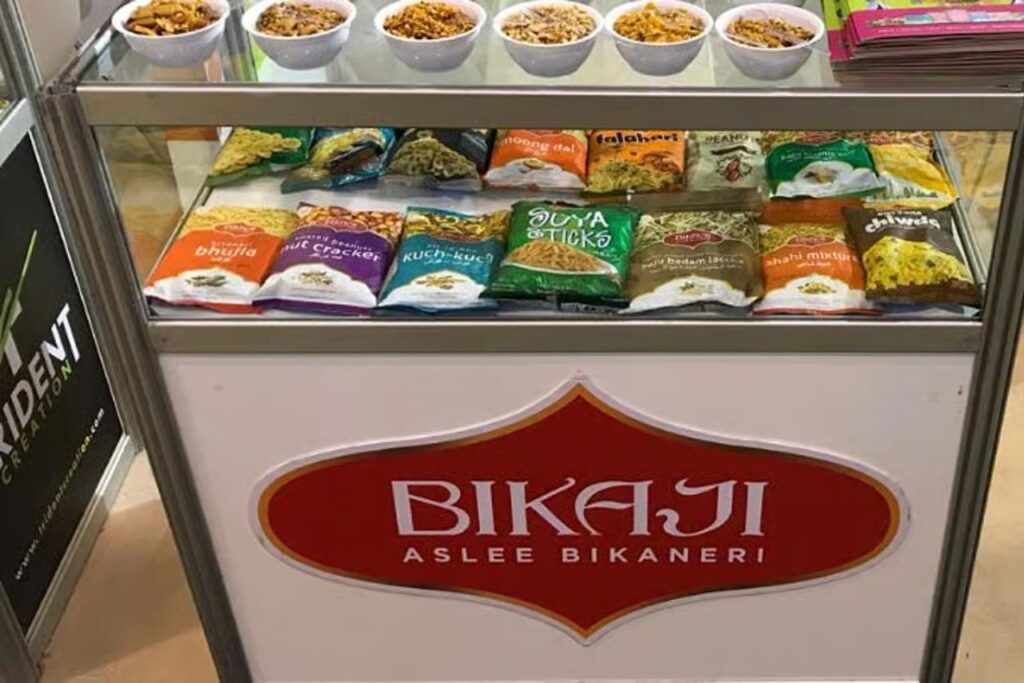
Synopsis: Bikaji Foods International Limited reported strong Q4FY26 growth driven by healthy volume expansion, improving margins and rising traction across core snack categories. The company also announced strategic investments in its US business and a majority acquisition in a regional snacks manufacturer to strengthen future growth and distribution reach.
FMCG stock gained attention after reporting robust Q4FY26 earnings growth along with multiple strategic expansion initiatives including a US manufacturing investment, acquisition of a regional snacks company and expansion into the bakery products segment. The developments are expected to strengthen the company’s long-term market presence across domestic and international markets.
Bikaji Foods International Limited has a total market capitalization of around Rs. 16,699 crore, according to data on the NSE. Bikaji Foods shares were trading higher after the company reported strong operational performance and announced multiple strategic growth initiatives across its FMCG business verticals.
Bikaji Foods International Limited reported strong audited consolidated financial results for the quarter and financial year ended March 31, 2026. Revenue from operations during Q4FY26 increased by 18 percent year-on-year to Rs. 720.9 crore compared to the corresponding quarter last year. Volume growth stood at 16.1 percent, indicating that growth was largely volume-led rather than purely price-driven. Profit after tax (PAT) increased sharply by 39.8 percent year-on-year to Rs. 56 crore during the quarter. EBITDA stood at Rs. 87.7 crore with EBITDA margin at 12.2 percent.
The company witnessed broad-based growth across its major product categories during the quarter. Ethnic snacks revenue increased by 16.1 percent year-on-year and contributed nearly 73.8 percent of total revenue, while packaged sweets revenue grew by 14.4 percent. Western snacks and papad categories also reported healthy growth of 8.6 percent and 11.6 percent respectively.
Operationally, the company continued expanding its distribution network aggressively. Direct retail coverage increased by around 9,638 outlets during the quarter to reach approximately 3.54 lakh outlets. Focus markets registered growth of nearly 15 percent year-on-year, while modern trade and e-commerce channels continued outperforming broader market growth.
One of the key highlights during the quarter was margin expansion despite continued investments in branding and distribution. Gross margins improved to 35.6 percent supported by softer raw material prices, operational efficiencies and better product mix. Higher operating leverage and disciplined cost management also contributed significantly to profitability improvement. The sharp rise in PAT compared to revenue growth indicates meaningful operating efficiency gains during the quarter.
For the full financial year FY26, Bikaji Foods reported revenue from operations of Rs. 2,993.9 crore, reflecting growth of 14.4 percent year-on-year, while PAT stood at Rs. 254.4 crore. EBITDA during FY26 stood at Rs. 410.6 crore with EBITDA margin of 13.7 percent. Volume growth for FY26 stood at 9.5 percent.
Apart from earnings, the company also announced several strategic investments and acquisitions aimed at strengthening future growth visibility. The company approved additional investment of up to USD 5 million in Bikaji Foods International USA Corp, its wholly owned US subsidiary, for setting up a manufacturing plant in the United States. The investment is intended to accelerate international business growth, improve customer accessibility and strengthen Bikaji’s presence in overseas markets. Bikaji USA has already shown strong growth with turnover increasing from USD 1.09 million in FY24 to USD 2.62 million in FY26.
Strategically, the US manufacturing expansion could prove highly important for Bikaji over the long term. Manufacturing products locally in the US may help the company reduce logistics costs, improve supply chain efficiency, avoid import dependency and cater more effectively to Indian diaspora demand as well as mainstream ethnic food consumption trends in North America. The move also aligns with the growing global demand for Indian packaged snacks and ready-to-eat food products.
The company also approved acquisition of a 74 percent stake in Jai Barbareek Dev Snacks Private Limited (JBDSPL), a Chhattisgarh-based snacks manufacturer engaged in contract manufacturing for Bikaji. The acquired company reported turnover of Rs. 19.81 crore in FY25.
This acquisition is strategically important because it strengthens Bikaji’s manufacturing and distribution presence in the Chhattisgarh region while giving the company greater operational control over a key contract manufacturing partner. By converting a contract manufacturer into a subsidiary, Bikaji may improve production integration, supply chain visibility, quality control and regional execution efficiency. The acquisition could also support faster penetration into central Indian markets over the coming years.
In addition, Bikaji approved investment of Rs. 5 crore into Bikaji Bakes Private Limited, its wholly owned subsidiary focused on bakery products including croissants, breads, cakes, pastries and doughnuts. This move signals Bikaji’s intention to diversify beyond traditional snacks into the rapidly growing bakery and packaged foods segment, which has been witnessing increasing urban consumption and premiumization trends.
Management commentary also highlighted continued strength in core categories such as bhujia, namkeen, sweets and papad, supported by strong regional branding campaigns including “Bhujia Ho To Bikaji” and “Kya Baat Hai Ji.” These campaigns helped strengthen brand recall and deepen regional consumer engagement, especially in Uttar Pradesh and focus markets.
Bikaji Foods International Limited is one of India’s leading ethnic snacks and packaged food companies with operations across 28 states and 7 union territories. The company exports products to 43 countries including markets in North America, Europe, the Middle East and Asia Pacific. Its portfolio includes bhujia, namkeen, sweets, papad, western snacks, frozen foods and cookies.
Overall, Bikaji delivered a strong Q4FY26 performance supported by healthy volume growth, improving margins and distribution expansion. The company’s strategic acquisitions, US expansion plans and entry into bakery products indicate a long-term growth-oriented strategy focused on category diversification, manufacturing integration and international expansion. Going forward, raw material prices, execution of new expansion initiatives, international growth, distribution scaling and margin sustainability will remain key factors influencing the company’s future performance.
Disclaimer: The views and investment tips expressed by investment experts/broking houses/rating agencies on tradebrains.in are their own, and not that of the website or its management. Investing in equities poses a risk of financial losses. Investors must therefore exercise due caution while investing or trading in stocks. Trade Brains Technologies Private Limited or the author are not liable for any losses caused as a result of the decision based on this article. Please consult your investment advisor before investing.
The post Bikaji Foods Q4 Profit Jumps 40% to ₹56 Crore; Approves $5 Million US Manufacturing Plant appeared first on Trade Brains.
Related Articles

Top 6 Indian Companies Powering India’s Housing Expansion; Do You Own Any?
Synopsis: India’s housing sector is poised for strong long-term growth, cr...

Can Data Centre Demand Drive Kirloskar Oil Engines’ Next Growth Phase?
Synopsis: Kirloskar Oil Engines Ltd (KOEL)is in focus after Jefferies issued a B...
Can Bio-CNG Become ₹2,000 Cr Business for Thermax Over the Next 3 Years?
Synopsis: Thermax sees Bio-CNG as a major growth driver, expecting the business...

CarTrade Tech Stock: How AI Integration Could Help It Dominate India’s ₹3 Lakh Cr Used Vehicle Market
Synopsis: CarTrade Tech has outlined its growth roadmap through AI, digital serv...