Can Ola Shakti home battery venture compensate for Ola Electric’s declining sales?
Alex Smith
6 months ago
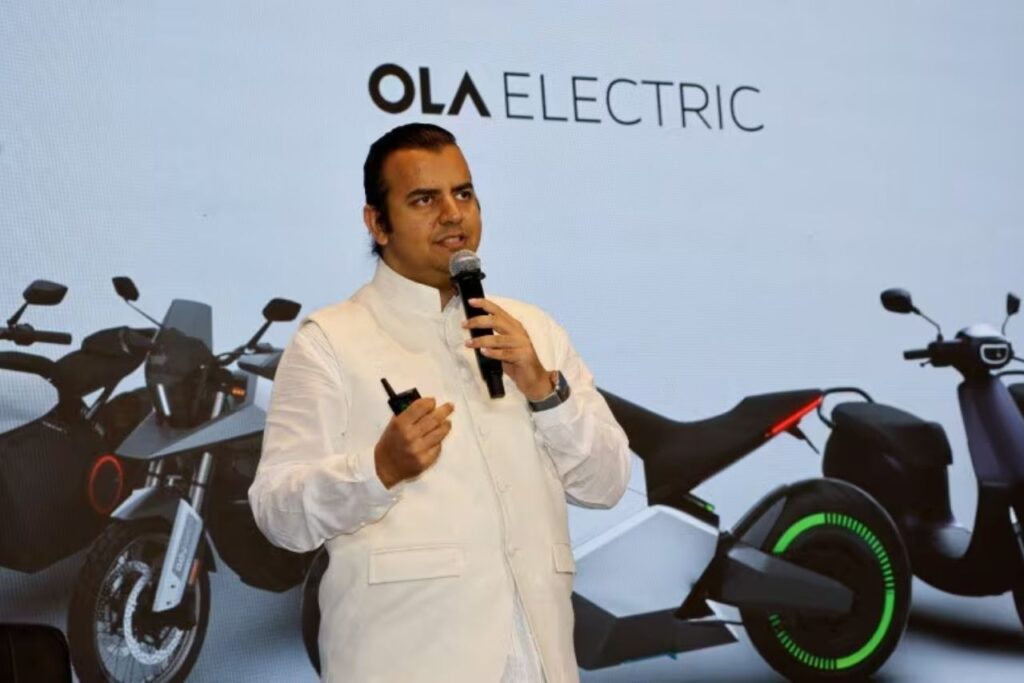
SYNOPSIS: Ola Electric faces declining sales, cash burn and weakened liquidity, forcing reduced guidance and stalled fundraising. Its new Ola Shakti home battery venture may open revenue streams, but cannot offset challenges without stabilising its core EV business.
Ola Electric Mobility Limited is an Indian electric vehicle (EV) manufacturer engaged in the development and production of EVs and core components, including battery packs, motors and vehicle frames through vertically integrated operations. It conducts in-house R&D and is building the Ola Gigafactory for cell production. Ola follows a direct-to-customer (D2C) distribution approach to sell its products.
The company is currently navigating one of its most challenging periods. Over the past year, Ola Electric has faced declining market share, heavy cash burn and a sharp 52 percent decline in its stock price. These pressures have complicated its fundraising efforts, with investors showing limited interest in the company’s proposed Rs. 1,500-crore equity raise due to concerns around weakening sales and overall financial performance. Additionally, lenders have been hesitant to participate in a Rs. 1,700-crore debt raise plan approved by the board in May 2025.
What’s Going Wrong with Ola
In Q2 FY26, Ola Electric reported a consolidated revenue from operations of Rs. 690 crores, a decline of nearly 17 percent QoQ and 43 percent YoY. The company reported a net loss of Rs. 418 crore for the quarter, reflecting a modest improvement of over 2 percent QoQ and 15 percent YoY. Despite the sequential improvement in losses, the company cautioned that it expects softer demand for the remainder of the fiscal year and subsequently lowered its full-year sales and revenue guidance.
Ola significantly cut its second-half sales expectations to around 1,00,000 vehicles, revising its full-year estimate to roughly 2,21,000 units – more than 40 percent below its earlier projection of 3,25,000-3,75,000 units.
The company’s liquidity position has also weakened. Net cash declined sharply to Rs. 160 crore as of September 2025, compared with Rs. 480 crore at the end of March, indicating continued cash burn and pressure on working capital.
In response to these challenges, founder Bhavish Aggarwal is steering the company toward a new strategic focus: home battery storage – an emerging category Ola views as a potential avenue for future growth.
New Plan
Aggarwal’s turnaround strategy centres on Ola Shakti, a residential Battery Energy Storage System (BESS) – priced between Rs. 1.2-Rs. 1.5 lakh – built using the company’s in-house 4680 lithium-ion cells. Positioned as India’s first residential BESS product, it marks Ola’s entry into the energy solutions segment and is expected to open new revenue streams while improving Gigafactory utilisation.
The company is targeting Rs. 100 crore in revenue in the March quarter alone, implying sales of about 7,000–8,000 units, which the company believes are achievable. Looking ahead, Ola aims to generate at least Rs. 1,000 crore in revenue from the Shakti product line in FY27.
Ola Shakti introduces several key features: instant zero-millisecond power switching compared to traditional inverters; smart energy management with real-time monitoring and consumption optimisation; wide voltage range (120V-290V); up to 98 percent efficiency with zero running or maintenance costs; and IP67-rated batteries weatherproofing for dust and water resistance. The system also includes advanced capabilities such as Time-of-Day charging, remote diagnostics, OTA updates, smart backup prioritisation, expansion support, and continuous online operation.
The product is available in four configurations—1.5 kWh, 3 kWh, 5.2 kWh, and 9.1 kWh—with introductory pricing for the first 10,000 units set at Rs. 29,999, Rs. 55,999, Rs. 1,19,999, and Rs. 1,59,999 respectively.
However, the company faces a notable challenge: India’s home inverter market is dominated by low-cost lead-acid battery systems, which are far cheaper than Ola’s lithium-ion alternatives. Without a strong distribution network and robust after-sales support, scaling Ola Shakti beyond early adopters may prove difficult.
Bottom Line
Ola now finds itself competing in two highly challenging markets: electric scooters – where established OEMs are increasingly executing more efficiently – and home energy storage, a segment where scale, reliability, and distribution strength outweigh brand appeal. Entering a capital-intensive business at a time of tightening cash flows further heightens operational pressure.
Ola Electric’s turnaround will require more than launching a new product category. The company must stabilise its core EV operations, rebuild customer and investor confidence, and regain volume momentum in its primary business.
While the home battery initiative may create an additional revenue stream, it cannot offset the company’s current challenges unless Ola strengthens its foundational EV business and exercises tighter financial discipline.
Written by Shivani Singh
Disclaimer

The views and investment tips expressed by investment experts/broking houses/rating agencies on tradebrains.in are their own, and not that of the website or its management. Investing in equities poses a risk of financial losses. Investors must therefore exercise due caution while investing or trading in stocks. Trade Brains Technologies Private Limited or the author are not liable for any losses caused as a result of the decision based on this article. Please consult your investment advisor before investing.
The post Can Ola Shakti home battery venture compensate for Ola Electric’s declining sales? appeared first on Trade Brains.
Related Articles

Maruti Suzuki: Can The Indian Auto Giant’s Stock Ever Hit ₹17,000 Again?
Synopsis: Maruti Suzuki’s stock is nearly 20 percent below its all-time hi...
HPL Electric Stock: How Smart Meters and the Wires & Cables Business Are Powering Growth
Synopsis: The company is building a dual-engine growth model led by smart meteri...
Market Leader Stock in Piston Diversifies Into EV Components and Other Segments for Growth; Do You Own It?
Synopsis : Company With FY26 revenue exceeding Rs.4,400 crore and substantial in...

5 Indian Companies That Built Billion-Dollar Businesses Around a Single Product
Synopsis: While many companies pursue growth through diversification, some of In...