Explained: Why Waaree Energies shares are trading at 25% discount?
Alex Smith
6 months ago

SYNOPSIS: Waaree faces near-term pressure from a US probe and domestic renewable slowdown, but strong revenue growth, rising production, a sizeable order book and aggressive capacity expansion underpin medium-term recovery potential over time.
Shares of India’s leading renewable energy company, operating with an installed capacity of ~18.7 GW for solar PV modules and 5.4 GW for solar cells, are worth watching as it is trading at a discount of nearly 25 percent from its previous close. This article examines the key factors contributing to the recent weakness in the stock and the developments investors should closely monitor.
At 10:16 p.m., the shares of Waaree Energies Limited were trading in the green at Rs. 2,928.05 on BSE, up by around 1 percent, as against its previous closing price of Rs. 2,895.45, with a market cap of Rs. 84,223 crores.
Background: US Duty Evasion Probe
Since late September 2025, shares of Waaree Energies Limited have fallen nearly 17 percent after reports surfaced that US customs authorities were investigating whether several Indian solar manufacturers had bypassed US tariffs on Chinese-made cells and modules by mislabelling as made in India.
The US Customs and Border Protection reportedly initiated a formal investigation into Waaree Energies and its subsidiary, Waaree Solar Americas Inc. The agency, in its memo, stated that there was reasonable suspicion of potential anti-dumping and countervailing duty evasion.
In an official exchange filing, Waaree clarified that the United States remains a critical manufacturing base within its global expansion strategy. Its subsidiary Waaree Solar Americas currently operates a 1.6 GW module manufacturing facility in Texas, which is being expanded to 3.2 GW. Additionally, its US subsidiary recently acquired the US assets of Meyer Burger to strengthen local manufacturing capabilities.
The company reiterated its commitment to full compliance, stating that it has always cooperated with US authorities and will continue to do so during ongoing investigations.
Sector Pressures & Weak Demands
India’s solar power sector has undergone a significant shift in recent months. A segment that was previously attracting record investments and expanding at an unprecedented pace is now entering a phase of consolidation and recalibration. The government has indicated that pursuing large-scale renewable energy tenders may no longer be practical, given the flattening project pipeline. Although the national target envisioned auctioning 50 gigawatts (GW) annually to help reach 500 GW of non-fossil fuel capacity, the country is currently adding only 15-25 GW each year.
India’s renewable energy landscape has nevertheless expanded dramatically – rising from just 35 GW in 2014 to about 197 GW today. The past decade has seen unparalleled growth in clean energy capacity. In a statement issued on 22nd October, the Ministry of New and Renewable Energy (MNRE) noted that such rapid expansion inevitably reaches a stage where further progress depends not merely on installing more megawatts, but on implementing deeper structural and system-level reforms.
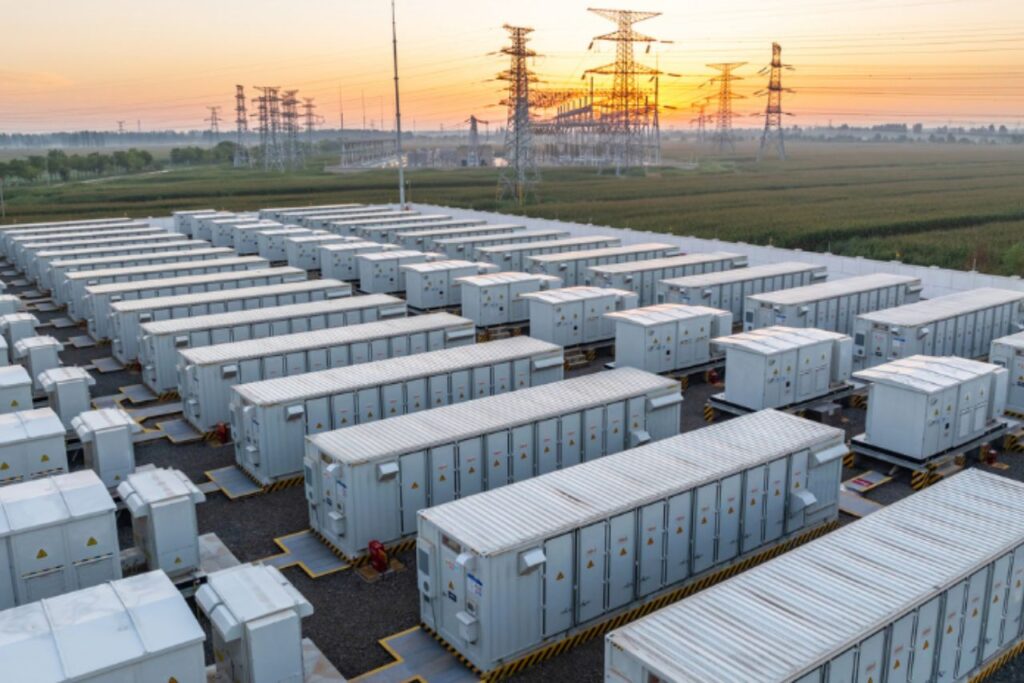
India’s power grid is increasingly unable to accommodate the rapid growth in solar installations, resulting in rising curtailment levels that pose a risk to the expansion of renewable energy and highlight the urgent need for storage solutions.
In October, the curtailment rate for solar generation climbed to around 12 percent – the highest since May, when Grid Controller of India Ltd. began releasing such data. On certain days, nearly 40 percent of solar power produced could not be fed into the national grid. Curtailment reflects the portion of electricity generated that fails to reach consumers despite being available.
Additionally, India is temporarily reducing the pace of renewable energy (RE) tenders as the country faces a demand-supply imbalance, with green power generation outstripping its current absorption capacity. The government plans to reassess its target of auctioning 50 GW of projects annually. Roughly 40 GW of capacity is currently stalled due to pending power purchase agreements (PPAs) and connectivity challenges. While these projects are unlikely to be cancelled entirely, industry stakeholders believe the recalibration will ultimately support better grid integration and system stability.
Financials Highlights & More:
Waaree Energies reported a significant growth in revenue from operations, experiencing a year-on-year increase of around 70 percent, from Rs. 3,574 crores in Q2 FY25 to Rs. 6,066 crores in Q2 FY26.
Likewise, the company’s net profit more than doubled during the same period, from Rs. 376 crores to Rs. 878 crores, reflecting an impressive rise of more than 133 percent YoY.
The company continues to demonstrate robust operational momentum, highlighted by a 37 percent YoY increase in module production, rising from 1.9 GW in Q2 FY25 to 2.6 GW in Q2 FY26, while cell production stood at 0.6 GW. Its business visibility remains strong, supported by an impressive order book of ~24 GW, valued at nearly Rs. 47,000 crore, with an additional 100+ GW in the order pipeline.
Revenue contributions are well balanced geographically, with 52.8 percent derived from domestic markets, including retail, EPC, and enterprise segments, while 47.2 percent comes from overseas markets, reflecting a diversified and resilient segmental mix.
Its current module capacity stands at 16.1 GW in India and 2.6 GW in the US, which will be augmented by an additional 6 GW under the PLI scheme and 2.05 GW more, including 1.6 GW in the US. This will take the total module capacity to 26.7 GW by FY26.
On the cell manufacturing front, Waaree currently operates 5.4 GW in India, with planned additions of 6 GW under PLI and 4 GW of domestic capacity, expanding its total cell capacity to 15.4 GW by FY27.
Similarly, Waaree is building a strong upstream manufacturing ecosystem with 6 GW of ingot-wafer capacity under PLI and another 4 GW in India, reaching a combined 10 GW capacity by FY27.
Management indicated that the company has planned an overall capex of over Rs. 25,000 crore to be deployed over the next 24 months. Based on their guidance, around 10-15 percent of this spending is expected in FY26, with another 10-15 percent spread across the next two quarters. The bulk of the investment – around 50 percent of the total capex – is projected for FY27, with the remaining portion scheduled for FY28.
Waaree Energies Limited is primarily engaged in the business of manufacturing solar photovoltaic (PV) modules, cells and setting up projects in the solar space and the sale of electricity.
Written by Shivani Singh
Disclaimer

The views and investment tips expressed by investment experts/broking houses/rating agencies on tradebrains.in are their own, and not that of the website or its management. Investing in equities poses a risk of financial losses. Investors must therefore exercise due caution while investing or trading in stocks. Trade Brains Technologies Private Limited or the author are not liable for any losses caused as a result of the decision based on this article. Please consult your investment advisor before investing.
The post Explained: Why Waaree Energies shares are trading at 25% discount? appeared first on Trade Brains.
Related Articles

Persistent Systems Shares: Can Europe Expansion and AI Deliver Long-Term Growth?
Synopsis: Persistent Systems remains focused on expanding its business through s...
Oriana Power: After Missing FY26 Expectations, Can ₹7,000 Cr Order Book Change the Narrative?
Synopsis: Oriana Power missed its FY26 expectations due to commodity inflat...

3 Indian Companies Capturing the Global Medical Consumables Opportunity
Synopsis:- Global hospitals and laboratories are leaning more heavily on Indian...

Power Infra Stock Targets Over 40% Growth as BESS and Green Hydrogen Investments Gather Pace
Synopsis: An energy transition-focused company is entering FY27 with strong grow...