Gold Holds Above ₹1,56,000 on MCX as US Inflation Offsets Iran Ceasefire Hopes
Alex Smith
1 month ago
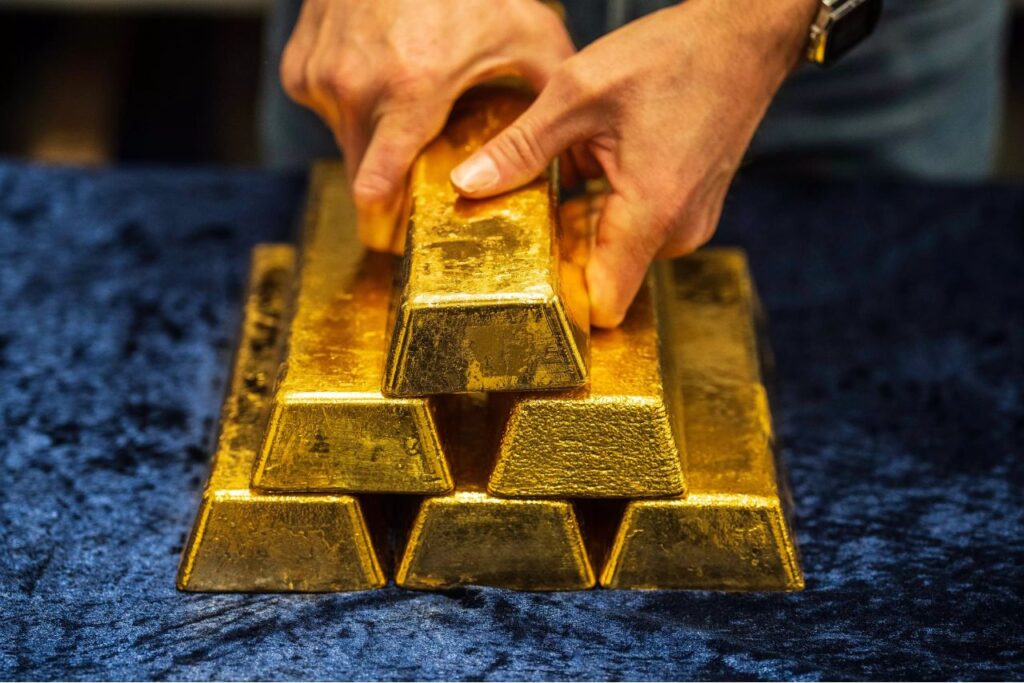
Synopsis: With a US-Iran peace framework emerging through Pakistani mediation and April PCE inflation hitting a three-year high, gold and silver are caught between two opposing macro forces, geopolitical de-escalation pulling prices lower while stagflationary signals and central bank buying keep any selloff shallow.
Precious metals traded in a narrow, volatile band on Friday, May 29, 2026, as traders digested a preliminary US-Iran Memorandum of Understanding alongside the hottest US inflation reading since May 2023. The tension between those two catalysts, one bearish, one bullish explains why gold has held above Rs.1,56,000 on the MCX even as geopolitical risk briefly receded.
Domestic and International Price Snapshot
On the Multi Commodity Exchange, gold futures for June 2026 delivery slipped Rs.609 to Rs.1,56,316 per 10 grams. Silver futures for July 2026 delivery fell more sharply, declining Rs.1,518 approximately 0.5 percent to settle at Rs.2,68,018 per kilogram. The MCX correction tracked an intraday dip in global spot markets, where gold had touched a two-month low earlier in the week before recovering.
International spot gold climbed 0.4 percent to $4,512.79 per ounce (approximately Rs.4,28,895 per ounce at the current exchange rate of Rs.95.04 per dollar). Spot silver advanced 0.7 percent to $76.17 per ounce (roughly Rs.7,237 per ounce). The divergence between the domestic MCX correction and the international recovery reflects the timing of the data snapshot global prices stabilised through Friday’s session while MCX futures, pricing an earlier dip, caught up.
The Geopolitical Catalyst: Hormuz, Not Headlines
The single biggest driver of gold’s recent volatility is the US-Iran conflict that escalated sharply through early 2026. An intensive US naval blockade on Iranian ports beginning in April 2026, combined with retaliatory IRGC strikes on commercial shipping near the Strait of Hormuz, choked a meaningful share of global crude oil supply. Brent crude traded near $90–$100 per barrel through much of this period, directly injecting energy-driven inflation into importing economies.
The preliminary MoU brokered via Pakistani mediation includes a potential 60-day ceasefire extension and a commitment to reopen the Strait of Hormuz to unrestricted shipping. If implemented, the deal would unwind the energy premium that has been embedded in global inflation since April. That prospect alone was sufficient to pull gold down to a two-month low earlier this week.
The caveat is material: neither US President Donald Trump nor Iran’s Supreme Leader has formally signed the agreement. Until official ratification, the deal remains a draft on paper, and the bullion market is trading the probability of completion rather than the fact of it.
The Macro Layer: PCE Inflation vs GDP Miss
The geopolitical ease is running directly into a sticky domestic inflation problem in the United States. April’s headline Personal Consumption Expenditures inflation accelerated to 3.8 percent year-on-year, the fastest pace since May 2023, while core PCE came in at 3.3 percent. Federal Reserve Bank of St. Louis President Alberto Musalem has flagged that rate hikes may need to return to the table if inflation does not moderate over the next six months.
Higher US interest rates are conventionally bearish for gold the metal bears no yield, making it less competitive as rates rise and the dollar strengthens. However, the rate-hike narrative runs into a contradicting datapoint: US Q1 2026 GDP grew at an annualised rate of just 1.6 percent, below the 2 percent consensus estimate. The combination of stubborn inflation and weakening growth is the textbook definition of stagflation, and stagflation historically anchors gold demand because it erodes real returns across most conventional asset classes simultaneously.
Central Bank Demand and the Structural Bid
Retail flows have been uneven; global gold ETFs are down approximately 0.44 million ounces year-to-date. But sovereign accumulation has absorbed the slack. China’s net gold imports via Hong Kong surged 81.2 percent in April compared to the previous month, a figure that reflects both official accumulation and a broader emerging-market trend of de-dollarisation. Central banks in economies exposed to potential US sanctions have been diversifying into physical gold as a balance-sheet hedge, providing a demand floor that purely financial investors cannot replicate quickly.
Silver: Industrial Demand Adds a Second Variable
Silver’s selloff on the MCX sharper in percentage terms than gold reflects its dual role as both a safe-haven metal and an industrial input. When geopolitical risk recedes, silver loses the safe-haven bid faster than gold. At the same time, concerns about global manufacturing growth weigh on the industrial demand component. The net result is a metal with wider intraday swings than gold. On the international market, silver’s 0.7 percent gain to $76.17 per ounce (roughly Rs.7,237) suggests the industrial outlook has not deteriorated enough to break the broader bullish structure.
Technical Levels to Watch
Commodity analysts have identified immediate gold support at $4,450 per ounce (approximately Rs.4,22,930). If the US-Iran peace framework collapses or stalls, the next resistance level at $4,530 per ounce (roughly Rs.4,30,531) becomes the near-term target, with $4,580 per ounce (approximately Rs.4,35,283) as the breakout level if fresh hostilities resume. Until the MoU text is formalised, both gold and silver are expected to trade in a volatile range rather than a defined trend.
Disclaimer: The views and investment tips expressed by investment experts/broking houses/rating agencies on tradebrains.in are their own, and not that of the website or its management. Investing in equities poses a risk of financial losses. Investors must therefore exercise due caution while investing or trading in stocks. Trade Brains Technologies Private Limited or the author are not liable for any losses caused as a result of the decision based on this article. Please consult your investment advisor before investing.
The post Gold Holds Above ₹1,56,000 on MCX as US Inflation Offsets Iran Ceasefire Hopes appeared first on Trade Brains.
Related Articles
5 Debt-Free Stocks with 5-Year ROE of Up to 44% to Add to Your Watchlist
Synopsis: Debt-free companies including Gillette India, BSE Ltd, and a few other...

5 Companies Supporting India’s Semiconductor Manufacturing Push
Synopsis: As global chipmakers look beyond China for supply chain diversificatio...
Alpine Texworld IPO: Check the GMP, Price Band, Financial Analysis and More
Synopsis: Alpine Texworld Limited’s ₹126.25 crore IPO opens on July 14, 20...

Mukul Agrawal Stock: Can This Precision Player Ride India’s $5.9 Billion Abrasives Opportunity?
Synopsis: India’s manufacturing sector is increasingly moving towards high...