GRSE Share: Will Its ₹1.5 Lakh Cr Naval Order Pipeline Convert Into Growth?
Alex Smith
1 month ago
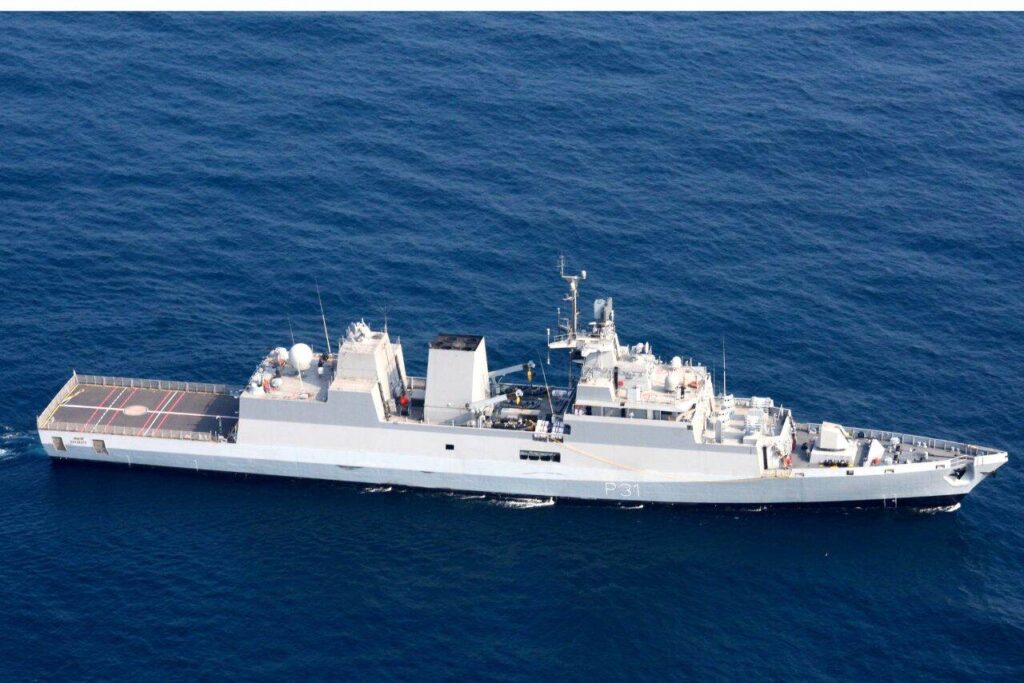
Synopsis: Garden Reach Shipbuilders & Engineers Limited delivered record FY26 revenue and profit growth driven by faster warship execution, while the Rs 33,000 crore NGC project and a separate Rs 1.5 lakh crore naval opportunity pipeline could support long-term growth. Expansion into exports, commercial shipbuilding and autonomous platforms may further diversify future revenue streams.
Garden Reach Shipbuilders & Engineers Limited has entered FY27 with record financial performance, improving execution capability and one of the strongest naval opportunity pipelines in India’s defence sector.
After delivering eight warships in FY26 and reporting 38% revenue growth, the company is now preparing for the next phase of expansion through the Rs 33,000 crore Next Generation Corvette project, commercial shipbuilding opportunities, exports and autonomous naval technologies. Additionally, management highlighted a separate Rs 1.5 lakh crore naval opportunity pipeline that could support long-term order inflows and growth visibility.
With a market cap of Rs 30,885 crore, the shares of Garden Reach Shipbuilders & Engineers Ltd are trading at Rs 2,696 and are trading at a PE of 41.2 compared to their industry’s PE of 69. The shares have given a return of more than 1,300% in the last 5 years.
Record FY26 performance strengthens execution credibility
In FY26, Garden Reach Shipbuilders & Engineers Limited posted the best-ever operational and financial performance, owing to the faster execution in shipbuilding and engineering programmes. The company reported a 38% rise in revenue from operations, which stood at Rs 7,002 crore.
Further, profit after tax grew by 42% to Rs 748 crore. For the quarter, the company witnessed a revenue growth of 29% to Rs 2,119 crore, while profit after tax (PAT) grew by 24% to Rs 303 crore. This performance was attributed to physical execution, including eight deliveries of warships to the Indian Navy during the year, wherein three warships were delivered on the same day, which is a first in India’s shipbuilding history.
Apart from shipbuilding, the company launched one warship and conducted keel-laying for 19 platforms, including 13 hybrid ferries for the government of West Bengal. Also, the company delivered seven naval surface guns and 110 portable steel bridges, of which 30 were export bridges. Bridge sales revenues crossed the Rs 200 crore mark for the first time, while exports accounted for more than Rs 270 crore.
Order book execution gains momentum
GRSE currently has an order book of Rs 15,324 crore spread over nine projects with 39 platforms. Notably, the management pointed out that the order book being less than Rs 20,000 crore for the first time in five years is indicative of better execution than poor demand.
Approximately 95% of the order book continues to comprise shipbuilding work, with the warship project accounting for approximately Rs 11,361 crore. Some of the significant ongoing projects include the completion of one more P-17 Alpha ship, which has achieved 74% physical progress.
Four ASW shallow water craft ships are pending delivery, with two ships already having completed their basin trials and moving towards contractor sea trials. The remaining two ASW ships are estimated to have made 60% progress in construction and will be delivered in the current financial year.
The Next Generation Offshore Patrol Vessel project is also in progress, with the first ship being prepared for launching in May 2026. Management anticipates that this project will be completed in FY ’29. Additionally, commercial and research vessel projects, including the Ocean Research Vessel, Acoustic Research Ship, Hybrid Ferries, Multipurpose Export Vessels, and Bangladesh Dredger, continue to progress on schedule.
The Rs 33,000 crore NGC project could become the next major trigger
An immediate catalyst for growth in the next few quarters for GRSE is the NGC project. Management stated that GRSE is the L1 bidder in the project, and the price negotiations have already been finalised. GRSE now awaits signing of the contract, which will take place in the current quarter. The expected order value of the project for GRSE alone is estimated at Rs 33,000 crore.
Revenue recognition from the NGC project is expected to start in H2 FY28. Shipbuilding projects have an S-curve revenue recognition pattern wherein the initial phase of design and preparation generates limited revenue before ramping up towards hull construction and integration of equipment. Significant revenue contribution from the NGC project is expected to start from FY29 onwards as construction begins.
It should be noted that GRSE does not consider this order gap to be of significance, as there are several other projects being bid out by the Indian Navy as well. Projects such as P-17 Bravo, Fast Interceptor Craft, and Coast Guard OPVs will provide sufficient visibility on revenue in the interim period until NGC revenue starts scaling up.
A Rs 1.5 lakh crore naval opportunity pipeline is opening up
The key long-term opportunity that was pointed out during the conference call is the large number of projects that have emerged in the naval procurement pipeline for India. As per GRSE, there are projects worth Rs 1.5 lakh crore where acceptance of necessity has been granted and RFPs are expected to emerge in the current financial year or shortly.
This includes the 120 Fast Interceptor Craft project worth Rs 3,500 crore, the 31 Follow-On Water Jet Fast Attack Craft project worth Rs 3,500 crore, and seven P-17 Bravo frigates with an order value of Rs 70,000 crore. Additionally, the Mine Countermeasure Vessel project will have an AoN value of Rs 32,000 crore, while the Landing Platform Dock project could be worth Rs 35,000 crore.
Management discussed the potential project sharing between shipyards for each of these projects. The P-17 Bravo project will most likely be shared between two shipyards on a four-plus-three basis, while the Mine Countermeasure Vessel project could be divided between two shipyards on an eight-plus-four basis. Lastly, the Landing Platform Dock project is expected to be shared two-plus-two.
Commercial shipbuilding could emerge as a second growth engine
Even though naval ships continue to be the key product line for the company, GRSE has begun preparations for taking on a bigger role in commercial shipbuilding. According to the management, the aggregation of orders by the Ministry of Shipping has begun to make progress, with multiple tenders being floated currently for platform support vessels, MR tankers, VLGCs, and Aframax vessels.
GRSE is also witnessing increased potential for exports, especially from European customers. As per the management, shipowners in Europe have begun to approach Indian shipbuilders since places like China and Korea are booked up, and Indian prices and quality are now competitive on the global stage. GRSE expects to sign more commercial vessel export orders in the coming year.
Nevertheless, management made it quite clear that building warships still provides better margins and larger order values than commercial projects. While the export multipurpose vessel project is valued at approximately Rs 1,400-1,500 crores, even smaller naval projects like ASW vessels are worth Rs 5,000-5,500 crores owing to the inclusion of expensive weapons and sensors in them.
Expansion plans aim to support future order inflows
GRSE is also increasing its production capacity in anticipation of future demand. GRSE currently has a shipbuilding capacity of 28 platforms, and management aims to scale up to 32 ships by the end of the year through continued modernisation efforts.
Additionally, two brownfield shipbuilding sites will be developed in West Bengal, along with two greenfield sites, one in West Bengal and another in Gujarat. This expansion plan was explicitly attributed by the management to the shipbuilding revitalization scheme worth around Rs 69,725 crore of the government, along with the demand aggregation initiative of the Ministry of Shipping.
This expansion drive is also in response to management expectations about the prospects of strengthening commercial shipbuilding demand in India over the coming years. In case of simultaneous acceleration in naval and commercial shipbuilding, increased capacity may prove essential.
Autonomous platforms and defence technology
GRSE is also preparing itself for the future generation of naval warfare technologies. Management pointed out that the Indian Navy had come up with a roadmap for autonomous systems nearly three years ago, well before the current geopolitical scenario increased international interest in autonomous warfare systems.
GRSE has already designed autonomous subsurface and surface systems and delivered one of their products to a DRDO entity. They are also working on several Make-I and Make-II programmes pertaining to autonomous underwater vehicles. Management believes that the autonomous products of the company will receive greater attention from a domestic perspective in the coming years, with extra-large autonomous underwater vehicle programmes being a possibility within the next three to five years.
However, management reiterated that traditional naval platforms such as destroyers, frigates, submarines, and patrol vessels would be strategically significant due to their armament capacity and endurance at sea.
Can GRSE convert the pipeline into sustained growth?
The important thing for investors moving forward will be if GRSE will be able to translate its unique naval pipeline into sustained, execution-driven growth over the next decade. Indeed, recent financial performance has shown that GRSE’s ability to execute is getting better and better, with improved execution cycles and growing capacity. Building eight warships in one year alongside numerous other commercial and research ship projects indicates that the bottleneck is starting to fade.
Furthermore, management feels that GRSE will be able to maintain its current margins going forward despite the shift towards newer projects. Though FY28 will likely see a decrease in the maturity of projects due to the completion of current projects and the beginning of NGC design work, GRSE expects new naval contracts like P-17 Bravo and interceptors to fill this void.
Ultimately, the company’s long-term trajectory could depend on three factors: timely conversion of the Rs 1.5 lakh crore naval opportunity pipeline into contracts, successful execution of expansion projects and sustained competitiveness in both defence and commercial shipbuilding. If GRSE continues executing at its current pace while securing a meaningful share of upcoming naval programmes, the company could be entering one of the strongest order and revenue cycles in its history.
Disclaimer: The views and investment tips expressed by investment experts/broking houses/rating agencies on tradebrains.in are their own, and not that of the website or its management. Investing in equities poses a risk of financial losses. Investors must therefore exercise due caution while investing or trading in stocks. Trade Brains Technologies Private Limited or the author are not liable for any losses caused as a result of the decision based on this article. Please consult your investment advisor before investing.
The post GRSE Share: Will Its ₹1.5 Lakh Cr Naval Order Pipeline Convert Into Growth? appeared first on Trade Brains.
Related Articles

Profitable Picks: Stocks with High ROCE and High OPM to keep on your radar
Synopsis: Five profitable picks including Alkem Laboratories, Navin Fluorine, an...

ICICI Securities Bets on OMCs and Gas Utilities Despite West Asia Oil Shock; Here’s Why
Synopsis:- ICICI Securities has stuck with its bullish call on Indian oil market...

4 Midcap Insurance Stocks to Look Out For
Synopsis: India’s insurance sector is witnessing strong growth driven by rising...
APL Apollo Has Guided For 20% Growth. So Why Has The Stock Corrected 20%?
Synopsis: APL Apollo has guided for strong growth, yet its stock is down nearly...