How Is CEAT Quietly Taking Over Michelin’s Customers?
Alex Smith
2 months ago
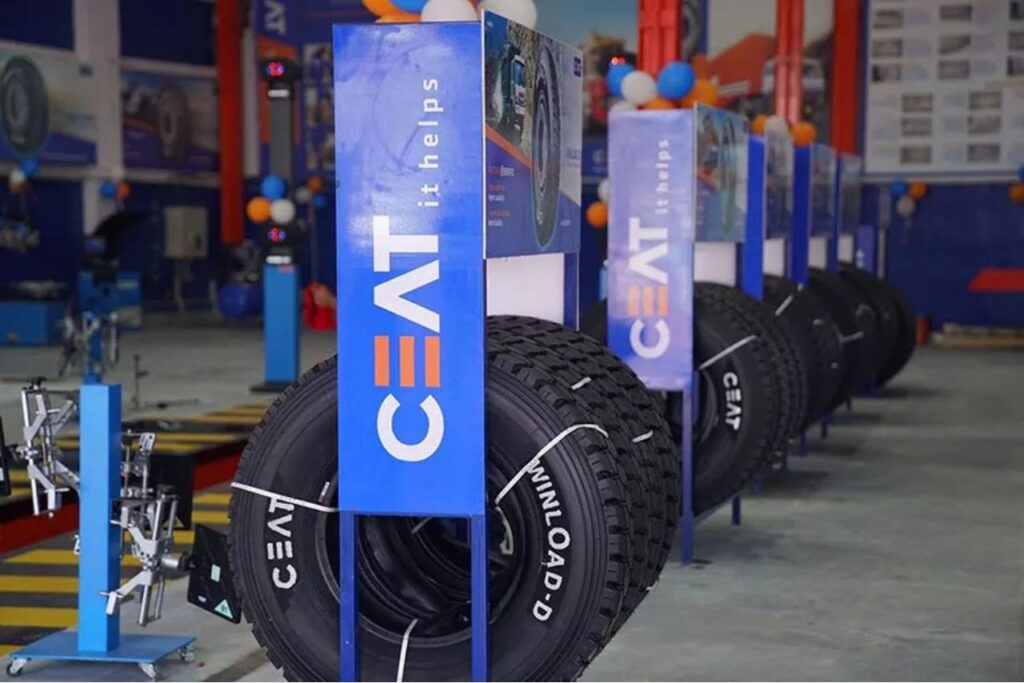
Synopsis: This acquisition highlights CEAT’s transition towards greater control over customers, pricing, and supply chain in the off-highway tyre segment. Although current performance reflects transitional challenges, the long-term outlook remains positive, driven by improving utilization, margin expansion, and deeper penetration into global markets as integration stabilizes.
In the global tyre industry, acquisitions are usually about expanding capacity or entering new markets. But what happens when a deal goes beyond assets and starts shifting customer relationships as well? A quiet transition is underway where control over sales, pricing, and distribution is gradually changing hands. While the financials may not yet reflect the full picture, the underlying shift is becoming hard to ignore, so how is this acquisition helping CEAT take over Michelin’s customers?
What Is The Acquisition?
CEAT Limited has taken a significant step in expanding its presence in the off-highway tyres (OHT) segment by acquiring the Construction Compact Line business of Michelin Group under its CAMSO brand. The deal, completed in September 2025, includes key manufacturing facilities in Sri Lanka, such as the Midigama plant and the casting product unit in Kotugoda.
As part of the transaction, CEAT will gain global ownership of the CAMSO brand after a three-year licensing period, allowing it to fully integrate and scale the business across multiple categories. This acquisition strengthens CEAT’s position in the high-margin OHT segment, where it has already built a solid base in agricultural tyres over the past decade.
By combining its existing capabilities with CAMSO’s expertise in compact construction equipment tyres and tracks, the company now gains access to a wider network of over 40 global OEMs and international distributors. Meanwhile, Michelin will gradually exit the compact line bias tyres and construction tracks segment as part of this transition.
Arnab Banerjee, MD & CEO, CEAT Limited, said: “We are confident that our enhanced strengths in products, capabilities, and markets will enable us to enter new geographies, expand our portfolio, and drive sustainable growth in the years ahead.”
How CEAT Is Taking Over Michelin’s Customers
The Real Story: Customer Transition Is Already Underway
The bigger story in this acquisition is not just ownership of a plant or a brand. It is the transfer of customer relationships. CEAT Limited has already begun taking over direct customer relationships from Michelin Group in a phased manner, moving across geographies and customers step by step.
In Q3FY26, management highlighted that the transition is progressing smoothly, with key sales hiring completed and most existing customers already approving the shift. This is a critical milestone because it ensures continuity of operations and signals that CEAT is gradually replacing Michelin at the front end without disrupting the business.
At the same time, this is still a transition phase. CEAT does not yet have complete control of the business. As explained in Q2FY26, the company is currently operating under a structure where it is not directly selling to customers and is also not fully managing procurement. Instead, it is buying semi-finished goods from Michelin and selling finished products back to Michelin, which then distributes them to customers. In simple terms, CEAT owns the business operationally, but Michelin is still temporarily positioned between CEAT and the end customer in parts of the value chain.
Why The Numbers Look Lower Than Expected
This transition structure is the primary reason why current financials do not reflect the true earning potential of the CAMSO business. In Q3FY26, the CAMSO business reported revenue of around USD 20 million, or approximately Rs. 182-183 crore, along with double-digit EBITDA margins at the operating level. While this appears lower compared to earlier expectations, management clarified that the performance is in line with internal estimates.
Earlier, the company had indicated an annualized revenue potential of around USD 120-125 million (previously closer to USD 140 million). However, that figure represents the full value CEAT would realize once it begins selling directly to customers.
Currently, because CEAT is selling through Michelin during the transition period, Michelin continues to handle distribution and retains a portion of the margin. As a result, CEAT’s effective realization is lower, trending around 90-100 levels. This difference is purely structural and not indicative of demand weakness.
Additionally, external factors such as a cyclone in Sri Lanka during the quarter led to temporary supply chain disruptions, impacting production and deliveries. These are expected to normalize over time and do not change the underlying demand outlook.
Margins: Stronger Than They Appear
Margins have also been a point of confusion for investors, especially when comparing consolidated numbers with standalone performance. Management clarified that the CAMSO business delivered low double-digit EBITDA margins at an operating level in Q3FY26. However, reported margins appeared significantly lower because several one-time transition-related expenses were included within operating costs. These included IT integration expenses and other costs associated with the initial phase of acquisition and change management.
These one-time costs accounted for roughly 4 percent to 5 percent of revenue during the quarter and were largely concentrated in Q3 and the early months of operations. Importantly, these costs are not expected to recur from Q4 onwards, as most of the transition-related expenses have already been incurred.
In addition, there are accounting factors that have affected reported profitability. The CAMSO entity currently carries depreciation based on estimated asset life and includes interest costs due to its capital structure, where a portion of funding has been structured as debt. While these are below the operating line, they still impact reported numbers and create further divergence between underlying operating performance and reported profitability.
Going forward, as one-time costs fall away and accounting adjustments stabilize, reported margins are expected to move closer to the actual operating margin. Over time, margins are expected to improve from low teens to mid-teens, and eventually move towards 20 percent or higher once CEAT gains full control over customers, sourcing, and plant utilization.
The Big Shift: From Supplier to Full Value Chain Control
The most important transformation underway is CEAT’s shift from being an intermediary supplier to becoming a fully integrated player controlling both customers and supply chain.
On the front end, customer transition has already begun and is expected to accelerate through Q4FY26. Management indicated that a significant portion of customer transfer could be completed by Q1 or Q2 of the next financial year. Once this is achieved, CEAT will begin selling directly to customers and capturing the full revenue realization, which should lead to a meaningful improvement in reported revenues.
On the back end, the transition will take longer. CEAT will continue to rely on Michelin for semi-finished goods until it installs its own upstream manufacturing capabilities, including mixing and calendaring equipment. This process is expected to take another three to five quarters from Q3FY26.
This staggered transition means that while customer control will improve relatively quickly, procurement independence will take more time. However, once both ends are fully integrated, CEAT will have complete control over pricing, sourcing, and margins.
At present, plant utilization is around 50 percent, which also limits profitability. As customer transition progresses and volumes increase, utilization is expected to improve, further enhancing operating leverage and margins.
Beyond Transition: Strengthening Global Presence
Alongside the integration process, CEAT is also expanding its broader off-highway tyre business globally. The company’s international business continues to show strong momentum, with Europe, Latin America, and Africa emerging as key growth regions. In Q3FY26, the specialty tyre segment delivered its strongest performance to date, growing in the mid-20s percent range, while year-to-date growth remained in the high teens.
CEAT also introduced more than 32 new off-highway tyre SKUs during the quarter, significantly expanding its product portfolio. This reflects the company’s strategy to position itself as a comprehensive supplier in the OHT segment, rather than just a niche player.
In terms of mix, international business contributed around 19.4 percent of total revenue. If CAMSO’s international consumption is included, this share rises to approximately 23 percent, highlighting the growing importance of global markets in CEAT’s overall strategy.
However, near-term challenges remain. Apart from weather-related disruptions in Sri Lanka, the company also faces pricing pressure from Asian competitors, particularly in the European market. Despite this, management remains confident in maintaining strong growth momentum and sustaining its market position.
What This Means
The CEAT-CAMSO acquisition is not a one-time event but a phased takeover of Michelin’s customer base and business ecosystem. At present, CEAT is in the middle of this transition, where it has ownership but not full control. This explains why current revenues and margins appear subdued. However, the underlying business performance remains intact, and the transition is progressing as planned.
As CEAT completes the customer transfer, it will start capturing full revenue realization directly from customers. As it gains control over procurement, it will improve cost efficiencies. And as plant utilization rises, the business will benefit from operating leverage.
In essence, CEAT is moving from being a participant in Michelin’s value chain to fully owning and controlling it. Once this transition is complete, the CAMSO acquisition is expected to unlock its full potential as a high-margin, globally competitive OHT business, delivering the premium growth that management has been guiding towards.
Disclaimer: The views and investment tips expressed by investment experts/broking houses/rating agencies on tradebrains.in are their own, and not that of the website or its management. Investing in equities poses a risk of financial losses. Investors must therefore exercise due caution while investing or trading in stocks. Trade Brains Technologies Private Limited or the author are not liable for any losses caused as a result of the decision based on this article. Please consult your investment advisor before investing.
The post How Is CEAT Quietly Taking Over Michelin’s Customers? appeared first on Trade Brains.
Related Articles

Mahindra & Mahindra and 2 Auto Stocks Trading At a PEG Ratio Below 1 with Strong Earnings Growth
Synopsis: The Price/Earnings-to-Growth (PEG) ratio is one of the most useful val...
3 Battery Stocks That Could Benefit From India’s Upcoming EV Policies
Synopsis: India’s EV push, supported by subsidies and localisation policies, is...

Top 3 Stocks Powering India’s Defence Manufacturing To Keep a Watch on
Synopsis: A leading brokerage believes defence manufacturing in India is enterin...

Defence Electronics Stock Targets 3x Revenue Growth; Here’s What Investors Must Know
Synopsis: Backed by a Rs.2,141 crore standalone order book, management guidance...