IndiGo Share: Can India’s Largest Airline See Revival in FY27 Despite Fuel Cost Pressure?
Alex Smith
1 month ago
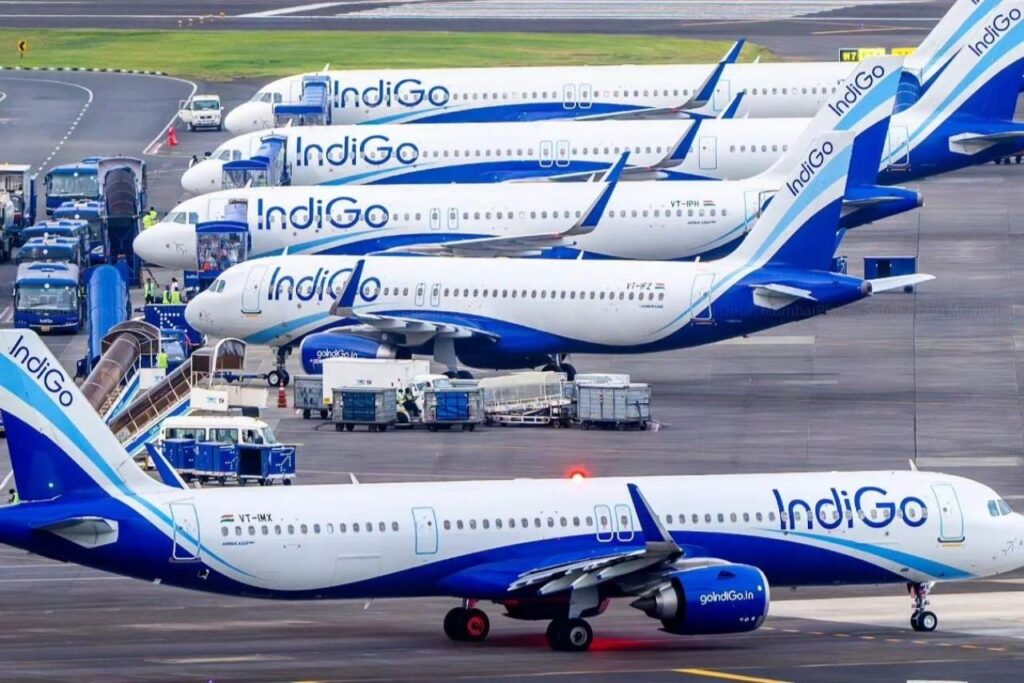
Synopsis: Shares of InterGlobe Aviation (IndiGo) may remain in focus after Morgan Stanley retained an Overweight rating. While rising ATF prices and currency pressure may weigh on near-term margins, brokerages expect IndiGo’s scale, cost efficiency, and balance sheet strength to support a possible H2FY27 recovery.
India’s aviation sector is currently navigating a mixed environment. While long-term air travel demand in India remains structurally strong, short-term profitability pressures have increased due to rising crude oil prices, geopolitical uncertainty, and moderation in discretionary travel spending.
With this in mind, the most tracked name in the Indian Aviation Sector is in focus due to its dominant domestic market share, operational scale, and stronger balance sheet compared to peers. This makes the stock particularly sensitive to both negative shocks and recovery expectations.
With a market capitalisation of ₹1,66,080 crores, the shares of Interglobe Aviation (IndiGo) were trading at ₹4,295 apiece in Thursday’s market session, down 1.15% from its previous day’s close of ₹4,345 apiece. The stock, however, has corrected significantly over the last 6 months, falling by 24.50%.
Near-Term Headwinds May Pressure H1FY27
Morgan Stanley maintained an Overweight rating with a revised target price to ₹5,913 from ₹6,468, with the new upside being 29%. Morgan Stanley believes the first half of FY27 could remain challenging for the airline industry. One of the biggest reasons is the rise in Aviation Turbine Fuel (ATF) prices, which remain one of the largest cost components for airlines.
In addition, a weaker rupee can increase dollar-linked expenses such as aircraft lease rentals, maintenance contracts, and overseas operating costs. Softer travel demand during uncertain macro conditions may also weigh on passenger yields and profitability. Since airline businesses operate with high fixed costs, even modest increases in fuel or currency costs can significantly impact margins.
Why Brokerages Still See H2 Recovery
Despite near-term turbulence, Morgan Stanley expects IndiGo to see a stronger second half of FY27 if industry conditions improve. The brokerage highlighted IndiGo’s structural cost advantage as a key reason. As one of India’s leading low-cost carriers, the airline has historically been able to manage costs better than many competitors, helping it recover faster during upcycles.
Its relatively stronger balance sheet and liquidity position may also help the company navigate weak quarters without major stress. Another supportive factor is valuation. Morgan Stanley noted that the stock trades at around 8x FY28 EV/EBITDA, below its 10-year median of around 9x, suggesting room for rerating if earnings visibility improves.
New ATF Blending Policy: Long-Term Positive?
In a policy move, India has allowed the blending of ethanol and synthetic/man-made hydrocarbons with Aviation Turbine Fuel (ATF). The initiative aims to reduce crude oil imports, strengthen energy security, and support cleaner aviation fuels.
For IndiGo and the broader aviation sector, the immediate cost benefit may be limited, as supply chains, certifications, and airport-level infrastructure for blended fuels may take time to scale.
However, over the medium to long term, successful adoption of blended ATF could reduce import dependence and lower fuel price volatility, which would be structurally positive for airline margins.
However, for the near term, Indian airlines have urged the government to revise the ATF pricing formula after a sharp rise in jet fuel prices linked to the West Asia conflict. The industry body said ATF now forms nearly 55–60% of operating costs versus the usual ~40%, and has sought lower taxes plus a pricing cap mechanism. For IndiGo, higher fuel costs may pressure near-term margins if fares do not rise enough. However, its larger scale, stronger balance sheet, and better cost efficiency could help it manage the stress better than peers.
Key Factors to Watch Ahead
Investors may closely track global crude oil prices, monthly ATF price revisions, and rupee movement against the US dollar, as these directly impact airline costs. At the same time, domestic passenger traffic growth, fare hikes, pricing discipline across the industry, international route recovery, and progress in blended fuel adoption may determine how quickly profitability improves.
Investor Takeaway
IndiGo may continue facing near-term earnings pressure, but brokerages appear to be positioning for a second-half recovery story. If fuel prices stabilise, travel demand rebounds, and currency pressure eases, the stock could benefit from improving margins and rerating potential.
Financials
InterGlobe Aviation Ltd., the parent company of IndiGo, is India’s largest airline by domestic market share and passenger traffic. Founded in 2006, the company operates a low-cost carrier model focused on affordable fares, operational efficiency, punctuality, and high aircraft utilisation.
IndiGo currently operates a fleet of around 440 aircraft, serving 96 domestic and 44 international destinations, giving it one of the widest networks among Indian carriers. The company has steadily expanded its international footprint while maintaining leadership in the domestic market.
Year-on-Year analysis: Revenue from operations has increased from ₹50,789 crores to ₹59,358 crores, up 16.87%. The company has reported positive operating profits of ₹4,495 crores, with net profit at ~₹2,707 crores.
Disclaimer: The views and investment tips expressed by investment experts/broking houses/rating agencies on tradebrains.in are their own, and not that of the website or its management. Investing in equities poses a risk of financial losses. Investors must therefore exercise due caution while investing or trading in stocks. Trade Brains Technologies Private Limited or the author are not liable for any losses caused as a result of the decision based on this article. Please consult your investment advisor before investing.
’
The post IndiGo Share: Can India’s Largest Airline See Revival in FY27 Despite Fuel Cost Pressure? appeared first on Trade Brains.
Related Articles

PVR INOX Share: Can Smart Cinemas and Debt-Free Ambition Drive Its Next Re-Rating?
Synopsis: India’s biggest multiplex chain posted record profits, slashed d...
Groww vs Angel One vs Motilal Oswal: Comparing the 3 Market Leaders and Their Strengths
Synopsis: India’s retail investing boom has created strong opportunities f...

Honasa Consumer Stock to Watch After Announcing Strong Revenue Guidance for FY31
Synopsis: Honasa targets Rs. 5,500+ crore revenue and 15% EBITDA margin by FY31,...
5 Stocks Reporting Consistent Revenue Growth Over the Last 4 Quarters to Look Out For
Synopsis: Several companies, including Bharat Forge, E2E Networksand others repo...