Maximizing Returns: How to Best Use Your TFSA in 2026
Alex Smith
5 hours ago
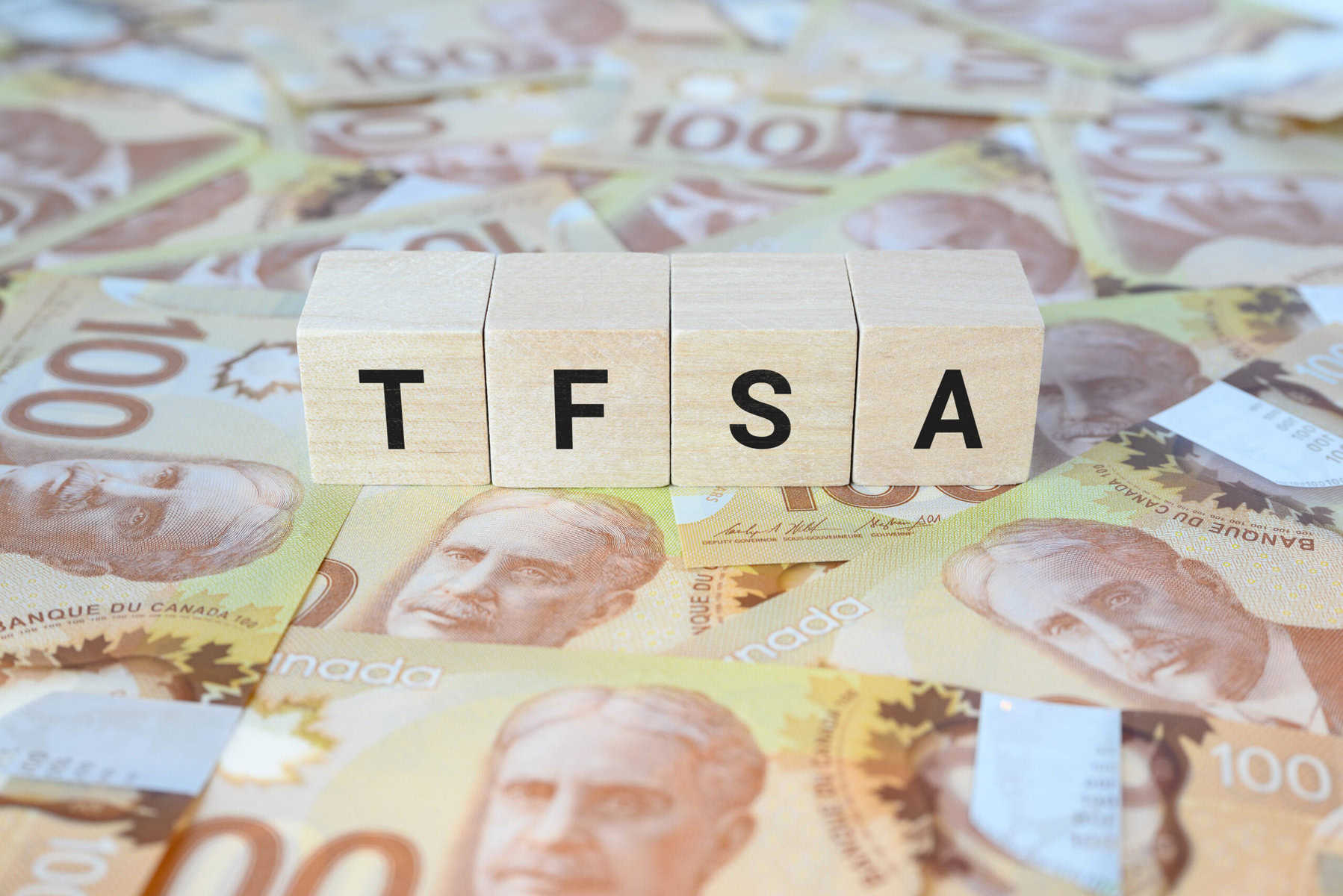
I personally think the Tax-Free Savings Account (TFSA) is arguably the best investment account available to Canadians. Ironically, its biggest weakness may be its name. The word savings leads many people to treat the account like a high-interest savings account, parking cash or guaranteed investment certificates (GICs) inside it for years.
While there is certainly a place for cash, particularly emergency funds, using all of your TFSA room that way can mean giving up one of the account’s biggest advantages: decades of tax-free compounding. Once you build up a decent-sized nest egg in a TFSA, you can let it ride for further growth or set it to generate passive income.
Inflation compounds, too
One reason cash can quietly become expensive is inflation. Many people focus on the annual Consumer Price Index (CPI) figure. If annualized inflation is running at 2% or 3%, it may not sound particularly alarming.
The problem is that inflation compounds just like investment returns do. Each year’s price increases build on the previous year’s increases. Over a decade or two, even modest inflation can substantially reduce purchasing power.
That means cash carries its own form of risk. While the account balance may not decline, its ability to buy goods and services steadily erodes over time unless investment returns outpace inflation.
For long-term investors, protecting purchasing power is often just as important as protecting principal. The stock market may be volatile, but it’s your best shot at compounding capital aside from real estate.
A simple TFSA strategy to try
One of the biggest mistakes investors make is believing they need to predict the future. They spend time trying to determine which country will outperform, which sector will lead the market next year, or which individual company will become tomorrow’s winner.
The reality is that nobody knows consistently. A simpler approach is to own all of them. Vanguard Growth ETF Portfolio (TSX:VGRO) was built around exactly that philosophy.
VGRO maintains a target allocation of approximately 80% equities and 20% fixed income. Through a collection of underlying exchange-traded funds (ETFs), investors gain exposure to Canadian stocks, U.S. stocks, international developed markets, emerging markets, and a diversified portfolio of global bonds.
The portfolio automatically rebalances itself, so investors never need to decide when to shift money between regions or asset classes. The ETF also remains inexpensive, charging a 0.22% management expense ratio (MER).
For most long-term investors, the strategy can be remarkably straightforward. Reinvest the quarterly distributions. Add new money whenever you receive additional TFSA contribution room each year. Then leave the portfolio alone and allow compounding to work.
Sometimes the simplest investment plan is also the hardest to stick with, but history suggests patience has been one of investors’ greatest advantages.
The post Maximizing Returns: How to Best Use Your TFSA in 2026 appeared first on The Motley Fool Canada.
Should you invest $1,000 in Vanguard Growth ETF Portfolio right now?
Before you buy stock in Vanguard Growth ETF Portfolio, consider this:
The Motley Fool Canada team has identified what they believe are the top 10 TSX stocks for 2026⦠and Vanguard Growth ETF Portfolio wasnât one of them. The 10 stocks that made the cut could potentially produce monster returns in the coming years.
Consider MercadoLibre, which we first recommended on January 8, 2014 … if you invested $1,000 in the âeBay of Latin Americaâ at the time of our recommendation, youâd have over $17,000!*
Now, it’s worth noting Stock Advisor Canada’s total average return is 97%* – a market-crushing outperformance compared to 88%* for the S&P/TSX Composite Index. Don’t miss out on our top 10 stocks, available when you join our mailing list!
Get the 10 stocks instantly #start_btn6 { background: #0e6d04 none repeat scroll 0 0; color: #fff; font-size: 1.2em; font-family: 'Montserrat', sans-serif; font-weight: 600; height: auto; line-height: 1.2em; margin: 30px 0; max-width: 350px; text-align: center; width: auto; box-shadow: 0 1px 0 rgba(0, 0, 0, 0.5), 0 1px 0 #fff inset, 0 0 2px rgba(0, 0, 0, 0.2); border-radius: 5px; } #start_btn6 a { color: #fff; display: block; padding: 20px; padding-right:1em; padding-left:1em; } #start_btn6 a:hover { background: #FFE300 none repeat scroll 0 0; color: #000; } @media (max-width: 480px) { div#start_btn6 { font-size:1.1em; max-width: 320px;} } margin_bottom_5 { margin-bottom:5px; } margin_top_10 { margin-top:10px; }* Returns as of July 6th, 2026
More reading
Fool contributor Tony Dong has no position in any of the stocks mentioned. The Motley Fool has no position in any of the stocks mentioned. The Motley Fool has a disclosure policy.
Related Articles

If I Could Only Buy and Hold a Single Stock, This Would Be It
Concentrating all on a single stock is universally a bad idea, but I would make...
This is the TFSA Balance You’ll Likely Need to Retire Comfortably in Canada
A $500,000 TFSA goal sounds big, but a simple, low-fee S&P 500 ETF like VFV...
2 TSX Dividend Stocks I’d Hold for the Next Decade
These TSX dividend stocks consistently generate solid earnings, produce healthy...
TSX Today: What to Watch for in Stocks on Monday, July 13
The TSX extended its winning streak on Friday as stronger-than-expected Canadian...