Mukul Agrawal Stock: Can Its 70% Correction and Semiconductor Play Ride Micron’s Memory Boom?
Alex Smith
3 hours ago
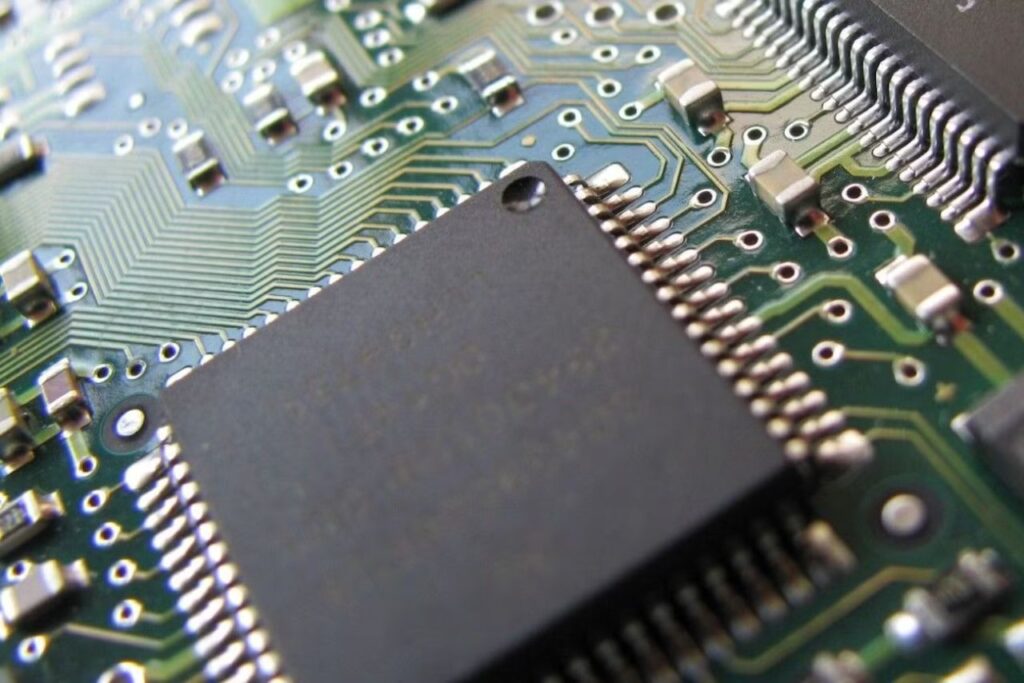
Synopsis: After correcting nearly 70% from its peak, Sahasra Electronic Solutions is looking to revive growth through semiconductor packaging, AI-driven memory demand, and domestic manufacturing expansion. With ambitious revenue targets, merger plans, and India’s US$150 billion semiconductor opportunity, can the company regain investor confidence and benefit from the global memory boom?
The global semiconductor sector has entered a new growth phase powered by AI and cloud computing, along with increased demand for advanced memory solutions. While global players like Micron are increasing capacities to meet this demand, there are a number of Indian firms which are planning to gain prominence in semiconductor packaging and memory solutions.
Amongst these, Sahasra Electronic Solutions stands out. But now that the stock has corrected about 70% from its peak, the emphasis has shifted from potential to performance. The real issue is whether improvement in fundamentals can restore investors’ confidence in the company. With a market cap of Rs 755 crore, the shares of Sahasra Electronic Solutions Ltd are trading at Rs 302 and are trading at a PE of 53 compared to their industry’s PE of 26.
A Sharp Correction Raises Questions
The semiconductor market in India continues to draw interest from investors as increased adoption of artificial intelligence, creation of data centres and computing lead to higher demand for memory chips in the world economy.
While international corporations like Micron are enjoying these advantages, Indian firms are trying to develop competencies in packaging and memory sectors. One of such companies is Sahasra Electronic Solutions. At the same time, although the company operates in a very promising sector, its shares have dropped by about 70% from their peak price.
This happened because of poor execution on the part of the company rather than lack of future opportunities. According to the management in FY25, the year was influenced by geopolitical tensions worldwide and new trade policies in the US, which reduced order inflow and exports. Margins also suffered due to moving to low-margin businesses in the domestic market.
Why the Business Lost Momentum
Traditionally, the export sector had accounted for about 80-90% of Sahasra’s revenues. However, as the external demand environment deteriorated, the share of the export sector fell to about 50-55%, changing the structure of the revenues of the company. Despite the success of expanding the business domestically, domestic orders brought in lower margins, lowering profits.
The semiconductor segment was also impacted adversely. The management had counted on the memory and eSIM segments to be profitable during FY26. However, the approval process for the production of eSIMs took much longer than expected, with the commercial agreement being signed in October 2025 as a result of late approval by customers. Full-scale production will now start from next calendar year onwards.
In addition to that, prices for the memory segment were depressed in the first half, leading to a delay in earnings recovery. Consequently, the semiconductor division remained in an investment mode while the customer qualification cycle was also longer than expected. All these factors contributed to the fall in the stock price.
Early Signs of Recovery
However, despite the challenging financial year FY25, it seems that FY26 has been started on more promising terms. In the first half of FY26, the firm reported Rs 58.16 crore in revenues and maintained the EBITDA margin at 12.63% and the PAT margin at 15.49%, while management expects outperformance in the second half relative to the first one. Furthermore, the firm reiterated its standalone revenue guidance of Rs 130 crore in FY26.
In addition, the firm has also diversified its business model from exporting through the entry of EV chargers, industrial electronics, metering products, automotive electronics and GPS tracking solutions. Further investments made in two SMT lines and automation are likely to boost up the firm’s production capacity.
Finally, another positive aspect is the confidence that ace investor Mukul Agrawal has shown in the company, with his holding rising from 2.26% in March 2025 to 2.48% in September 2025 and then to 2.76% in March 2026 despite the stock’s trading well below its highs.
Why Memory Could Become the Next Growth Driver
The most noteworthy highlight from management’s perspective is the improvement in the outlook for the semiconductor business. As per management, the quick uptake of AI has led to an immense rise in global memory demand, creating shortages in several memory segments.
Capitalising on the earlier stockpiling of inventory, Sahasra feels well-positioned to increase packaging and cater to domestic and international clients. Further, the company is also broadening its memory segment to include advanced packages for NAND Flash, eMMC and other high-end memory products. In addition to contracts that have been signed with international clients as well as numerous Indian clients, the company hopes that these measures will help in boosting semiconductor revenues in the future.
With better execution going ahead as guided, the rise in memory demand along with increasing domestic capacity and the semiconductor industry of India may provide a platform for a recovery after a sharp fall in the stock price.
India’s Semiconductor Opportunity
Apart from the successful execution of their plan, management sees the overall industry prospects as very attractive. It mentioned that India’s electronics market was seen to grow to US$400-500 billion in a few years ahead, whereas the semiconductor market could grow from around US$30 billion to US$150 billion.
Taking into consideration various government programmes like ISM 2.0, management feels that India has entered a positive phase for electronics and semiconductor companies. Management also intends to take part in the ISM 2.0 program for growth in the semiconductor business.
Expansion Plans Gather Pace
Though the semiconductor operations of the company are still in the investment stage, there are various milestones which have already been achieved, according to management. In FY26, the company has improved its domestic client base, but it has managed to keep a good demand from Europe and the US for its memory solutions.
The export of semiconductors constituted more than 60% of its semiconductor operations, while the executable order book was approximately Rs 68.5 crore in FY26. In addition to that, the company is increasing its production capacity by scaling up its SMT operations to 10 production lines. This would enable the company to take up even large EMS and IT hardware projects.
Roadmap for Higher Revenue
There has been a clearly defined path set out for the growth of the semiconductor business by management. The management expects to generate revenues of approximately Rs 50 crore from the semiconductor business during FY27 while managing to breakeven operationally.
Going forward, semiconductor revenues are expected to grow to Rs 150 crore during FY28, while management feels that the semiconductor business has the potential to grow up to Rs 600-650 crore in the next four-five years.
The proposed consolidation of the unlisted entities of the group in the future remains an essential element of the company’s strategy going forward. Upon completion, management aims for the combined entity to target revenues of Rs 275-300 crore with profit margins of approximately 15%.
Outlook
Having already recovered almost 70% of the loss since its peak, Sahasra Electronic Solutions is now trying to restore its reputation by executing well rather than giving lofty forecasts.
With the diversification into domestic manufacturing, improving memory requirements, increased semiconductor capacity, and participation in India’s semiconductor space, the company seems to have entered a new cycle from that of FY25.
But the turnaround still remains contingent upon success in execution. This involves meeting its semiconductor revenue goals, executing the planned projects, completing the merger, and remaining profitable as the firm grows.
In case all these factors come together with the rising AI-related demands for memory products, the firm is likely to emerge as a winner in the semiconductor space of India’s coming cycles. The issue for investors is whether this operational turnaround can ever lead to any recovery in its share price after such a steep correction in the sector.
Disclaimer: The views and investment tips expressed by investment experts/broking houses/rating agencies on tradebrains.in are their own, and not that of the website or its management. Investing in equities poses a risk of financial losses. Investors must therefore exercise due caution while investing or trading in stocks. Trade Brains Technologies Private Limited or the author are not liable for any losses caused as a result of the decision based on this article. Please consult your investment advisor before investing.
The post Mukul Agrawal Stock: Can Its 70% Correction and Semiconductor Play Ride Micron’s Memory Boom? appeared first on Trade Brains.
Related Articles

3 Defence Stocks Likely to Benefit After DAC Clears ₹52,000 Cr Defence Procurement
Synopsis: The Defence Acquisition Council’s ₹52,000 crore approvals are set to b...
HEC Infra Bags ₹48 Cr Order From BPCL for 66 KV Switchyard Project
Synopsis: HEC Infra Projects secured a Rs. 48 crore BPCL order for a 66 KV switc...

3 Solar Pump Stocks Jump Up to 8% After Securing Orders Worth ₹826 Cr
Synopsis: Three listed solar pump manufacturers have landed fresh orders from Ma...
Stocks to Watch: TCS, DMart, and 6 Other Companies Announcing Q1 Results This Week
Synopsis: Eight companies, including Anand Rathi Wealth, G M Breweries, TCS, Jus...