Ola Electric Growth Strategy: 3 Strategies Ola is using silently to turnaround their business
Alex Smith
6 months ago
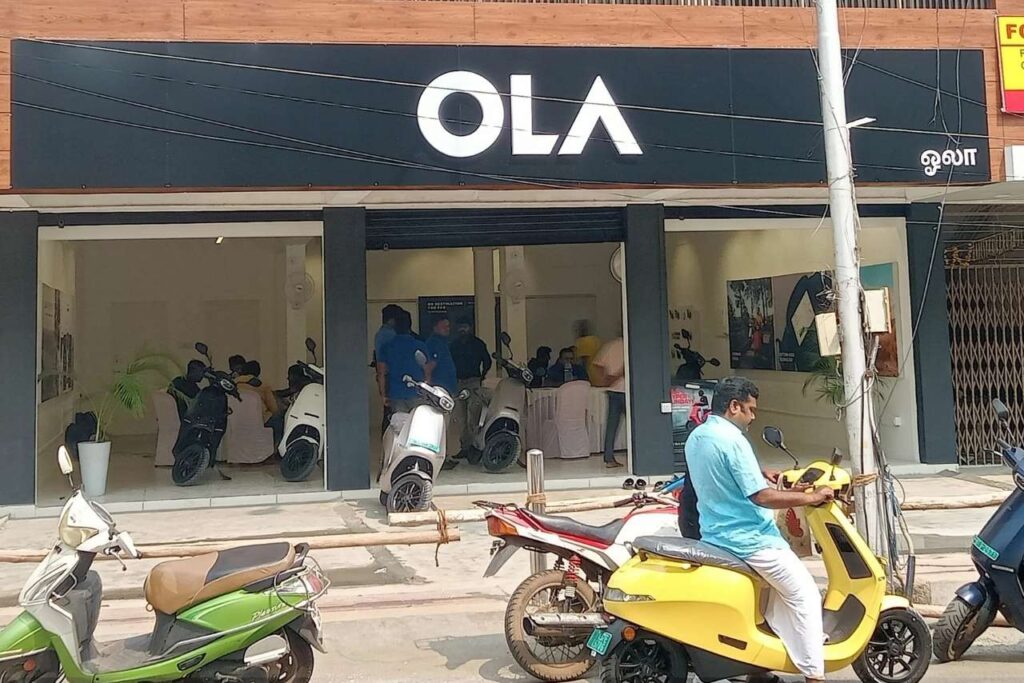
SYNOPSIS: Ola Electric Mobility faces slowing demand, cash burn and stock pressure, but recent steps on service upgrades, promoter pledge clearance and new energy products signal an attempt at operational and strategic recovery.
Ola Electric Mobility Limited has stayed in the spotlight ever since its market debut. Over the past year, the company has struggled with declining market share, heavy cash burn, and a sharp decline of over 62 percent in its stock price.
It is an Indian electric vehicle (EV) manufacturer engaged in the development and production of EVs and core components, including battery packs, motors and vehicle frames through vertically integrated operations. It conducts in-house R&D and is building the Ola Gigafactory for cell production. Ola follows a direct-to-customer (D2C) distribution approach to sell its products.
While headlines around the company have mostly been negative so far, this could be one of the rare moments when Ola Electric is making news for a more positive reason. In this article, we’ll break down both the challenges and the bright spots, along with the latest developments shaping the company’s journey.
What’s gone wrong with Ola
In Q2 FY26, Ola Electric reported a consolidated revenue from operations of Rs. 690 crores, a decline of nearly 17 percent QoQ and 43 percent YoY. The company reported a net loss of Rs. 418 crore for the quarter, reflecting a modest improvement of over 2 percent QoQ and 15 percent YoY. Despite the sequential improvement in losses, the company cautioned that it expects softer demand for the remainder of the fiscal year and subsequently lowered its full-year sales and revenue guidance.
Ola significantly cut its second-half sales expectations to around 1,00,000 vehicles, revising its full-year estimate to roughly 2,21,000 units – more than 40 percent below its earlier projection of 3,25,000-3,75,000 units.
The company’s liquidity position has also weakened. Net cash declined sharply to Rs. 160 crore as of September 2025, compared with Rs. 480 crore at the end of March, indicating continued cash burn and pressure on working capital.
Turnaround Strategies
I. Launch of Hyperservice CentresOla Electric Mobility has often made headlines not just for weak financials and poor stock performance, but also for customer complaints around service delays – driven by shut service centres, slow response times, and spare-part shortages.
To address these long-standing issues, Ola announced a major upgrade to its service ecosystem on 23rd December with the launch of “Hyperservice Centres”, designed to offer a same-day service guarantee to eligible customers at no additional cost. The rollout begins in Bengaluru, where the first Hyperservice Centre is now operational in Indiranagar, with existing service centres set to be progressively upgraded.
The new format aims to make servicing faster, simpler, and more transparent. Customers can get their vehicles serviced within the same day while tracking the entire process digitally – from check-in to delivery. The centre features a customer lounge, free Wi-Fi, and real-time service updates to improve trust and convenience.
Beyond company-owned centres, Ola is also scaling Hyperservice into an open platform, allowing independent garages, mechanics, and fleet operators to access genuine Ola spare parts, diagnostic tools, and service training modules. Spare parts can now be purchased directly through the Ola Electric app and website, removing middlemen.
Additionally, Ola has rolled out a nationwide in-app service appointment feature, enabling users to book slots, track service status, and manage all service-related needs directly within the app.
II. Promoter Pledge-FreeOn 18th December, Ola Electric Mobility announced that its promoter and CEO, Bhavish Aggarwal, has completed the sale of a small portion of his personal stake to fully repay a promoter-level loan of around Rs 260 crore.
Following this update, the company’s shares rose over 4 percent on 23rd December, as it announced that the proceeds from the stake sale were used for the repayment of debt, along with interest and related charges, while the remaining amount will be utilised to meet applicable tax liabilities in due course.
With the loan fully repaid, all promoter-level share pledges, aggregating to nearly 3.93 percent of the company’s total equity, have now been entirely released. After this transaction, the promoter group continues to hold a 34.6 percent stake in the company.
III. New Bet: Home BatteriesAggarwal’s turnaround strategy also centres on Ola Shakti, a residential Battery Energy Storage System (BESS) – priced between Rs. 1.2-Rs. 1.5 lakh – built using the company’s in-house 4680 lithium-ion cells. Positioned as India’s first residential BESS product, it marks Ola’s entry into the energy solutions segment and is expected to open new revenue streams while improving Gigafactory utilisation.
The company is targeting Rs. 100 crore in revenue in the March quarter alone, implying sales of about 7,000-8,000 units, which the company believes are achievable. Looking ahead, Ola aims to generate at least Rs. 1,000 crore in revenue from the Shakti product line in FY27.
Bottom Line
Ola Electric is clearly at a crossroads. While near-term challenges around demand, profitability, and liquidity remain significant, the company’s recent actions – improving service infrastructure, removing promoter pledges, and diversifying into home energy storage – indicate a conscious effort to stabilise operations and rebuild confidence.
The success of these initiatives will depend on execution, market acceptance, and the company’s ability to manage cash flows while scaling new businesses. For now, Ola’s turnaround story is still unfolding.
Disclaimer

The views and investment tips expressed by investment experts/broking houses/rating agencies on tradebrains.in are their own, and not that of the website or its management. Investing in equities poses a risk of financial losses. Investors must therefore exercise due caution while investing or trading in stocks. Trade Brains Technologies Private Limited or the author are not liable for any losses caused as a result of the decision based on this article. Please consult your investment advisor before investing.
The post Ola Electric Growth Strategy: 3 Strategies Ola is using silently to turnaround their business appeared first on Trade Brains.
Related Articles

Alkem Pharma Unit Signs Fresh Pact to Move Closer to Swiss Medtech Acquisition
Synopsis: Alkem Laboratories’ wholly owned subsidiary Alkem Medtech Privat...

Monarch Surveyors Bags ₹5.08 Cr DPR Consultancy Order from Jaipur Development Authority
Synopsis: Monarch Surveyors and Engineering Consultants Limited has secured a Le...

IT Stock Jumps 9% After Becoming an Anthropic Authorised Reseller for Amazon Bedrock
Synopsis: IT stock shares surged 9% after the company became an Anthropic Author...

Why Did Dr. Reddy’s Shares Jump 5% Today?
Synopsis: The share of this pharmaceutical company gained nearly 5 percent after...