Railway Stock: Is IRCTC’s ticketing business actually driving the most revenue?
Alex Smith
6 months ago
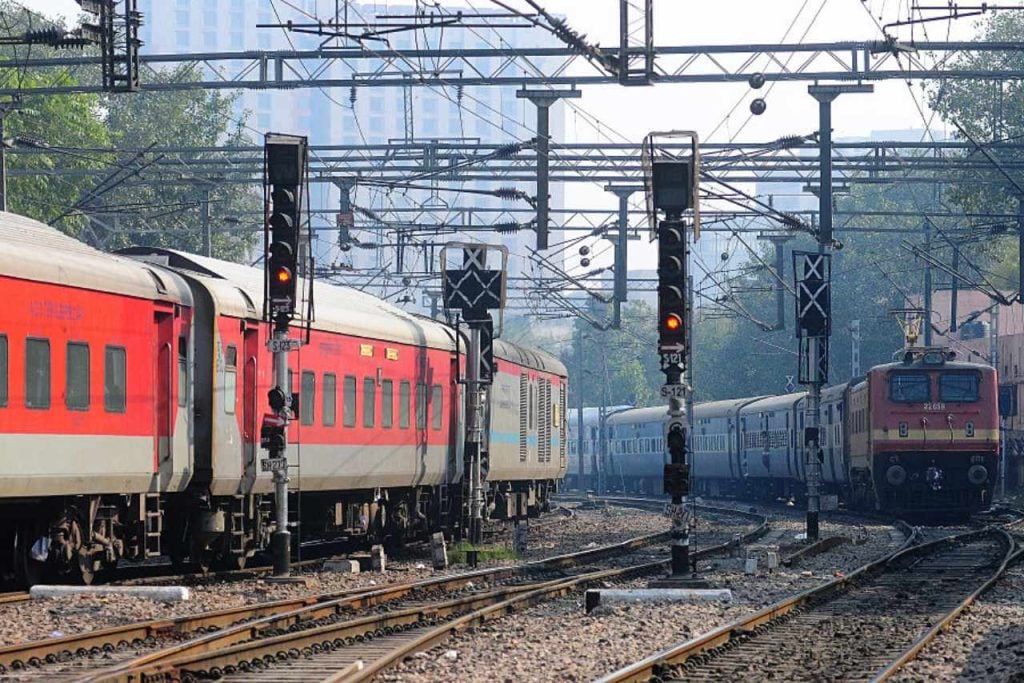
The shares of a Navratna PSU company, specializing in a range of integrated services for Indian Railways and tourism, such as internet ticketing, catering and hospitality services on trains and stations, and tourism promotion through exclusive packages and tourist trains, are gaining attention. In this article, we will explore how significant IRCTC’s ticketing monopoly is to its overall revenue in the latest quarter.
With a market capitalization of Rs. 54,488.00 crores on Wednesday, the shares of Indian Railway Catering and Tourism Corporation Ltd jumped upto 0.2 percent, making a high of Rs. 685.95 per share compared to its previous closing price of Rs. 684.40 per share.
Indian Railway Catering and Tourism Corporation (IRCTC) is a key public sector enterprise under the Ministry of Railways, specializing in internet ticketing, catering, packaged drinking water, and tourism services. As a strategic arm of Indian Railways, IRCTC plays a crucial role in enhancing the passenger experience while contributing significantly to the national transport ecosystem.
The company generates revenue through its diversified verticals, including online ticket booking, on-board catering, hospitality services at stations, travel packages, and exclusive luxury train experiences, positioning itself as a unique, integrated service provider in the travel and tourism sector.
IRCTC has improved its digital services and customer support, making it easier and safer for millions of people to book train tickets every day. By running its services efficiently and at a large scale, the company helps boost tourism and provides reliable service. This makes IRCTC an important part of India’s travel system and overall economic progress.
How Significant is IRCTC’s Ticketing Monopoly to the company?
The company’s performance across its key segments highlights IRCTC’s strategic focus on growth and service diversification. Below is a breakdown of the consolidated segment-wise revenue for the quarter ended Q2 FY26. This comparison will help us understand the significance of the IRCTC’s Ticketing Monopoly to the overall company’s revenue.
Catering
Catering, which includes on-board meals, e-catering, pantry car operations, and food services at station-based outlets and executive lounges, is a major contributor to IRCTC’s service portfolio. In Q2 FY26, the segment generated Rs. 519.66 crore, compared to Rs. 481.95 crore in Q2 FY25, reflecting a year-on-year rise of 7.8 percent.
Rail Neer
Rail Neer, IRCTC’s packaged drinking water brand, caters primarily to railway passengers across stations and trains. It plays a key role in ensuring access to safe and hygienic drinking water while supporting the company’s non-ticketing revenue. In Q2 FY26, the segment recorded revenue of Rs. 94.06 crore, slightly higher than Rs. 90.21 crore in Q2 FY25, reflecting a rise of 4.2 percent.
Internet Ticketing
Internet Ticketing, IRCTC’s flagship segment, includes the online booking of railway tickets through its website and mobile app, along with revenues from service charges, payment gateway fees, and advertising on the platform. In Q2 FY26, the segment earned Rs. 385.87 crore, up from Rs. 370.95 crore in Q2 FY25, reflecting a year-on-year growth of 4.0 percent.
Tourism
Tourism, which includes travel packages, Bharat Gaurav trains, hotel bookings, and other leisure travel services offered by IRCTC, continues to expand its footprint in the domestic travel market. In Q2 FY26, the segment generated Rs. 149.52 crore, up from Rs. 124.44 crore in Q2 FY25, marking a robust year-on-year growth of 20.15 percent.
Financials & Others
The company’s revenue rose by 7.71 percent from Rs. 1,064 crores to Rs. 1,146 crores in Q2FY25-26. Meanwhile, Net profit rose from Rs. 308 crores to Rs. 342 crores in the same period.
The company has demonstrated strong financial performance with a robust 20.0 percent compound annual growth rate (CAGR) in profits over the last five years. Its return on capital employed (ROCE) stands at an impressive 49.0 percent, while return on equity (ROE) is solid at 37.2 percent, further underpinned by a strong three-year average ROE of 40.4 percent.
With a low debt-to-equity ratio of just 0.02, the company has maintained a healthy balance sheet. Additionally, it has consistently delivered value to shareholders, with a dividend payout ratio of 46.4 percent, reflecting its commitment to returning profits to investors while ensuring sustainable growth.
Capacity Roadmap
Rail Neer is expanding capacity with the Bilaspur plant restarting soon at 72,000 bottles/day, and the Danapur and Ambernath plants are being upgraded from 1 Lakh to 3 lakh bottles/day each. Additionally, four new plants are planned across India, with upgrades expected in 12 months and new plants in the next fiscal year.
Outlook and Management Confidence
Management reiterated confidence in sustaining growth via digital ecosystem strengthening, operational efficiency, and diversification into payments, unified travel, MICE, and capacity additions in Rail Neer.
Over Next 6–12 Months
Over the next 6–12 months, it will prioritise submitting the final application by January, ramping up internal GMV capture from 20 percent to 100 percent (targeting ~Rs 70,000 crore), and strengthening the organizational structure of the PA subsidiary.
GMV is the total value of transactions processed, and if the payment aggregator captures more of its internal GMV (from 20 percent to 100 percent of Rs. 70,000 crore), it handles more payments itself, earns more fees, and reduces reliance on outside processors, while its PA subsidiary grows to manage the higher volume.
Along with it, they are focused on onboarding Amrit Bharat pre-paid catering, ensuring system readiness and smooth roll-out and rack migration from SBD to cluster contracts and its impact on execution and margins.
For Rail Neer, monitor the Bilaspur restart timeline (72k bpd) and debottlenecking efforts at Danapur/Ambernath (to 3 lakh bpd each) and also keep an eye on site selection and timelines for four new plants, as well as capex cadence. In Tourism, drive the MICE pipeline from government/PSUs with a margin target of 8 percent, while ensuring Bharat Gaurav train deployments and Maharajas’ Express bookings maintain a “highest ever” trajectory.
Conclusion
IRCTC’s ticketing monopoly remains one of the key drivers of its revenue, but the company’s performance across various segments highlights its strategic push for growth and service diversification. In Q2 FY26, IRCTC’s total revenue from key segments was as follows: Internet Ticketing revenue stood at Rs. 385.87 crore, while the major contributor, Catering, generated Rs. 519.66 crore.
Other segments, such as Tourism and Rail Neer, also contributed to a lesser extent. While Internet Ticketing accounted for revenue of Rs. 385.87 crore (33 percent of the overall revenue of Rs. 1,149.13 crore), which is indeed a significant contributor, catering still generates Rs. 519.66 crore, making it the leading segment for now.
Written by Sridhar J
Disclaimer

The views and investment tips expressed by investment experts/broking houses/rating agencies on tradebrains.in are their own, and not that of the website or its management. Investing in equities poses a risk of financial losses. Investors must therefore exercise due caution while investing or trading in stocks. Trade Brains Technologies Private Limited or the author are not liable for any losses caused as a result of the decision based on this article. Please consult your investment advisor before investing.
The post Railway Stock: Is IRCTC’s ticketing business actually driving the most revenue? appeared first on Trade Brains.
Related Articles
5 Stocks Recommended by Top Brokerages That Can Deliver Returns of Up to 45%
Synopsis: Five top brokerages have issued fresh Buy calls across IT, FMCG, trave...

₹3,200 Cr Order Book: Can This Smart Meter Stock Evolve Into an Electrical Solutions Co.?
Synopsis: HPL Electric delivered a record FY26, backed by strong smart meter dem...
Tata Motors: Can It Double Passenger Vehicle Volumes and Reach 20% Market Share by FY31?
Synopsis: Tata Motors targets strong PV growth with EV-led expansion, aiming to...
KPIT Technologies: Will Q1 Results Be Strong Enough For A Turnaround?
Synopsis: KPIT Technologies has spent the past year explaining why growth slowed...