Reliance BP vs Govt of India: What is the $30 Billion Dispute all about?
Alex Smith
5 months ago
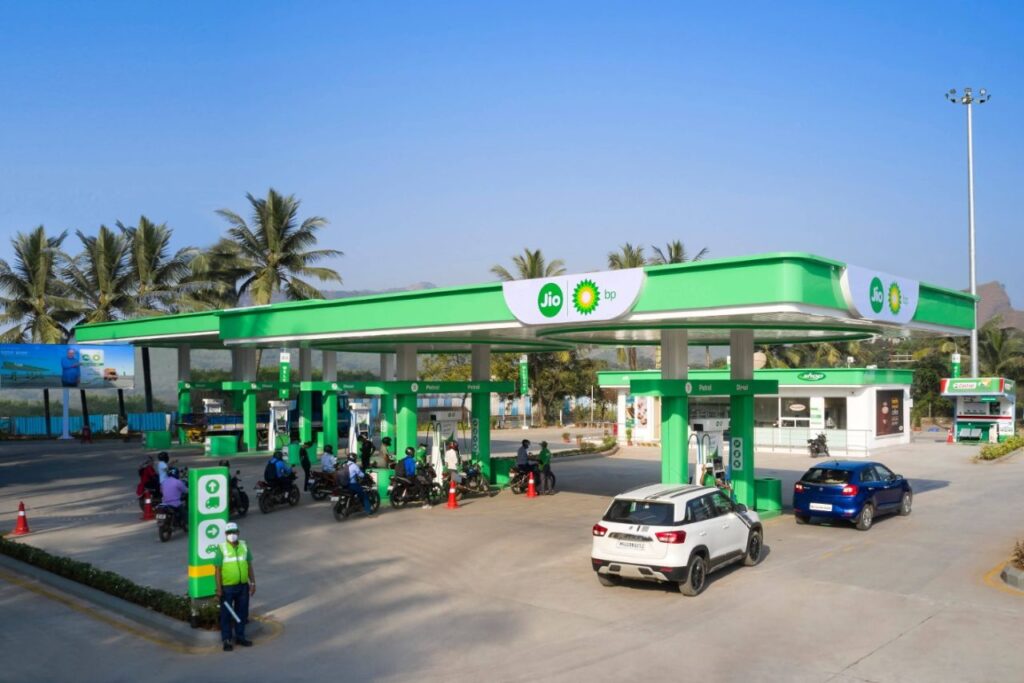
SYNOPSIS: India and Reliance-BP are locked in a long-running arbitration over alleged KG-D6 gas underproduction, with the government citing a $30 billion claim, while Reliance disputes the figure and pegs exposure at $247 million.
The Indian Government is seeking more than $30 billion in compensation from Reliance Industries and BP – the largest compensation claim ever raised against a company in India. So, what’s really going on, and why has the government taken such a strong stand against a corporate entity? In this article, we break down the issue in simple terms and answer all the key questions you need to know.
What is the dispute?
At the centre of the issue is the government’s claim that Reliance Industries and BP failed to produce the agreed volumes of natural gas from offshore fields in the Krishna Godavari basin. According to the government, alleged mismanagement and operational decisions led to a significant loss of gas reserves from the D1 and D3 fields.
The matter has been under arbitration since 2016 and is currently being heard by a three-member tribunal. As per Reuters, a verdict is expected around mid-2026, though the decision could later be challenged in Indian courts.
The D1 and D3 blocks were once seen as a game-changer – India’s first major deepwater gas project aimed at boosting domestic energy security. However, the project ran into multiple hurdles, including water seepage, falling reservoir pressure, and prolonged disagreements over cost recovery. These challenges meant actual output fell well short of early expectations, something both Reliance and the government have acknowledged in earlier statements.
Government Allegations
The government’s case rests on a sharp gap between what was initially promised and what was eventually produced. In 2012, the oil ministry told Parliament that Reliance Industries Limited (RIL) had originally estimated recoverable gas reserves of 10.3 trillion cubic feet (tcf) from the D1 and D3 fields, a figure that was later revised down drastically to 3.1 tcf. In reality, actual production from these fields ended up being just about 20 percent of the original estimate.
Based on this shortfall, the government argues that Reliance and BP should compensate the state for the value of gas that was never produced. During arbitration proceedings, officials have maintained that all gas discovered under the contract belongs to the state and that poor mismanagement led to the loss of a large portion of reserves.
The government has further alleged that Reliance followed “unduly aggressive” production practices, drilling gas from only 18 wells instead of the originally planned 31, and proceeding without adequate supporting infrastructure. According to officials, these decisions damaged the reservoir.
Both Reliance and BP strongly dispute these allegations and say no compensation is due.
The gas block was awarded to Reliance and its partners in 2000 under a production-sharing contract, which allowed the company to first recover project costs from oil & gas sales before sharing profits with the government. Initially, the government’s profit share stood at 10 percent, with scope to rise after cost recovery. As per the contract terms, all disagreements are to be resolved through arbitration by a mutually agreed tribunal.
Who is BP and how is it connected to India?
BP (British Petroleum) is a UK-based global integrated energy major, with operations spanning oil, gas, and renewables across several countries, including India. BP’s India journey took a major turn on 21st February 2011, when it entered into a strategic alliance with Reliance Industries.
As part of this deal, BP acquired a 30 percent stake for about $7.2 billion in 21 oil & gas production-sharing contracts (PSCs) operated by RIL in India, including the key KG-D6 block. Collectively, these blocks cover nearly 2.2 lakh square kilometres.
BP holds participating interests in two PSA blocks – KG-D6 (33.33 percent) and NEC-25 (33.33 percent), and two revenue-sharing contracts – KG-UDWHP-2018/1 (40 percent) and KG-UDWHP-2022/1 (40 percent). All these blocks are operated by Reliance Industries.
Later on 18th November 2011, the partnership expanded further with the formation of India Gas Solutions Private Limited, a 50:50 joint venture between BP and Reliance. The JV focuses on global sourcing and marketing of natural gas in India.
More recently, in February 2025, BP strengthened its India presence by signing an agreement with Oil & Natural Gas Corporation (ONGC). Under this deal, BP will act as the technical services provider for ONGC’s Mumbai High field, India’s largest oil & gas field, aiming to improve production efficiency over a 10-year period.
Why is KG-D6 project such a big deal for India?
The KG-D6 project was seen as a landmark moment for India’s energy sector. On 18th December 2020, RIL and BP announced the start of gas production from the R Cluster, an ultra-deep-water field located in the KG-D6 block off India’s east coast.
What made this project truly special was its scale and complexity – together, the R Cluster, Satellite Cluster, and MJ fields were producing about 30 million metric standard cubic metres per day (MMSCMD), contributing nearly 30 percent of India’s total gas production.
Strategically, KG-D6 was India’s first major ultra-deepwater natural gas project, with expectations to reduce dependence on gas imports, strengthen energy security, and significantly boost domestic gas supply.
Reliance Industries Clarification
As per the 29th December exchange filings, Reliance Industries dismissed reports claiming that the Indian government had sought $30 billion in compensation over alleged underproduction of gas from the KG-D6 block, calling such claims “factually incorrect.” The company said publishing such reports based on unnamed and unidentified sources was inappropriate and irresponsible.
The company further clarified that there is no $30 billion claim against either itself or BP. According to the company, the government’s claim related to the KG-D6 block is ~$247 million, a figure that has been consistently and appropriately disclosed in its audited annual financial statements in line with regulatory disclosure requirements.
Disclaimer: The views and investment tips expressed by investment experts/broking houses/rating agencies on tradebrains.in are their own, and not that of the website or its management. Investing in equities poses a risk of financial losses. Investors must therefore exercise due caution while investing or trading in stocks. Trade Brains Technologies Private Limited or the author are not liable for any losses caused as a result of the decision based on this article. Please consult your investment advisor before investing.

The post Reliance BP vs Govt of India: What is the $30 Billion Dispute all about? appeared first on Trade Brains.
Related Articles

5 Engineering Stocks Quietly Building India’s Green Hydrogen Infrastructure to Look Out For
 Synopsis: India’s green hydrogen transition is not a fuel story it i...
6 Stocks That Have Delivered Returns of Up to 975% in the Last Year; Do You Own Any?
Synopsis: Several Indian stocks have delivered exceptional returns over the past...

Vivid Electromech Stock: Can 50% Data Centre Revenue and 3x Capacity Expansion Drive FY27 Growth?
Synopsis: Vivid Electromech is strengthening its position in data centres throug...
Infosys Shares Have Crashed Nearly 50% But Can It Ever Reach ₹2,000 Again?
Synopsis: Infosys shares have fallen nearly 50 percent from their peak despite t...