Responsible Trading Takes Center Stage as Prediction Market Safeguards Advance
Alex Smith
1 month ago
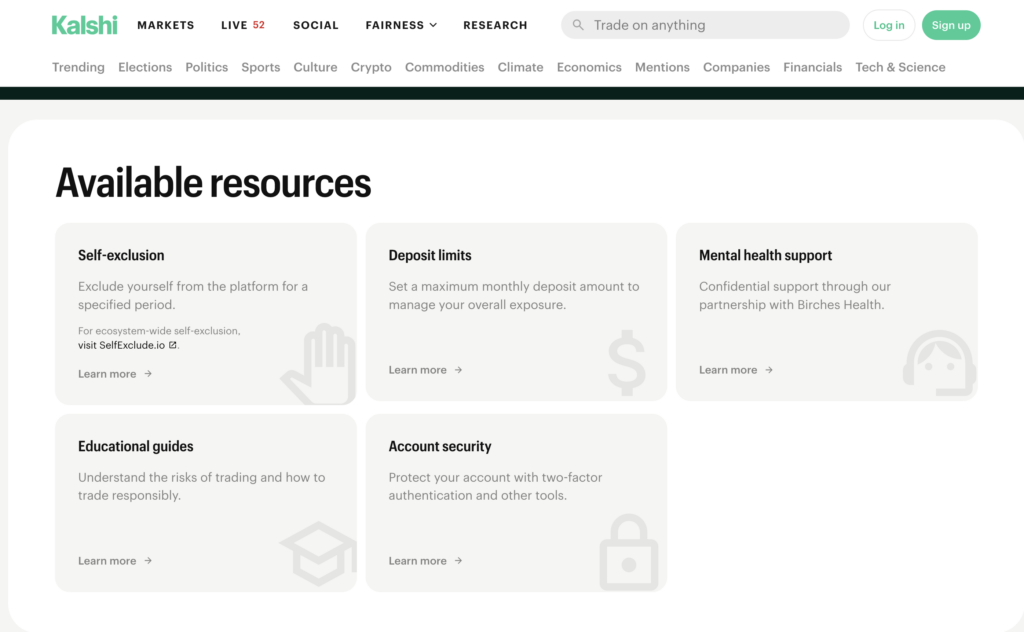
- ▸ Responsible trading protections in prediction markets remain largely voluntary, unlike in state-regulated betting markets.
- ▸ Kalshi and sportsbook-linked apps have introduced responsible trading tools, but protections vary widely across platforms.
- ▸ Comments from the National Council on Problem Gambling to the CFTC about a need for nationwide responsible trading requirements and recent research point to gambling-like risks and call for stronger safeguards.
The rapid rise of prediction markets has pushed a new class of event-based trading platforms into the spotlight, with billions of dollars flowing into contracts tied to elections, economics, sports, weather, entertainment and more. As those markets expand into areas that increasingly resemble traditional betting, they are also drawing closer scrutiny from regulators, lawmakers and public health advocates.
Unlike sportsbooks, which operate under state rules that require responsible gambling tools, prediction market platforms have not been subject to similar responsible trading mandates. That gap has become a focal point as policymakers weigh how to oversee contracts that, to many users, function similarly to wagering but are offered under a different regulatory framework.
At the state level, bills introduced in states like Illinois and New Jersey would require protections such as self-exclusion systems, deposit or spending limits, session reminders and problem gambling resources if prediction markets are allowed to operate. Regulators have also raised concerns in enforcement actions and public statements, arguing that these platforms lack the consumer protections built into state-regulated betting markets.
In Congress, lawmakers have taken a different approach but have pointed to similar risks. Proposals targeting sports event contracts have cited concerns about addiction and youth exposure, with lawmakers warning that younger users are being exposed to “addictive sports betting” through these markets. Rather than outlining specific safeguard requirements, many of those efforts have focused on restricting or banning certain types of contracts.
Advocacy groups have been more explicit. In comments recently submitted to the Commodity Futures Trading Commission (CFTC), which oversees prediction markets in the U.S., the National Council on Problem Gambling (NCPG) argued that prediction markets share key characteristics with gambling and should be subject to comparable safeguards, including tools that allow users to set limits or exclude themselves from trading.
Derek Longmeier, executive director of the Problem Gambling Network of Ohio (PGNO), tells DeFi Rate he has heard increasing concerns from problem gambling experts and professionals the organization works with in the state. “Prediction markets are increasingly emerging as a concern across the prevention and treatment landscape,” Longmeier says. “Because these products are growing faster than regulation and education, they are creating gaps in understanding, oversight, and harm mitigation. When products expand faster than safeguards, harm often follows.”
With pressure building, some platforms have begun introducing their own trader protections, raising a new question for the industry. Will responsible trading tools remain voluntary features developed by individual companies, or evolve into a standardized requirement as prediction markets continue to grow?
Kalshi pushes early lead on responsible trading tools
As the largest federally regulated prediction market platform in the U.S., Kalshi has been among the most visible operators as scrutiny around the sector has increased. The company has also been early in building out what it describes as responsible trading tools, introducing features designed to give users more control over their activity while positioning those efforts as part of a focus on trust and market integrity.
Kalshi formally rolled out its “Customer Protection Hub” in March 2025, introducing user safeguards including deposit caps, trading breaks and voluntary opt-outs.
No important financial innovation has ever been created without critics.
— Tarek Mansour (@mansourtarek_) March 24, 2025
• Credit cards were going to drive “reckless consumer spending”
• Mutual funds were seen merely as a way to speculate and risk people’s savings
• ETFs were feared because they could increase volatility… pic.twitter.com/iUsHcog9SK
By early 2026, Kalshi had consolidated those features within a dedicated Responsible Trading hub, which outlines available tools and how to use them across its app and website. The hub sits alongside a separate market integrity initiative focused on surveillance and enforcement, reflecting the company’s emphasis on both user safeguards and compliance infrastructure.
Kalshi has continued to expand those efforts this year. In April, the company became the first prediction market platform to integrate with a cross-platform self-exclusion system operated by Integrity Compliance 360. The system, known as SelfExclude, is designed to allow users to block themselves from trading across multiple participating platforms through a single enrollment, rather than setting limits on each account individually.
The company already offered platform-level self-exclusion, which allows users to restrict access to Kalshi for a defined period of time. The new integration extends that concept beyond a single platform, although its effectiveness depends on other operators choosing to participate. Kalshi is currently the first fully integrated partner, with additional platforms like Polymarket and Robinhood listed on the SelfExclude website as “coming soon.”
Protections remain uneven across platforms
Kalshi’s efforts represent one of the most developed responsible trading frameworks currently in place among standalone prediction market operators. Prediction platforms operated by traditional sportsbook companies have taken a different approach. Products such as DraftKings Predictions and FanDuel Predicts incorporate many of the same responsible gambling tools used in their sports betting products, including deposit limits, cool-off periods and self-exclusion. In some cases, those controls extend to a user’s account across a company’s entire ecosystem, applying to both prediction markets and sportsbook activity.
But those systems are carried over from existing sportsbook infrastructure, where safeguards are required by state law. Prediction market platforms, which are regulated at the federal level, are not subject to those mandates, leaving protections uneven across the industry.
Other prediction market platforms have introduced more limited forms of user controls. Platforms including Crypto.com and Robinhood provide tools that allow users to track positions, monitor activity and manage their accounts, reflecting their roots in trading and brokerage environments. Polymarket, one of the world’s largest prediction market platforms, offers similar visibility into positions and activity.
But those features generally stop short of the structured safeguards common in regulated betting markets, such as standardized limits or comprehensive self-exclusion systems. That gap has prompted growing calls for more consistent protections across all U.S. prediction market platforms.
Advocacy group calls for safeguards in CFTC rulemaking
The issue of consumer protections also surfaced in the federal rulemaking process at the CFTC. As part of its effort to develop a framework for prediction markets, the agency opened a public comment period through April 30 inviting input on how the platforms should be regulated. In its official Advanced Notice of Proposed Rulemaking (ANPRM), one of the questions the CFTC explicitly asks the public to weigh in on is: “What aspects of responsible gaming standards, such as self-exclusion programs, monetary or time limits, or advertising limits, disclaimers, or warnings, should the Commission consider in its public interest determination?”
Among the most detailed submissions came from the NCPG, which argued that prediction markets should be treated as a form of gambling regardless of how they are labeled.
“It is clear to NCPG that purchasing event contracts is functionally gambling,” the organization wrote. Based on that view, the group urged regulators to require platforms to offer safeguards designed to prevent and address gambling-related harm.
“We believe that any activity that is functionally gambling, including purchasing event contracts, can cause gambling harm to individuals and their loved ones” and “must be regulated to include protections against problem gambling,” the filing states.
NCPG’s comments lay out a detailed framework for those protections. It calls for platforms to provide users with clear account-level data, including amounts wagered, time spent on the platform and net profit or loss over a defined period. It also recommends that platforms prompt users to set limits on spending and time by default, while still allowing them to opt out, and enforce those limits by preventing further activity once thresholds are reached. In addition, the group proposed more granular controls, including the ability for users to exclude themselves from specific categories of markets, rather than only from a platform as a whole.
Outside the rulemaking process, the group has pushed for additional measures, including requiring platforms to prominently display the National Problem Gambling Helpline, now branded as 1-800-MY-RESET, across their websites, apps and advertising.
State problem gambling groups raise concerns about prediction markets
State-level efforts are also beginning to reflect problem gambling concerns related to event contract trading. In Ohio, a statewide campaign run by Ohio for Responsible Gambling has incorporated prediction markets into its “Pause Before You Play” messaging, warning that event-based trading platforms can carry risks similar to online gambling, particularly for under-21 traders, and encouraging users experiencing problems to seek help through the state’s problem gambling helpline.
In Nevada, where regulators are engaged in legal battles with prediction market platforms, problem gambling organizations have taken a more direct role. Groups including the Nevada Council on Problem Gambling have joined the fight in support of state regulators, backing efforts to restrict or block the platforms from operating in the state. In filings and public statements, those organizations have argued that prediction market platforms operate outside Nevada’s regulated betting system while offering products that resemble wagering, raising concerns about the absence of tools such as limits, self-exclusion and responsible gambling resources.
Longmeier agrees with the NCPG’s call for industry-wide standards requiring responsible trading tools and consumer protections similar to online gambling mandates, saying it would be a “meaningful and necessary step.”
Research raises questions about trading and gambling overlap
The issues raised by problem gambling advocates are echoed in a growing body of research examining the overlap between financial trading and gambling behavior. That research does not necessarily resolve whether prediction markets are legally gambling, but it does challenge the idea that labeling an activity as trading eliminates gambling-like risk.
In a recent report in Science Magazine, researchers described part of that framing as “terminological washing,” referring to the practice of replacing terms like betting with language like forecasting, information markets or financial instruments. The authors warned that such language can make gambling-like products appear more neutral or technical, even when users are still risking money on uncertain outcomes.
PGNO’s Longmeier says that the labeling of prediction market activity as trading is a serious concern, as it reduces the perceived risk and could “trigger relapse or substitute behaviors for individuals in recovery.”
“For people with disordered gambling, the framing matters,” he says. “If a product looks and feels like gambling and involves risking money on uncertain outcomes, but is not labeled or regulated as gambling, it can bypass personal safeguards and clinical awareness. This creates a particularly risky environment where individuals may engage without recognizing the behavior as harmful.”
The Science Magazine report frames prediction markets as a potential public health concern, warning that their structure and accessibility could contribute to “a new behavioral addiction” if left unchecked.
A 2025 study published in the Journal of Behavioral Addictions examined problematic trading behavior among amateur investors and found growing evidence of overlap between trading and gambling. The study found that trading can involve risk, uncertainty and repeated decision-making patterns that resemble gambling behavior.
Among 403 participants, 17.6% were classified as at-risk traders and 10.2% as disordered traders. Those in the highest-risk group traded more frequently, monitored markets more closely and showed higher rates of problem gambling, impulsivity and substance use.
The behaviors used to identify disordered trading closely mirror those seen in gambling research, including preoccupation, chasing losses and difficulty cutting back. The authors also pointed to the use of “gamblified” design features on trading platforms that may encourage more frequent and riskier activity.
The authors of the Science report concluded that “prediction markets stand at a crossroads: Ethically designed, they could enhance decision-making; as currently deployed, they risk behavioral and democratic harms.” They warn that the rapid growth of the sector “without oversight comparable to that of regulated gambling” risks turning widespread adoption into what they describe as a “large uncontrolled experiment on users.”
CFTC rulemaking could shape safeguards across prediction markets
The next phase of prediction market regulation is already taking shape. The CFTC’s rulemaking process will help determine whether platforms should be expected to adopt more baseline consumer safeguards.
The outcome could reshape how prediction markets are defined and regulated. If regulators move to require responsible trading safeguards, the distinction between trading and gambling may matter less in practice than how platforms strive to protect users.
A similar pattern has already played out around market integrity. As questionable markets and suspicious trades drew scrutiny, some platforms responded by emphasizing heightened surveillance, monitoring and enforcement. A similar shift around user protections could follow with responsible trading tools moving from a differentiator to a baseline expectation across the industry.
The post Responsible Trading Takes Center Stage as Prediction Market Safeguards Advance appeared first on DeFi Rate.
Related Articles
Referrals Are Live: Refer & Earn on Synthetix
Referrals on Synthetix are now live.Create & share your referral code and ea...
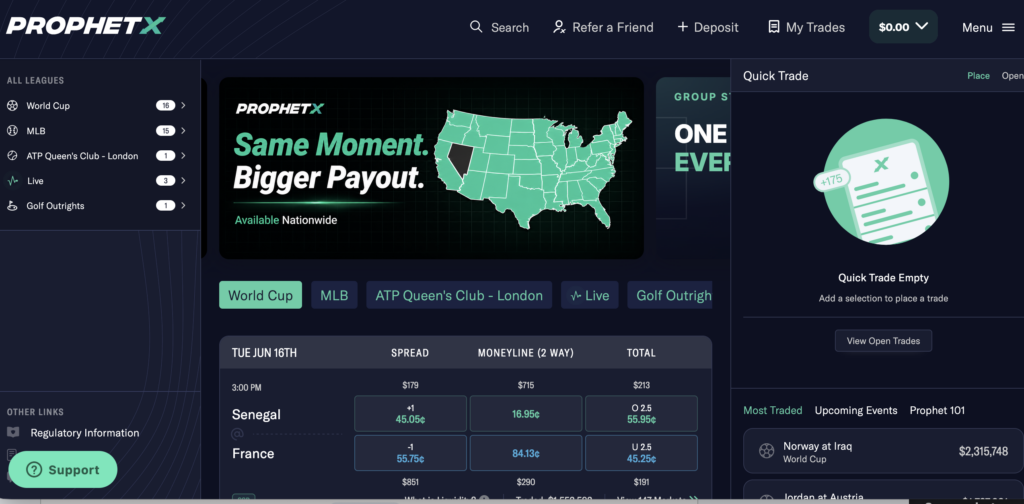
Novig Receives CFTC Approval as ProphetX Launches Sports Prediction Markets Days After Designation
Novig targets a summer rollout after earning CFTC designation, while ProphetX we...
Introducing ETH as Margin on Synthetix
Multicollateral margin is now live on Synthetix and ETH is the first non-USDT as...
Polymarket Trader Loses $500K After Rules Change on Microstrategy BTC Market
A $175 million Polymarket market on MicroStrategy's Bitcoin holdings resolved ag...