₹5 Billion Investment: WeWork India announces aggressive expansion plans, Check the details
Alex Smith
2 months ago
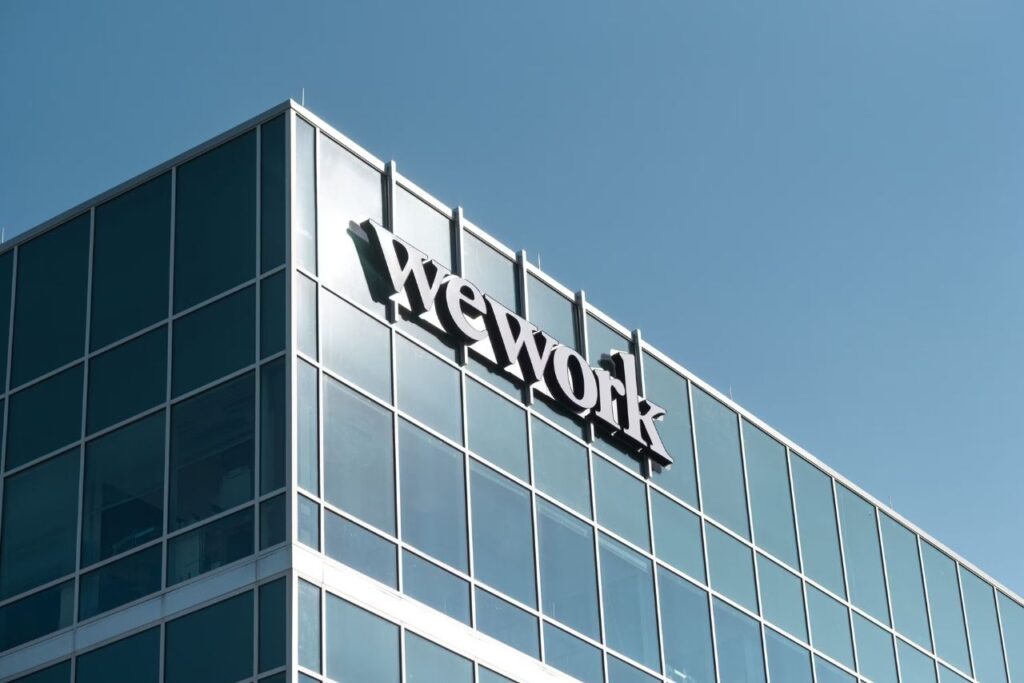
Synopsis- Despite market volatility, WeWork India is aggressively scaling. From a massive ₹475 crore Hyderabad deal to a 90 million rupee Pune expansion, the flex-space giant is doubling down on operational growth.
Within the span of just a few days, the company has announced expansion moves worth nearly ₹5 billion—signalling not just growth, but a deeper strategic shift in how workspace demand is shaping up across India’s top technology corridors.
At the heart of this expansion story lies a landmark ₹475 crore managed office agreement in Hyderabad, complemented by a capacity boost in Pune. Together, these moves offer a compelling glimpse into the company’s financial trajectory, operational strategy, and the broader transformation underway in India’s office space market.
With a market cap of more than Rs 6,000 Cr, Wework India Management Ltd. is trading at ₹445, which sits toward the lower end of its 52-week range; the stock has seen a High of ₹664 and a Low of ₹421 over the past year. From a valuation perspective, the Stock P/E stands at 25.8. The company has delivered good profit growth of 20.6% CAGR over the last 5 years.
1. Pune Expansion: Strengthening the Base, Quietly
The Pune addition—around 575 desks with an investment of roughly ₹9 crore—doesn’t look dramatic. What it does, though, is strengthen WeWork’s base. Pune demand is steady, largely enterprise-driven, and less volatile compared to more aggressive startup-heavy markets.
For WeWork, this kind of expansion improves occupancy stability. And stability matters. Because a large part of WeWork’s historical challenge—globally—has been uneven occupancy and unpredictable demand cycles.
It may not deliver explosive revenue growth, but it helps smoothen fluctuations.And sometimes, especially at scale, predictability is more valuable than speed.
2. Hyderabad Mega Deal: Not Just Growth, But Strong Revenue Support
The ₹475 crore Hyderabad deal with TMUS India is where things really start to impact WeWork in a meaningful way. This isn’t just about adding 1,500+ workstations in HITEC City. It’s about locking in a large, enterprise-grade client into the system. And that changes a few things internally for WeWork:
- Revenue visibility improves – Large contracts mean predictable income over longer periods
- Cash flow stability increases – Less dependence on short-term bookings or fluctuating occupancy
- Client mix shifts upward – More enterprise, less reliance on smaller, less predictable users
In simple terms, deals like this act as anchors. They reduce volatility. Also, there’s a signaling effect. When a company commits ₹475 crore to a managed workspace deal, it validates WeWork’s model. That validation can attract more enterprise clients, which further strengthens revenue quality. So the impact isn’t just direct revenue—it’s also indirect momentum.
3. Bengaluru Addition: Strengthening Capacity Where It Matters Most
Now, the Bengaluru expansion comes with more concrete numbers—and they actually tell a deeper story. WeWork India currently operates with an existing capacity of 1,21,638 desks, with an occupancy rate of 83.9%. That’s already quite high. Not full, but close enough to signal strong demand.
The company now plans to add approximately 1,256 desks, with an investment of around ₹31 crore, expected to be completed on or before May 2026. At one level, this is straightforward—add more desks because demand exists. But the impact on WeWork is more layered:
- High occupancy (83.9%) indicates limited idle capacity, so expansion is almost necessary rather than optional
- Adding 1,256 desks increases revenue potential without drastically altering the cost structure per unit.
Still, Bengaluru isn’t an easy market. Demand is strong, yes—but competition is intense. Which means these additional desks need to be filled efficiently to justify the investment. So this move strengthens presence, but also quietly raises execution pressure.
Revenue and Profitability Impact: Growth with a Catch
Now the core question—what does all this do to WeWork’s financials? At a surface level, the logic is fairly straightforward—more capacity should translate into higher revenue. Pune contributes incremental and relatively stable income, Hyderabad adds a large, contract-backed revenue stream, and Bengaluru brings a mix of steady as well as more dynamic earnings potential. But the real story lies in how this revenue behaves over time.
With a growing share of enterprise clients, revenue becomes more predictable, less volatile, and potentially higher in overall contract value. There is also the advantage of operating leverage; once a workspace is set up, higher occupancy can significantly improve margins since the incremental cost per desk remains relatively low.
So if WeWork can maintain strong occupancy across these new additions, profitability could improve faster than revenue. If demand holds, this expansion could significantly strengthen WeWork’s financial position.If it slows down, the same expansion could start weighing on margins.
What This Means for Investors
From an investor’s perspective, this expansion phase at WeWork India feels like a mix of opportunity and careful observation. On one hand, the company is clearly moving toward a more stable and predictable revenue model—driven by enterprise clients, large-ticket deals like Hyderabad, and high occupancy levels in key markets like Bengaluru. That improves visibility on cash flows, which is something investors typically look for in a business that has historically been seen as volatile. The additional capacity, especially when utilisation is already at 83.9%, suggests that demand is real and not just anticipated, which further strengthens the growth narrative.
The reliance on internal accruals and some level of debt adds another layer, as returns now need to justify not just expansion but also capital efficiency. If these new capacities get absorbed smoothly, the upside could be meaningful in terms of both revenue growth and margin improvement through operating leverage. But if demand softens or competition intensifies, the pressure on returns could become visible.
For investors, it’s less about whether WeWork is growing—and more about how efficiently this growth translates into sustainable earnings over the next few quarters.
Disclaimer: The views and investment tips expressed by investment experts/broking houses/rating agencies on tradebrains.in are their own, and not that of the website or its management. Investing in equities poses a risk of financial losses. Investors must therefore exercise due caution while investing or trading in stocks. Trade Brains Technologies Private Limited or the author are not liable for any losses caused as a result of the decision based on this article. Please consult your investment advisor before investing.
The post ₹5 Billion Investment: WeWork India announces aggressive expansion plans, Check the details appeared first on Trade Brains.
Related Articles

GHV Infra Projects stock In Focus After Bagging ₹213 Cr Railway Infrastructure Work Order
Synopsis: GHV Infra Projects Limited has secured a work order worth approximatel...

Zee Entertainment Shares: Is It Unlocking a New Revenue Engine Through Content Licensing?
Synopsis: Zee Entertainment has partnered with Bradford License India to monetiz...

Birla Corporation Kickstarts Commercial Production at Bikram Coal Mine
Synopsis: Birla Corporation Limited has officially started commercial coal produ...

Why Did Vedanta Shares Crash Over 7% Today? Here’s What Happened
Synopsis: Vedanta shares came under pressure after reports of a promoter stake s...