Silver Prices Surge: Speculation, Scarcity, or Fundamentals?
Alex Smith
6 months ago
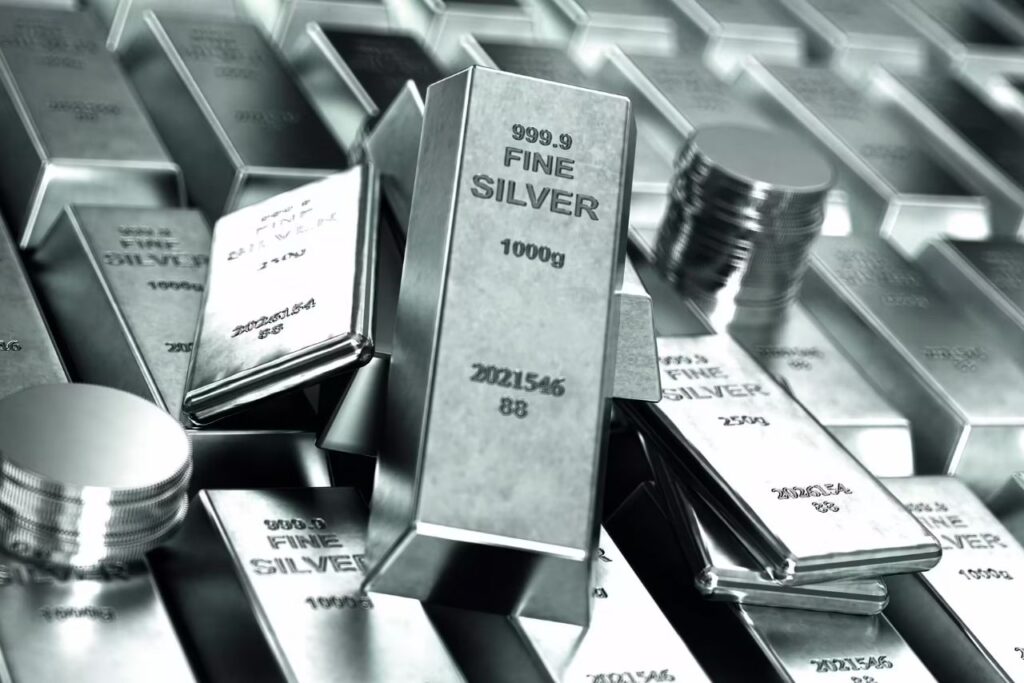
Synopsis: When the price of an asset quadruples in a decade after decades of underperformance, it deserves attention. When it doubles in a single year amid global uncertainty, it demands scrutiny. This editorial examines the history, macro trends, and company-level analysis to determine whether silver’s record-breaking run is a bubble or an overdue repricing, highlighting India’s evolving demand-supply dynamics, policy push, and listed winners driving the sector.
Silver, the modest sibling of gold in the precious metals family, has finally emerged from the shadows in 2025, but the question haunting investors is whether we’re witnessing a golden dawn or a fake glitter.
A Metal Reborn: From Forgotten to Frontrunner
For nearly four decades, silver has been the forgotten precious metal. While gold reached new all-time highs, exceeding $4,000 per ounce in 2025, silver languished in obscurity, trading at levels barely higher than its 1980 peak of $48 an ounce. That narrative changed dramatically this year.
Silver’s 2025 surge represents a stunning 100-140% gain, dwarfing gold’s more modest climb. The metal briefly breached $65.8 per ounce in December, surpassing its legendary 1980 high and approaching its inflation-adjusted peaks from both the Hunt Brothers’ infamous corner in 1979-1980 and the financial crisis rally of 2011. Yet this isn’t merely a price recovery. It’s a fundamental reset in how the market values industrial silver versus precious silver.
Understanding the Rally
The mathematics of silver’s rise tell a compelling story rooted in supply-demand economics rather than pure speculation, at least for now. The Silver Institute reported that 2025 marks the fifth consecutive year of supply deficits, with cumulative shortfalls reaching nearly 800 million ounces since 2021. Chinese stockpiles, long a buffer for global supply shocks, have fallen to decade lows, with Shanghai-linked inventories declining sharply after record exports exceeding 660 tonnes in October.
On the demand side, industrial consumption continues breaking records. Silver industrial fabrication is forecast to exceed 700 million ounces for the first time, representing a 3% growth rate despite concerns about higher prices potentially cooling demand. This paradox, rising demand despite higher prices, reveals the metal’s true economic value beyond speculation.
The culprit? Renewable energy. Each solar photovoltaic panel contains approximately 20 grams of silver, and global solar installations continue accelerating toward all-time highs. Electric vehicles, 5G networks, data centres, and artificial intelligence infrastructure all depend heavily on silver’s unique properties: exceptional electrical conductivity, unmatched thermal properties, and proven antimicrobial benefits. As societies transition toward green energy and digital transformation, silver has transformed from a byproduct of zinc and gold mining into a strategic industrial metal.
The Safe-Haven Shuffle
Beyond industrial demand, geopolitical turbulence and economic uncertainty have rekindled silver’s appeal as a safe-haven asset. Persistent trade tensions, tariff speculation, and questions about global monetary policy have driven investors toward precious metals. When the U.S. added silver to its official list of critical minerals, the psychological impact rippled through markets. Suddenly, silver wasn’t just an industrial commodity; it was a strategic asset.
Central bank accommodative policies, despite inflation concerns, have kept real interest rates relatively low or negative, reducing the opportunity cost of holding non-yielding precious metals like silver. This environment, combined with record ETF inflows and institutional buying, has created multiple structural supports for silver prices.
The Bubble Question: Legitimate Concern or Market Noise?
Here’s where the narrative becomes complicated. While the fundamental case for silver remains compelling, the mechanics of this rally increasingly resemble speculative excess rather than rational revaluation.
Silver mining stocks, typically leading indicators for the underlying metal, have begun showing weakness. The SIL (large silver miners ETF) and SILJ (junior silver miners ETF) have formed bearish reversal patterns, suggesting that institutional players are stepping back even as retail momentum pushes prices higher. In India, a stark real-time warning emerged when silver crashed 16%, plummeting from ₹4,784 per ounce to ₹4,025 between October 17 and 28.
The volatility concerns are legitimate. Silver moves approximately 1.7 times faster than gold in either direction, meaning corrections could be equally dramatic. Goldman Sachs has specifically cautioned that silver faces “significantly more” downside risk than gold, precisely because, unlike gold, silver lacks central bank support and remains heavily dependent on industrial demand.
The ETF premium structure has become unsustainable. Several silver ETFs had suspended new subscriptions in October, a signal that speculative positioning had reached critical levels. When the last wave of FOMO (fear of missing out) buyers enters, and no new money flows in, the premium could collapse very steeply. Moreover, much of the remaining silver sits locked away in ETF vaults, creating artificial scarcity that amplifies price dislocations.
Even the Bank for International Settlements, the central bank of central banks, warned in its December 2025 Quarterly Review that a rare, simultaneous bubble has emerged in both stocks and gold, with implications for silver as a correlated asset.
The Historical Precedent That Haunts
Anyone studying Silver’s 1980 blow-up should feel nervous. The Hunt Brothers’ audacious attempt to corner the global silver market drove prices above $50 before the bubble catastrophically burst, sending silver crashing below $11. While today’s setup differs from that orchestrated squeeze, this time the shortage is genuine, not contrived; the psychological risk remains.
The key distinction: the 1980 spike was driven by speculation and market manipulation. The current rally, at least fundamentally, reflects structural supply constraints and genuine industrial demand. Yet the pace and scale of gains suggest speculators have joined legitimate industrial buyers and strategic investors, creating a toxic mix of greed and fear.
What Lies Ahead: Supply Dynamics
Despite the supply deficit narrative, market equilibrium will eventually reassert itself. While silver’s by-product nature constrains primary production, sustained high prices will incentivize increased recovery from base metal mining operations. The Silver Institute projects mine production rising 2% to 844 million ounces in 2025, a seven-year high, while recycling increases 5% to 200 million ounces for the first time since 2012.
More significantly, if prices remain elevated, the incentive structures for both primary and secondary production will accelerate supply growth. Logistical bottlenecks easing between major producing countries (Canada, Chile, Morocco, and China) could gradually dissipate the physical tightness fueling premium pricing.
Government Support
India’s government has recognized silver’s pivotal role in the energy transition. The Mines and Minerals Amendment Bill 2025 officially added silver to the critical minerals list, transforming its status from commodity to strategic asset. The National Critical Minerals Mission, launched in 2024, targets reinforcing India’s entire critical mineral value chain, from exploration through recycling, with the explicit goal of reducing India’s 80%+ import dependence on critical minerals.
The National Mineral Policy 2019 encourages private participation in exploration through 100% FDI under the automatic route. Meanwhile, Atmanirbhar Bharat (self-reliant India) initiatives prioritise reducing import dependence for strategic minerals, and the government’s Solar Energy Mission directly supports silver demand through accelerated renewable energy deployment.
Budget 2025-26 earmarked mining as a key focus area, with duty elimination on critical mineral scraps to promote the recycling industry, a move that will lower input costs for secondary producers and enhance competitiveness in global markets.
India’s Silver Stocks Driving Progress
- Hindustan Zinc has emerged as India’s, and one of the world’s, most important silver producers. A Vedanta group subsidiary, the company has achieved a remarkable milestone: becoming the 3rd largest silver producer globally as of 2024.
- Vedanta Limited stands as one of India’s largest natural resources multinational corporations, operating across metals (zinc, lead, silver, copper, aluminium), hydrocarbons (oil and gas), and power generation. The company’s critical minerals strategy positions it at the epicentre of India’s energy transition and self-reliance agenda.
- Hindustan Copper Ltd: India’s only fully integrated copper producer offering the cleanest metal exposure through mining, beneficiation, smelting, and refining operations, with emerging silver byproduct opportunities as copper prices rise.
- Hindalco Industries: US$26 billion Aditya Birla Group flagship produces gold, silver, and fertilizers through its Birla Copper division alongside world-class aluminium operations, providing diversified precious metal and base metal exposure.
- NMDC Ltd: The government-backed iron ore backbone of India’s steel industry with growing copper and gold exploration capabilities, offering stability combined with optionality in critical minerals diversification.
- Lloyds Metals & Energy Ltd: Integrated mining-to-metals company operating India’s single largest iron ore mine in Gadchiroli (Maharashtra) with expanding pellet and direct reduced iron (DRI) capacity, representing an infrastructure play benefiting from silver-intensive renewable energy buildout.
- Thangamayil Jewellery Ltd: South India’s dominant retail jewellery player specializing in silver ornaments with a strong regional presence and exposure to India’s culturally significant silver jewellery market, offering a retail consumption angle.
- Goldiam International Ltd.: A specialty diamond-studded gold and silver jewellery producer with strong global luxury market exposure and international presence, capitalizing on premium ornament trends and investment demand.
- JSW Steel Ltd: A diversified US$23 billion JSW Group flagship with iron ore mining, integrated steel production, and a broader manufacturing footprint supporting India’s infrastructure-led growth, requiring silver-bearing electrical applications.
Shiny Opportunity or Speculative Trap?
Silver in December 2025 stands at a critical juncture. The fundamental case for the metal remains exceptionally strong. Global solar installations are accelerating to all-time highs, EV penetration is expanding exponentially, data centre demand continues surging, and the 5G-to-6G transition will drive sustained industrial consumption. India’s policy environment has shifted decisively toward mineral self-sufficiency, with Hindustan Zinc positioned as a direct beneficiary.
Yet the technical setup and market structure suggest caution for near-term traders. The weakness in mining stocks despite rising metal prices, the unsustainable ETF premium structures, and the Bank for International Settlements’ warning about simultaneous bubbles all merit respect.
For momentum traders, the prudent approach is to take profits and await a proper consolidation base. Technical patterns historically precede corrections lasting into early 2026, potentially offering superior entry points for the next leg higher.
For long-term investors, silver’s structural demand from green energy, EVs, AI infrastructure, and industrial applications provides compelling long-term fundamentals. However, current entry points offer poor risk-reward. Waiting for the inevitable correction to accumulate positions in quality silver producers like Hindustan Zinc appears more prudent than chasing an already-rallied market.
Analyst’s Opinion
In 2025, the performance of silver is a combination of both fundamental and speculative influences; however, it has shifted to a more speculative influence at this point. The existence of a supply shortfall, the continued legitimacy of industrial demand, and the establishment of an Indian government support for mineral development all create reasonable justifications for increasing silver prices over time in the near to longer term.
Nevertheless, due to the magnitude and the speed with which this year’s 100%+ growth rate has occurred, in addition to several technical indicators, as well as a performance issue with the ETF’s, continued volatility, among other indicators, point toward the conclusion that we are already in the final phases of a rally that has priced in most of the positive outcomes on the horizon.
The combined forces of legitimate, industrial demand and speculative excess produce a very ripe environment for a significant correction in the price of silver. Therefore, investors should take into account the legitimate structural tailwinds supporting silver prices but also be skeptical of the continued sustainability of such gains in the very short term.
Additionally, for the Indian, there are significantly more compelling arguments: The performance of Hindustan Zinc, being one of the top 3 producers of silver globally and receiving government support along with its strategic positioning for the energy transition, provides an opportunity to participate in a true-growth narrative, rather than simply a commodity speculation opportunity. Key differences exist in price behavior between stocks and metals. In volatile markets, stock prices do not always reflect the value of the underlying asset (in this case, silver). The silver bull market of 2025 will likely be considered a milestone event. However, what happens next with Silver presents uncertainty; whether it will end up being a turning point in an upward direction towards ongoing valuation or speculation remains to be determined.
Written by – Rajat Baddi
Disclaimer
The views and investment tips expressed by investment experts/broking houses/rating agencies on tradebrains.in are their own, and not that of the website or its management. Investing in equities poses a risk of financial losses. Investors must therefore exercise due caution while investing or trading in stocks. Trade Brains Technologies Private Limited or the author are not liable for any losses caused as a result of the decision based on this article. Please consult your investment advisor before investing.
The post Silver Prices Surge: Speculation, Scarcity, or Fundamentals? appeared first on Trade Brains.
Related Articles
4 Stocks Riding India’s E-Waste Recycling Boom to Keep on Your Radar
Synopsis:- As stricter Extended Producer Responsibility norms, rising e-waste vo...
5 Stocks Investors Should Look Out for Amid Strong Data Center Demand
Synopsis: India’s data centre industry is entering a phase of unprecedente...
Data Patterns And Other Defence Stocks Capturing High-Margin Electronics Boom
Synopsis: Modern warfare has undergone a fundamental transformation, shifting th...

Railway Stocks: How Kernex, HBL, Quadrant, and RailTel Are Monetizing the Kavach Rollout
Synopsis: As Indian Railways accelerates its Kavach train-protection rollout, a...