South Korea’s First Bank-Led Crypto Picks A Quantum Security Partner — Here’s Why It Matters
Alex Smith
1 month ago
BTQ Technologies has been selected as the core security infrastructure provider for South Korea’s first bank-led Korean Won stablecoin proof-of-concept, deploying its Quantum Secure Stablecoin Network on the Kaia mainnet — a development that positions post-quantum cryptography at the foundation of one of Asia’s most closely watched crypto initiatives.
The initiative is led by iM Bank, one of South Korea’s major commercial lenders, and marks the first time a Korean bank has formally moved a KRW-denominated stablecoin to a public Layer-1 blockchain in a structured proof-of-concept environment.
According to the official press release, BTQ is providing both strategic advisory support and its QSSN product as the primary post-quantum cryptographic security layer for the deployment.
Solana, Avalanche, And Others Race for the Digital Won
QSSN — the Quantum Secure Stablecoin Network — is designed to enable banks, payment providers, and digital asset platforms to issue and manage stablecoins with built-in protection against quantum-era cybersecurity threats. The system provides quantum-safe smart account wallets for EVM-compatible blockchain networks, using ML-DSA post-quantum cryptography within the ERC-4337 account abstraction standard, per BTQ’s regulatory filings with the SEC.
The choice of Kaia as the underlying network is significant in itself. Kaia is a public Layer-1 blockchain built from the merger of Kakao’s Klaytn and LINE’s Finschia networks, engineered specifically for institutional stablecoin settlement with one-second block times and instant finality.
The network has been central to South Korea’s broader KRW stablecoin buildout — with multiple Tier-1 banks conducting parallel proof-of-concept work across competing chains including Avalanche, GIWA Chain, and Solana.
A Crypto Competition With Serious StakesThe iM Bank initiative arrives as South Korea accelerates toward formal stablecoin legislation. The country’s Digital Asset Basic Act, which would authorize domestic issuance of KRW-backed stablecoins for the first time after nearly nine years of prohibition, is anticipated to move through the legislative process in 2026, per earlier reporting by KoreaTechDesk.
With roughly $40 billion flowing out of South Korean exchanges into foreign dollar-backed stablecoins in the first quarter of 2025 alone, according to Seoulz, the urgency behind a domestic alternative is not theoretical.
BTQ’s selection for the iM Bank PoC follows earlier QSSN deployments in Korea with Danal, the country’s leading mobile carrier billing provider, and Finger Inc. Group, a banking-solutions developer serving major Korean institutions.
This development marks a pivotal moment for the nascent sector’s approach to financial infrastructure security. As sovereign-aligned stablecoin frameworks take shape across Asia, the decision to embed post-quantum cryptography at the base layer — rather than retrofit it later — could establish a new standard for how regulated digital currencies are built in the years ahead.
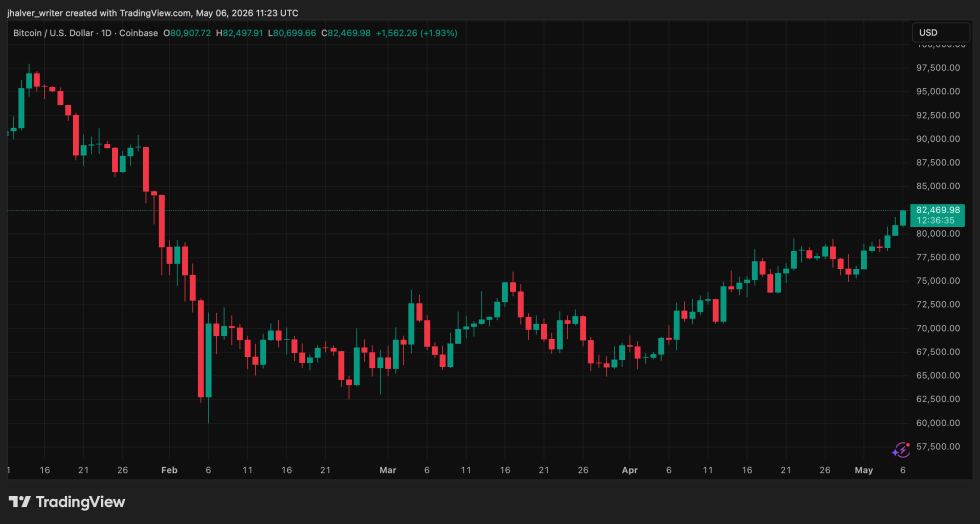
Cover image from Grok, BTCUSD chart from Tradingview
Related Articles
SEC’s 2026–2030 Plan Puts Crypto At The Center Of Its Regulatory Agenda
The US Securities and Exchange Commission (SEC) has again pointed to its goal of...
Bitcoin Eyeing $60,000 Support As Iran Strikes Hammer Crypto Markets
Bitcoin traders are watching $60,000 after US-listed funds tied to the coin shed...
Premier League Crypto Sponsors Under Fire In UK Regulatory Warning
The UK’s financial watchdog has raised concerns to Premier League football...
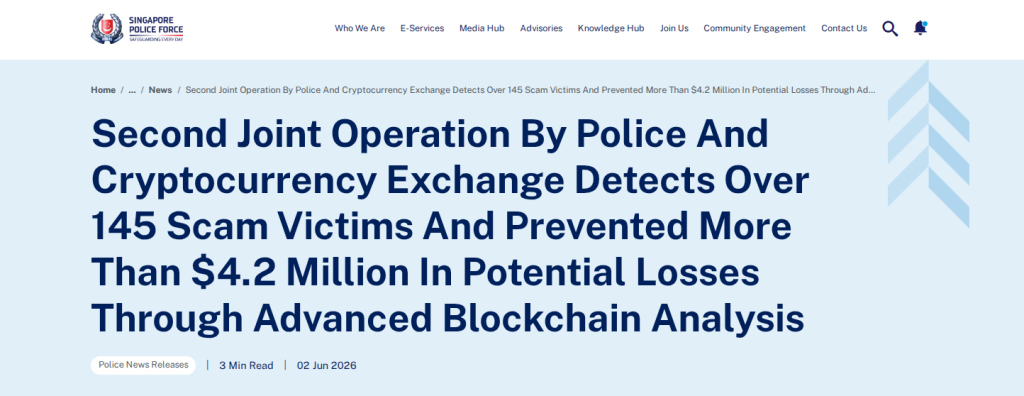
Over $7M In Crypto Scams Thwarted As Singapore Launches Second Crackdown
Over $7 million in potential losses has now been stopped across two back-to-back...