VA Tech Wabag: How Does the Company Plan to Achieve Its 20% Revenue CAGR Target?
Alex Smith
4 months ago
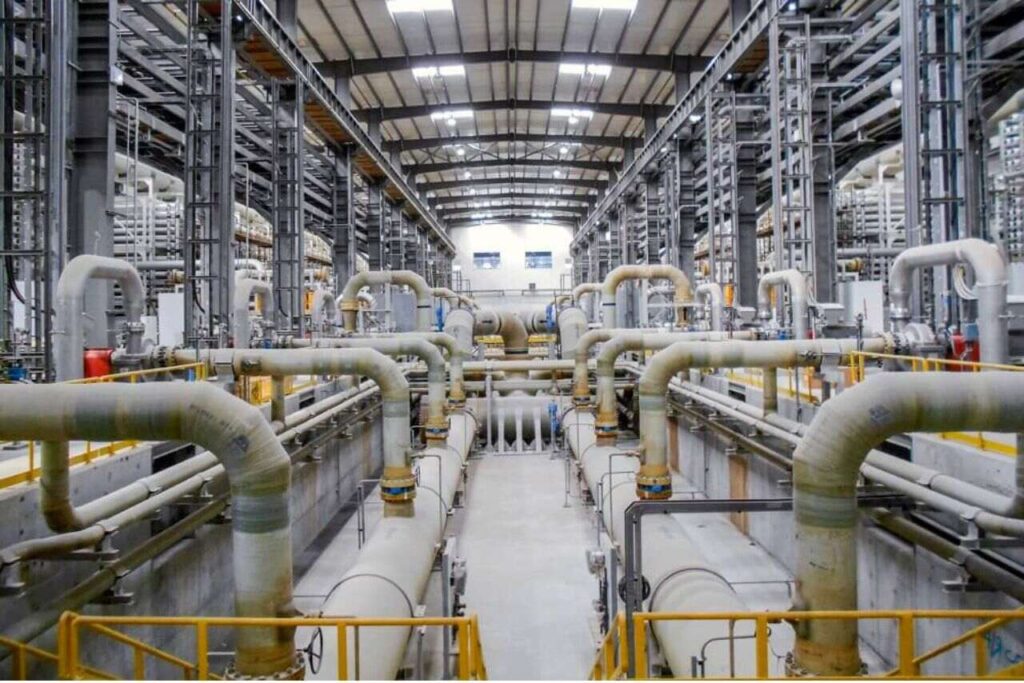
Synopsis: VA Tech Wabag is targeting 15 to 20 percent CAGR supported by a strong order book, rising international presence, stable margins and a net cash balance sheet. With disciplined execution, expansion into new sectors and steady project pipeline, the company appears well positioned to sustain growth while maintaining profitability and financial strength.
As global demand for water infrastructure continues to rise and governments ramp up spending on desalination, wastewater treatment and reuse, one Indian multinational is positioning itself for steady expansion with a strong order book, improving margins and a net cash balance sheet. But with ambitious growth targets ahead, can VA Tech Wabag sustain execution momentum and deliver on its 15-20 percent Revenue CAGR goal?
About the Company
With more than a century of experience, VA Tech Wabag has established itself as a global water technology company providing sustainable solutions across municipal and industrial segments. As a pure-play Indian multinational focused on water, the company offers end-to-end solutions tailored to different customer needs across markets. Supported by a team of around 2,000 professionals operating in over 25 countries, Wabag serves millions of people worldwide through its water treatment and management solutions.
In Q3FY26, The company reported a strong financial performance despite a one-time statutory impact from the implementation of new labour codes. Profit after tax grew by 24 percent year-on-year, while EBITDA increased by 20 percent, with margins maintained at 13.7 percent, comfortably within the guided range. Revenue grew by more than 18 percent, supported by steady execution across its project portfolio and remaining in line with medium-term guidance.
Balance sheet strength continued to improve as the company reduced debt and remained net cash positive for the twelfth consecutive quarter, ending the period with more than Rs. 1,000 crore in cash, marking a key milestone. International business continued to gain traction, contributing around 50 percent of revenue year-to-date, reflecting the company’s strategy to expand its global footprint.
The order book remained strong at over Rs. 163 billion (Rs. 16,300 crore) and is well diversified, with EPC projects accounting for 64 percent and operations and maintenance projects making up 36 percent. International projects also represent nearly half of the order backlog, supporting revenue visibility, margin stability and stronger cash flows.
Over the past five years, EBITDA has grown at a compound annual rate of 19 percent and profit after tax at 30 percent, reflecting consistent value creation driven by disciplined execution, a strong order book, higher contribution from international and operations businesses, and effective capital management.
Working capital efficiency improved significantly with net current working capital days reducing to 101 days due to better receivables management and billing discipline. As of December 2025, gross cash stood at Rs. 1,080 crore and net cash at Rs. 891 crore. Excluding temporary debt under the HAM entity, net cash exceeded Rs. 1,000 crore, the highest level in the company’s history.
The company continues to follow an asset-light approach, supporting healthy return ratios, with return on capital employed at around 19 percent and return on equity above 15 percent, reflecting a focus on sustainable and capital-efficient growth.
Future Outlook
Growth Strategy Focused on Profitability and Balance Sheet Strength
VA Tech Wabag continues to position itself for steady and profitable growth while maintaining a strong and disciplined balance sheet. The company remains committed to its asset-light strategy, which focuses on improving returns without taking on unnecessary capital risk. Management has emphasized that capital allocation, risk discipline, and liquidity management will remain key pillars as the company scales its global operations.
The company is targeting revenue growth at a compound annual rate of around 15 to 20 percent over the medium term. With revenue already growing about 18.3 percent year on year, execution momentum and project wins indicate that the company is broadly on track to achieve this goal. Profitability guidance remains stable, with EBITDA margins expected to stay in the 13 to 15 percent range, supported by better project mix, improved execution, and a higher share of international business. Management has also highlighted that this 13 to 15 percent EBITDA margin guidance is not just an aspiration, and the company has been delivering within this band consistently for more than two years, despite commodity price swings, which reinforces confidence in sustaining margins going ahead.
From a returns perspective, Wabag is targeting return on capital employed above 20 percent, with the current level at about 18.9 percent, showing steady progress. Return on equity is already above its target at around 15.3 percent, reflecting a continued focus on shareholder value creation.
The company also maintains a strong financial position with net cash of about Rs. 10,065 million excluding HAM projects, marking its twelfth consecutive quarter of being net cash positive. This strong liquidity provides flexibility to bid for larger projects, negotiate better procurement terms, and pursue strategic opportunities.
Geographic Expansion and International Growth Engines
Wabag is steadily increasing its international presence, with around half of its revenue already coming from overseas markets. Going forward, the company expects the international business share to increase further because these projects typically offer better margins, stronger cash flows, and improved working capital cycles.
The Middle East is emerging as the next major growth engine, supported by strong infrastructure investments across the GCC region, particularly in desalination, wastewater treatment, and water reuse. The company continues to see sustained opportunities here due to rising demand and disciplined bidding strategies.
Africa remains another important region, where multilateral and government-backed sanitation and water projects are expected to drive steady growth in the medium term. Wabag is also expanding its footprint in CIS countries, South Asia, and Southeast Asia, where urbanization and tightening environmental norms are creating new opportunities.
The company’s Europe cluster is witnessing improved bidding activity, especially in complex and high-technology water treatment projects across Eastern and Western Europe. While Europe remains a selective market, Wabag continues to pursue opportunities aligned with its strategic priorities.
Overall, the company’s diversified geographic presence helps reduce dependence on any single market and provides resilience against regional economic or geopolitical challenges. Management has also addressed concerns around softer oil prices and possible GCC capex slowdown, stating that water treatment is a non-discretionary need in these regions and is not dependent on oil price cycles. The company has not seen any slowdown in project additions or conversions, and pointed out that over the last 12 to 18 months it has secured multiple large marquee international orders, with the Middle East remaining a key contributor alongside other regions like Africa, South Asia, Southeast Asia, and CIS.
Strong Order Book Visibility and Pipeline
Wabag continues to maintain strong order visibility, with more than Rs. 3,000 crores of projects already in visibility and a robust pipeline across geographies. The company aims to maintain its order book at around three times revenue, and currently, the order book stands at about Rs. 163 billion, equivalent to nearly four times revenue, providing strong growth visibility.
Management highlighted that the pipeline includes a diversified mix of government, municipal, and private sector projects, many of which are nearing conclusion and expected to convert in the near future. Some projects have been deferred beyond the current quarter, but the company expects conversions to accelerate in the coming periods.
The company is also a preferred bidder or well positioned in about two to three major projects across India and the Middle East, in addition to several smaller opportunities. One such opportunity discussed is the Hadda ISTP project, where Wabag is the preferred EPC partner to a developer that is itself a preferred bidder. Management indicated that such development-led projects typically require additional steps like conditions precedent and financial closure at the developer’s end, and the company is actively supporting the developer to help convert the opportunity. While the timing cannot be guaranteed, management suggested the awarding could potentially happen in FY26, and is likely a matter of time.
In India, management also highlighted emerging tender opportunities linked to the Delhi Yamuna clean-up and related Delhi Jal Board activity. The company has already submitted some bids, with several tenders still to open, and believes this is a meaningful opportunity given Wabag’s existing presence and experience in Delhi, including completed EPC work and ongoing O&M sites. While management did not share a quantum because it is a live bidding process, they expressed confidence that some of these prospects can convert in the coming weeks and months.
Project Execution Updates
Several ongoing projects across geographies are progressing steadily. The JICA-funded 400 MLD desalination plant in Chennai is on schedule, with marine works nearing completion, civil construction advancing, key equipment deliveries underway, and piping and prefabrication in progress. The 200 MLD Pagla project in Bangladesh, funded by the World Bank and AIIB, has gained momentum with pile casting and drilling progressing satisfactorily.
In India, the wastewater treatment plants project for the Bangalore Water Supply and Sewerage Board has started site activities with subcontractors mobilized. The Ghaziabad Nagar Nigam HAM project achieved final commercial operation date on 1 January 2026 and is now fully operational.
The RenewSys solar cell manufacturing facility order covering ultrapure water, effluent treatment, and zero liquid discharge systems is progressing as planned, with engineering completed, equipment ordering nearing completion, supplies started, and installation to begin after civil handover.
Internationally, the 200 MLD Al Haer STP project in Saudi Arabia is progressing well, while early engineering and procurement activities have started for the 300 MLD Yanbu mega desalination project. The Lusaka sanitation project in Zambia is also on track with equipment procurement progressing and civil contractors mobilized.
In addition to these, management also shared an update on the Indosol project. The engineering phase is quite mature, and the company has started scouting suppliers and engaging with the market. The main reason for the time taken so far has been the customer’s finalisation of the plot and layout for the plant. Management indicated that the customer is now close to finalising the layout and plot, after which Wabag has restarted supplier contracting to ensure deliveries remain on time. Overall, the company expects momentum on this project to pick up further in the coming period.
Emerging Sectors and New Growth Opportunities
Beyond traditional water treatment, Wabag is actively pursuing opportunities in new sectors such as solar manufacturing, semiconductors, green hydrogen, and data centres. The company is leveraging its capabilities in ultrapure water, desalination, water reuse, and zero liquid discharge to address the growing demand from these industries.
The company has already secured projects linked to solar manufacturing and is in discussions with hydrogen developers where water requirements are significant. It is also engaging with data centre developers, where water reuse solutions present a major opportunity.
In addition, Wabag is expanding into the bioenergy space through compressed biogas projects and technology upgrades, while its Blue Seed initiative is supporting innovation by investing in water sector startups and evaluating pilot projects.
Digital transformation is another important pillar, with artificial intelligence driven operational platforms being deployed across plants, along with AI based solutions for water loss reduction and decision support systems.
Municipal Platform and Strategic Partnerships
In March 2025, Wabag signed a non-binding term sheet to create a dedicated municipal platform with an investor consortium including Norfund, the Norwegian government’s development investment fund. The platform plans to invest up to USD 100 million in municipal capital projects over three to five years.
Wabag will act as the technical partner providing EPC and O&M services and will also make a minority investment, consistent with its asset-light strategy. Due diligence is largely completed and definitive agreements are currently being negotiated, with formal approvals expected in the coming months subject to internal investment committee processes. This platform is expected to help Wabag capture growing municipal water infrastructure opportunities while leveraging external capital.
Financial Discipline, Working Capital and Funding
Wabag continues to focus on maintaining strong liquidity and improving working capital efficiency. Net working capital is expected to remain in the range of around 100 to 120 days, supported by a higher share of international and O&M projects.
Wabag has also provided broad colour on execution and cash-flow quality between international and Indian orders. International projects are generally faster to execute compared to Indian projects, and for large EPC jobs, a broad execution timeline is typically around 2.5 to 3 years, depending on size and scope. From a modelling perspective, management suggested investors can assume a broadly linear flow of project revenue into the profit and loss account across this 2.5 to 3-year period, unless a project has specific characteristics that change the profile. Management also highlighted that the international mix supports working capital because collection cycles are generally better, especially in the Middle East where counterparties are often sovereign-linked, and in Africa where projects are commonly backed by multilaterals. This is one of the key reasons Wabag prefers expanding internationally, since these projects can be stronger on cash flows and working capital compared to equivalent domestic projects.
The company has also onboarded two additional international banks across the Middle East and Africa to support growing project requirements and improve financial flexibility. It has started using insurance bonds as substitutes for traditional bank guarantees to optimize costs and improve non-funded limits.
Most projects are backed by multilateral agencies, sovereign counterparties, or letters of credit, which provides strong payment security and reduces receivable risk. The company’s credit rating has improved over the past five years, leading to lower financing costs and better financial efficiency.
Management also shared a broader view on competition in international markets. The company generally does not see Chinese players as direct competitors in the high-technology segments it targets, such as desalination, recycled reuse, industrial water, and complex effluent treatment. In these areas, competition is more commonly from European players, including Spanish, Israeli, and French companies. Where construction capability is needed, Wabag indicated that Chinese firms can sometimes participate as construction partners or subcontractors rather than competing on the technology-led scope.
Medium Term Outlook and Strategic Direction
Looking ahead, Wabag remains confident about sustaining profitable growth supported by a strong order pipeline, diversified geographic presence, and increasing share of high-technology projects. The company plans to continue expanding its operations and maintenance business to around 20 percent of revenues to improve stability and margins, with the current level at about 18 percent.
Management has also provided a broad mix view of the current order book to help investors understand the direction of the business. On a broad estimate, around one-third of the order book is linked to desalination, supported by the fact that three of the company’s top five order book projects are desalination. Operations and maintenance also forms a meaningful portion, with around Rs. 4,000 crores to Rs. 5,000 crores out of roughly Rs. 16,000 crores of order book attributed to O&M. The remaining mix includes industrial projects such as effluent treatment, ultrapure water, reverse osmosis demineralisation, and zero liquid discharge, while sewage treatment plants form roughly 20 to 25 percent of the overall mix based on management’s broad guesstimate. Management believes the desalination component can grow further over time due to the volume of opportunities under evaluation.
The company expects international markets and India to grow together, creating dual growth engines. Management believes that water treatment remains a critical and non-discretionary sector globally, which provides long term demand visibility.
As an additional point on legacy recoveries, management addressed the status of past dues linked to the APGENCO and TSGENCO matters. The company clarified that it is primarily pursuing recovery of around Rs. 140 crores of retention money from TSGENCO, where the Supreme Court has ruled in its favour. While Wabag has already written off such receivables from its books to stay conservative and focus on core operations, it has not stopped pursuing recovery and continues to follow legal routes to receive the money. However, management did not provide any specific timeline because the process depends on administrative and legal steps beyond the company’s control. They indicated that any recovery, if and when it happens, would be a positive upside, but investors should not factor it into the core business outlook since current performance and growth plans are not dependent on it.
Overall, Wabag’s strategy of focusing on technology driven projects, expanding into new industries, maintaining financial discipline, and leveraging multilateral funded opportunities positions the company well for steady growth over the next three to five years.
Disclaimer: The views and investment tips expressed by investment experts/broking houses/rating agencies on tradebrains.in are their own, and not that of the website or its management. Investing in equities poses a risk of financial losses. Investors must therefore exercise due caution while investing or trading in stocks. Trade Brains Technologies Private Limited or the author are not liable for any losses caused as a result of the decision based on this article. Please consult your investment advisor before investing.
The post VA Tech Wabag: How Does the Company Plan to Achieve Its 20% Revenue CAGR Target? appeared first on Trade Brains.
Related Articles
Stocks to Watch: Groww, Angel One and 8 Other Top Stocks Set to Announce Results Today
Synopsis: Companies including Groww, HDB Financial, Emmvee, Angel One, HDFC AMC,...

Financially Strong Stock to Buy Now for an Upside of 38%; Recommended by UBS
Synopsis:- A global brokerage has initiated coverage on a leading auto-tech plat...

Divis Laboratories Forms An Ascending Triangle Pattern Signalling A Near-Term Bullish Breakout
Synopsis: Divis Laboratories Ltd has formed an ascending triangle on the 4-hour...
Chemical Stock Quietly Diversifying into Animal Health and CDMO to Keep on Your Radar
Synopsis: A fine chemicals major built on pharmaceuticals and crop protection is...