3 Battery Stocks That Could Benefit From India’s Upcoming EV Policies
Alex Smith
2 hours ago
Synopsis: India’s EV push, supported by subsidies and localisation policies, is expected to drive strong demand for batteries, benefiting manufacturers linked to EV and energy storage growth.
India’s electric vehicle market is gaining strong policy support, with both central and state governments focusing on faster adoption of clean mobility. The push is mainly driven by subsidies, localisation of manufacturing, and expansion of charging infrastructure, which together are expected to improve EV affordability and usage across segments.
At the same time, recent policies like Delhi’s EV plan highlight how demand incentives and infrastructure spending are being combined to accelerate adoption over the next few years. This kind of structured support is expected to benefit the broader EV ecosystem, especially battery manufacturers and EV players as penetration gradually rises
Delhi EV Policy Push: Heavy Subsidies, Infrastructure Boost and Faster Adoption Plan
Delhi government has finalised a new EV policy aimed at accelerating adoption of zero-emission vehicles over the next four years. The policy will run from July 1, 2026 to March 31, 2030, after receiving approval from the Lieutenant Governor. The total planned outlay for the scheme stands at around Rs 7,000 crore, showing a strong fiscal push to support cleaner mobility in the capital.
Under the policy, direct purchase incentives have been introduced across vehicle categories, with the highest support in the early years. Buyers of eligible electric four-wheelers priced below Rs 30 lakh will receive an incentive of up to Rs 1 lakh. Electric two-wheelers will get Rs 30,000 in the first year, which gradually reduces to Rs 10,000 by the third year, while electric three-wheelers will receive up to Rs 50,000 initially.
The policy also extends targeted support for electric trucks, where eligible N2 category vehicles will receive incentives of up to Rs 1 lakh, along with exemptions for a limited number of units from entry fees. At the same time, the government is promoting scrappage of older BS-IV vehicles to speed up replacement with cleaner alternatives, strengthening the overall shift towards EV adoption.
On the infrastructure side, Delhi has set an ambitious target of building 32,000 charging points and has already identified land for rollout. An additional Rs 8,000 crore has been allocated for charging infrastructure and EV-related tax incentives. Overall, the policy combines upfront subsidies, infrastructure development, and scrappage support to push faster adoption of EVs and hybrid vehicles in the city.
Battery Stocks to watch
Amara Raja Energy & Mobility Ltd
With a market capitalization of Rs 15,644 crore, the share of this company closed at Rs 855 per share, down by 0.88 percent from its previous close. Amara Raja Energy & Mobility is steadily shifting from traditional lead-acid batteries to lithium-ion and advanced energy storage solutions. This transition fits well with India’s EV push, especially as policies start rewarding local manufacturing and EV battery production.
With rising demand from electric two-wheelers and energy storage systems, the company can benefit from both replacement demand and new EV-linked applications. Its strong manufacturing base and distribution network also support scaling up in the EV battery value chain.
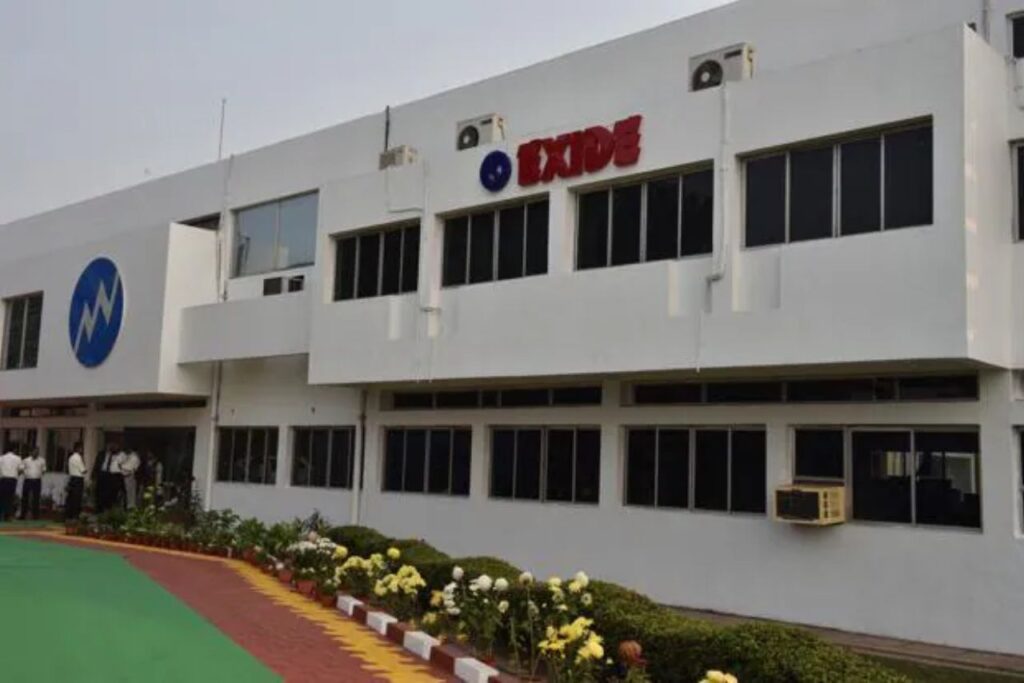
Exide Industries Ltd
With a market capitalization of Rs 35,419 crore, the share of this company closed at Rs 417 per share, down by 0.66 percent from its previous close. Exide Industries is one of the largest battery makers in India and is actively building its presence in the lithium-ion segment through its new energy business. The company is investing in cell manufacturing, which is a key focus area under India’s EV localisation push.
As EV adoption increases, Exide can benefit from both automotive battery demand and large-scale energy storage requirements. Government incentives for domestic battery production and EV supply chain localisation could further strengthen its long-term position.
Ola Electric Mobility Ltd
With a market capitalization of Rs 20,587 crore, the share of this company closed at Rs 44.5 per share, down by 2.26 percent from its previous close. Ola Electric is among the most direct beneficiaries of India’s EV push, especially due to its strong presence in electric two-wheelers. The company’s integrated ecosystem, including its battery initiatives like Bharat Cell and energy storage efforts under Ola Shakti, gives it greater control over costs and supply chain efficiency.
The Delhi EV policy, with subsidies of up to Rs 30,000 for two-wheelers in the initial phase, directly supports demand for Ola Electric’s products. As incentives reduce over time, early adoption becomes critical, and Ola is well placed due to its strong brand in the EV scooter segment and rapidly expanding manufacturing capabilities.
Disclaimer: The views and investment tips expressed by investment experts/broking houses/rating agencies on tradebrains.in are their own, and not that of the website or its management. Investing in equities poses a risk of financial losses. Investors must therefore exercise due caution while investing or trading in stocks. Trade Brains Technologies Private Limited or the author are not liable for any losses caused as a result of the decision based on this article. Please consult your investment advisor before investing.
The post 3 Battery Stocks That Could Benefit From India’s Upcoming EV Policies appeared first on Trade Brains.
Related Articles

Mahindra & Mahindra and 2 Auto Stocks Trading At a PEG Ratio Below 1 with Strong Earnings Growth
Synopsis: The Price/Earnings-to-Growth (PEG) ratio is one of the most useful val...

Top 3 Stocks Powering India’s Defence Manufacturing To Keep a Watch on
Synopsis: A leading brokerage believes defence manufacturing in India is enterin...
Defence Electronics Stock Targets 3x Revenue Growth; Here’s What Investors Must Know
Synopsis: Backed by a Rs.2,141 crore standalone order book, management guidance...
Titan Company and 9 Other Stocks Trading Ex-Dividend Next Week to Keep on Your Radar
Synopsis: Ten listed Indian companies will trade ex-dividend between July 6 and...