Adani Enterprises: Here’s The Future Outlook Of Every Key Business From Airports To Data Centres
Alex Smith
2 hours ago
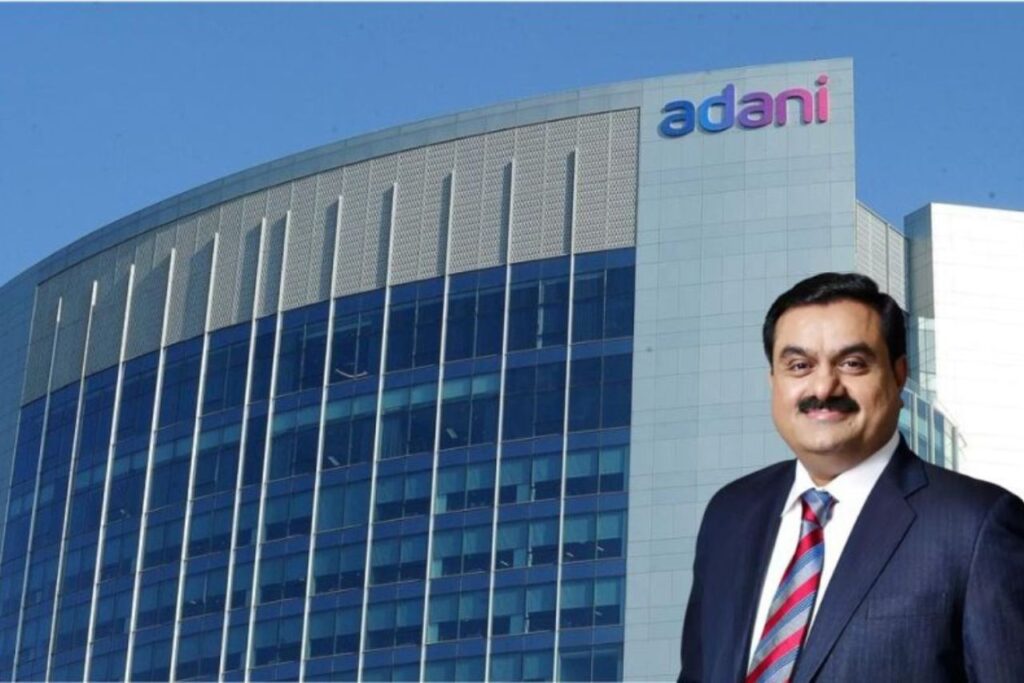
Synopsis: Adani Enterprises is entering a major growth phase as businesses like airports, roads, copper, new energy and data centres start scaling up. With several big projects moving toward maturity, the coming years could play a key role in shaping Adani Enterprises’ future growth.
Adani Enterprises Ltd has entered a new phase where its story is no longer only about commodity trading or legacy resource management. The company is now trying to position itself as a large infrastructure and industrial incubator, with businesses spread across airports, roads, new energy manufacturing, copper, mining services, data centres, PVC, defence and digital capabilities. Management said FY26 was a stabilization year for its incubating businesses, while FY27 should see a fresh EBITDA unlock from Navi Mumbai Airport, Kutch Copper and Ganga Expressway.
For FY26, Adani Enterprises reported total income of Rs. 1,02,943 crore and EBITDA of Rs. 16,464 crore. The important change is in the mix. The company said 80 percent of EBITDA now comes from core infrastructure and services businesses, compared with a far more commodity-heavy profile earlier. Management described AEL’s incubation model as “build, stabilize, scale and unlock,” and said the company is now moving toward the value unlock phase across several platforms.
Airports: The Biggest Visible Infra Platform
Airports are now one of the most important parts of Adani Enterprises’ future outlook. The airport segment reported FY26 revenue of Rs. 13,215 crore in the consolidated segment statement, which is roughly 13 percent of AEL’s FY26 total income. In Q4, Adani Airports reported total income of Rs. 3,429 crore, up 21 percent year-on-year, while EBITDA rose 75 percent to Rs. 1,670 crore. In FY26, passenger traffic stood at 95.3 million, cargo volume rose to 11.7 lakh metric tonnes, and the platform contributed about 23 percent of India’s passenger traffic and 29 percent of air cargo volume.
The future trigger here is Navi Mumbai International Airport. The airport commenced operations on December 25, 2025, and management said it will meaningfully change the financial performance of Adani Airports. In Q3, the company said Navi Mumbai had a provisional regulatory asset base close to Rs. 20,000 crore, with expected return in the range of 12 percent to 14 percent. In the Q4 call, management said Navi Mumbai is still ramping up and should take around 18 months to reach maturity. It also said Navi Mumbai alone could approach nearly Rs. 3,000 crore of peak EBITDA.
The next phase is already being accelerated. Management said Phase 2 of Navi Mumbai has to start now because traffic projections suggest the airport could fill up in the next 12 to 18 months. Apart from this, FY27 airport capex is expected to be around Rs. 17,000 crore, including Navi Mumbai Phase 2, city-side development across Mumbai, Navi Mumbai, Ahmedabad, Lucknow and Jaipur, and a new terminal in Ahmedabad with the 2030 Commonwealth Games in sight.
Roads: Ganga Expressway Is The Main Trigger
The road business reported FY26 revenue of Rs. 6,347 crore, contributing roughly 6 percent of AEL’s total income. Revenue was lower compared with FY25 because several projects moved from the construction phase toward operational status. However, the outlook is driven by operating assets rather than construction revenue alone.
The biggest trigger is Ganga Expressway. In Q3, management said this is around an Rs. 18,000 crore asset and a traffic-risk project that should add significantly to Adani Roads revenue and EBITDA. In Q4, management said the project had come online in April and would become the largest business within the road portfolio. Peak EBITDA from the expressway itself could be close to Rs. 1,800 crore.
AEL also added three new road projects during Q4, taking the total road project tally to 20. The company said these include the Chennai Outer Ring Road TOT project, the Palanpur-Radhanpur-Samkhayili NH-27 TOT project and the Ganga Path extension HAM project in Bihar. The future outlook, therefore, is not only about Ganga Expressway opening, but also about the road business becoming a steadier long-term cash-flow platform as more assets move into the operating phase.
ANIL: Solar, Wind And The Green Hydrogen Ecosystem
Adani New Industries, or ANIL, is the company’s green hydrogen ecosystem business, covering solar modules, cells, ingots, wafers, wind turbines and future electrolyser plans. The New Energy Ecosystem segment reported FY26 revenue of Rs. 15,399 crore, which is close to 15 percent of AEL’s total income. In Q4, ANIL’s total income was Rs. 5,168 crore, up 41 percent year-on-year, while EBITDA stood at Rs.1,173 crore. In FY26, Module sales rose 15 percent to 4,904 MW and wind turbine generator sales rose 41 percent to 231 sets.
Management’s near-term focus is capacity expansion. The company already has 4 GW of cell and module capacity and 2 GW of ingot and wafer capacity. Another 6 GW of module and cell capacity is expected to be commissioned, with management saying numbers should start appearing from the second half and the full benefit from the following year. On solar sales, management said the business will remain primarily India-focused in the near term, though some opportunities may exist in Europe. It also said domestic sales are strong, even though margins may see short-term compression.
On green hydrogen, management was more cautious. It said the first objective is to get the integrated manufacturing complex fully running, not just at current capacity. It is also preparing the site for renewable power assets, while electrolyser testing is underway. However, management clearly said it has not yet made the final investment decision on green power implementation and hydrogen derivation. So the near-term story is solar and wind manufacturing, while green hydrogen remains a longer-term option.
Wind is also emerging as a meaningful contributor within ANIL, with FY26 wind revenue of roughly Rs. 3,700 crore and EBITDA of around Rs. 760 crore. Management’s strategy suggests wind is not only a product business, but also an important complementary pillar alongside solar for Adani’s broader renewable manufacturing and future hydrogen ecosystem.
Copper: A New Industrial Growth Engine
Copper has quickly become one of the largest reported revenue segments. The Copper segment reported FY26 revenue of Rs. 15,284 crore, compared with Rs. 2,291 crore in FY25, contributing close to 15 percent of AEL’s total income.
The future outlook is more important than the current number. In Q3, management had said Kutch Copper would start showing numbers from Q1FY27. In the Q4 call, it said copper will be reported more clearly as a separate line item from the coming quarter. Management also said Copper could deliver just over Rs. 2,000 crore EBITDA at peak capacity. Along with Navi Mumbai Airport and Ganga Expressway, Kutch Copper is part of the three-asset EBITDA unlock that management expects to add more than Rs. 3,000 crore in FY27 and Rs. 6,000 crore to Rs. 6,800 crore at peak capacity by the end of FY28.
Mining Services: The Contracted Legacy Strength
Mining Services is not as flashy as airports or data centres, but it remains one of AEL’s steadier businesses. The segment reported FY26 revenue of Rs. 4,446 crore, contributing roughly 4 percent of total income. During the year, dispatch volume rose 14 percent to 49.4 million metric tonnes.
The long runway comes from underutilized contracted capacity. AEL has 18 MDO service agreements with a total peak capacity of 145 million metric tonnes per annum. It is currently operating at an annual run-rate of nearly 50 million metric tonnes, from six service contracts, which is only about 34 percent of total contracted potential. With the GP2 mine becoming operational in Q4, seven service contracts are now operational, giving the company potential to reach 86 million tonnes annually. Management expects close to 20 percent growth next year.
IRM And Commercial Mining: Large But More Volatile
Integrated Resource Management remains AEL’s largest revenue segment. It reported FY26 revenue of Rs. 28,362 crore, contributing roughly 28 percent of total income. However, volume declined by 21 percent to 44.6 million metric tonnes in FY26. The segment has repeatedly been described as cyclical because it is exposed to commodity prices, trade flows and geopolitical volatility.
Commercial Mining reported FY26 revenue of Rs. 5,642 crore, roughly 5 percent of total income. In Q4, management explained that weakness in commercial mining was mainly due to heavy rainfall at the Carmichael mine in Australia, which constrained mining production for nearly a quarter. It also mentioned a non-cash mark-to-market impact of around Rs. 600 crore due to exchange rates. So while these businesses remain important, they are not the centre of AEL’s future value unlock narrative.
Data Centres, GCC, Defence And PVC: The Next Layer
Data centres are one of AEL’s biggest long-term digital infrastructure opportunities, though the numbers are not fully visible in consolidated EBITDA because AdaniConneX is equity accounted. In Q4, AdaniConneX received a new hyperscale order of 358 MW in Hyderabad, taking cumulative tied-up capacity to over 560 MW. It also commissioned 4.8 MW of Hyderabad Phase 2 capacity, taking operational capacity to more than 55 MW across four data centres.
The Google-linked AI data centre campus in Andhra is another major trigger. In Q2, management said Google is one of the participants in a comprehensive AI data campus and more details would be shared once rollout plans are finalized. Separately, AEL has also set up Adani Capability Center, or GCC, inside AEL. Management said GCC will include artificial intelligence and an agentic workforce model, and clarified that it is currently internal to the group. This means GCC is not yet a standalone revenue engine, but it could become an internal AI and digital backbone for Adani’s businesses.
Defence and Aerospace is also taking shape. In Q3, management referred to announcements with Embraer for regional civilian transport and Leonardo for a helicopter ecosystem in India. It said the business will be updated in more detail from mid this year. PVC is another future project, with the 1 MMTPA plant under development. Management said around Rs. 9,000 crore had already been spent and revenue should be looked at from calendar year 2028.
The Bigger Picture
Adani Enterprises is moving from a trading-heavy company to a portfolio of infrastructure, industrial and digital platforms. The near-term earnings unlock is clearly from airports, roads and copper. ANIL remains a major manufacturing platform, mining services offers contracted growth, and IRM continues to provide scale but with volatility. Data centres, PVC, defence and GCC are not yet the biggest current contributors, but they form the next layer of optionality. The key question now is whether AEL can convert this large asset base into steady EBITDA, lower volatility and eventual value unlock through separate platforms.
Disclaimer: The views and investment tips expressed by investment experts/broking houses/rating agencies on tradebrains.in are their own, and not that of the website or its management. Investing in equities poses a risk of financial losses. Investors must therefore exercise due caution while investing or trading in stocks. Trade Brains Technologies Private Limited or the author are not liable for any losses caused as a result of the decision based on this article. Please consult your investment advisor before investing.
The post Adani Enterprises: Here’s The Future Outlook Of Every Key Business From Airports To Data Centres appeared first on Trade Brains.
Related Articles

Dolly Khanna Portfolio: How Much Dividend Will the Ace Investor Earn in FY26?
Synopsis: A veteran investor’s diversified small and mid-cap portfolio qui...
Hidden Gem: Vanguard and BlackRock’s Top Nuclear Stock Pick To Add To Your Watchlist
Synopsis: A legacy infrastructure player with deep nuclear and complex engineeri...

How This Low-Debt, High-Return IT Stock Is Diversifying Its Business to Overcome AI Disruption
Synopsis: A traditionally stable, high-return business is undergoing a structura...

5 Stocks to Benefit as India’s Data Usage Is Set to Nearly Double Over the Next 5 Years
Synopsis: India’s rising data consumption is reshaping digital infrastructure de...