Anand Rathi Stock Broking: Can Diversification Reduce Market Dependence?
Alex Smith
2 hours ago
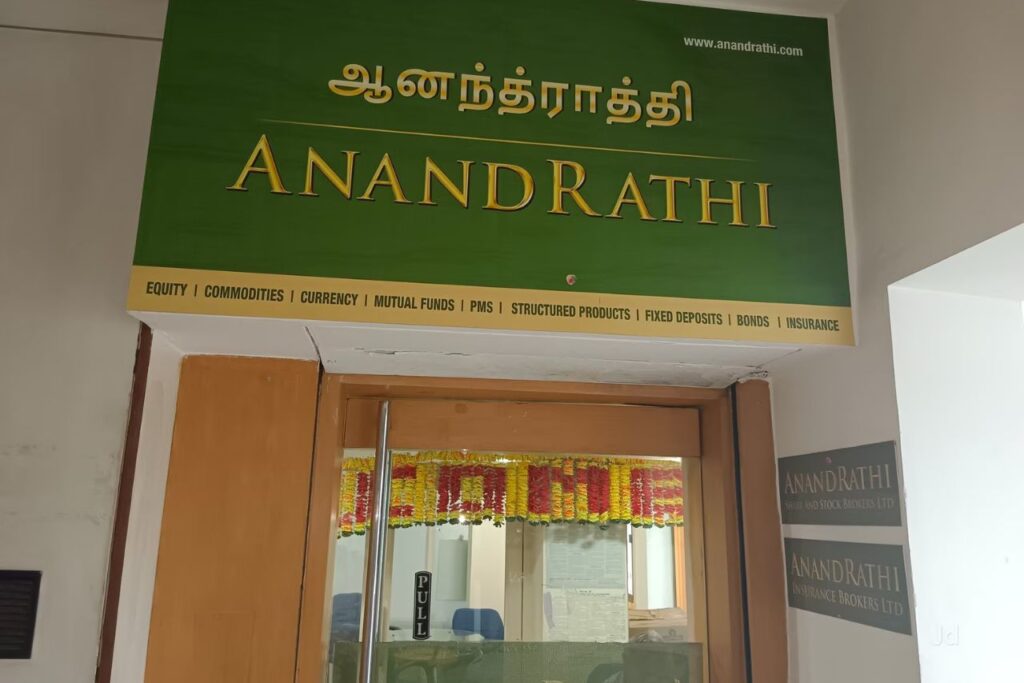
Synopsis: Anand Rathi reported FY26 revenue of Rs 932 crore and PAT of Rs 129 crore, with non-broking contributing 49% of revenue. Strong growth in distribution income and the MTF book highlights its ongoing shift toward a more stable and diversified business model, reducing reliance on market-linked broking revenues.
FY26 performance of Anand Rathi shows an evolution in the form of diversification in the face of a turbulent business climate. Although broking continues to be an important source of income, it is now working on building up its other sources of income for increased stability. By having diversified income sources and by growing its fee-based income streams, it is striving towards being less susceptible to changes in the market cycle.
Weak Market Environment
The financial year 2026 took place in an environment that was characterised by geopolitical uncertainties, trade disputes, and disruptive innovations in technology. These trends caused high volatility in the financial markets along with negative sentiments among investors.
Due to the above reason, foreign institutional investors were more conservative, which meant that there were constant outflows from the country. In addition, they had a risk-off strategy for all investments, and hence the capital market of India was moving towards a consolidation phase after experiencing favorable conditions.
However, some structural fundamentals remained the same. For instance, the total number of demat accounts increased from 15.14 crore in March 2024 to 22.2 crore in February 2026, and the assets under management of mutual funds grew from Rs 65.74 lakh crore to Rs 82.02 lakh crore.
IPO and New Opportunities
Within such an environment of uncertainty, Anand Rathi took a critical step in terms of strategy when it successfully made its initial public offering during September 2025 with Rs 745 crore raised.
The resultant cash influx helped enhance the organisation’s financial position, specifically aiding its working capital needs along with expansion within certain scalable markets. Additionally, in the very same financial period, the organisation was awarded a licence for becoming a corporate agency that would help it offer insurance products to its clients.
Such a development helped the organisation start offering services related to life and health insurance to its customers, creating another source of fee income generation.
Strong Financial Performance
Nevertheless, the organisation maintained a steady financial record despite the tough market environment. In terms of revenue for the three months ending March 31, 2026, the company generated Rs 255.7 crore of income.
The company’s earnings before interest, taxes, depreciation, and amortisation were Rs 110.3 crore, while its profit after taxes was Rs 41.6 crore. In annual figures, revenue amounted to Rs 932.2 crore, with EBITDA of Rs 379.6 crore and profits after tax of Rs 129.3 crore. Margins stayed high, with EBITDA margins at 43% and 41% and profit after tax margins at 16% and 14%, respectively.
Balanced Revenue Mix
The first major change in the company’s operations that can be observed in its performance relates to the change in the revenue structure. In Q4 of FY26, non-broking services accounted for 53% of total revenue against the contribution made by broking, which was 47%.
On a yearly basis, non-broking contributed 49%, while broking services contributed 51%. The almost even split between the two sources of revenue represents a shift in the operating model used by the organisation.
Traditionally, broking operations have been the main source of revenue generation for companies like this, thus making them very vulnerable to the volume of trading activities taking place in the market.
Growth in Non-Broking Business
The growth story in non-broking areas is impressive as well. The distribution income in FY26 was Rs 112.9 crore, which represents a healthy growth rate of 44.1% YoY. This growth is attributable to the growth in the product offerings of mutual funds, portfolio management, alternative investment funds, structured products, bonds, and insurance.
The relationship-based approach, along with cross-selling, has contributed to deepening client relationships and wallet share. Yet another area of strength is the margin trading facility (MTF) line. The MTF book was up 61% YoY, at Rs 1,101.9 crore, backed by increased capital due to the IPO and good risk-management policies.
Interest income on the MTF book was Rs 151.5 crore for the year. Unlike broking, these lines are not dependent on the daily market action and hence make for good revenue lines.
Pressure on Broking Business
Despite strong performance in other businesses, the broking business still exhibits cyclicality due to the volatility of the market environment. In fiscal year 2026, revenues from broking operations amounted to Rs 475.5 crore, which is 6.8% lower than in the prior year.
This drop was mainly attributable to a weak market environment, limited transaction volume, and conservative investor behaviour. The broking business includes various lines of revenue sources, including equity cash (51%), derivatives (41%), and others (8%).
It should be noted that management prefers investment strategies over trading, with a focus on developing a revenue base in the broking segment itself. Nevertheless, the susceptibility of this business area to the market environment suggests that diversification beyond broking operations is necessary.
Strong Risk Management
One of the major strengths of the company is its conservative approach to risk management. For instance, even though the MTF is a highly risky product, the company’s MTF portfolio does not have any NPAs.
This shows that the company’s credit policy is very sound. In addition, the company has adopted more conservative measures in risk management by restricting the number of stocks in its portfolio to less than 1,000, despite a regulatory limit of 2,000, and using high margins in some cases.
Moreover, the company has considerably improved its financial position by reducing its debt-equity ratio from 1.8 to 0.62. This ratio represents one of the best among financial firms. This shows how well the firm has been managing its finances, giving itself more room for growth without compromising its financial condition.
Stable Client Base and Digital Growth
Moreover, the company has a stable client base, where, as of March 2026, about 42% of the clients were with the company for more than five years. Also, 83% of the clients are aged over 30 years, which is the category of people that have more investable surplus and stable investing behaviour.
Furthermore, the company has adopted the “phygital” strategy, which means that the company uses both digital and relationship-based services. Currently, 60% of the clients use the digital platform, allowing scalability and efficient implementation. However, relationship managers continue to interact with the clients, providing them with tailored advice and guidance.
Future Growth Plans
In terms of the future, the company has set out its target growth plans for the broking as well as the non-broking business divisions. The management sees growth in the range of 40-45% on an annual basis for the non-broking revenues, mainly due to expansion in its distribution and MTF business operations.
The broking revenues, while being market-dependent, are expected to grow by 15%. On a consolidated basis, the company aims at achieving a growth in revenue at around 15-20% on a YoY basis.
However, there exist certain headwinds for the company in the short-term period. The recent change in regulations regarding fundraising channels for the capital market intermediaries has adversely affected growth in the MTF business, where there was a fall in business of 10.53% for the March quarter. Moreover, there has been a fall in the market by about 15%, making investors cautious.
Conclusion: Moving Toward Stability
The evolution of the business throughout FY26 shows a definite strategy for transitioning from being completely market-dependent for broking into becoming a diversified financial services company.
Broking continues to be a significant source of revenues, but the contributions from other sources like distribution and MTF have helped lower the degree of dependency on the market. The growth witnessed from non-broking sources, along with effective risk management and consistent clients, will help improve the predictability of earnings.
As the firm moves closer to achieving its desired ratio between revenues, diversification seems to be a vital component of sustainability in the coming years. Even though market dynamics will continue to impact the company’s results, the business strategy has changed enough to make the company better equipped to handle fluctuations.
Disclaimer: The views and investment tips expressed by investment experts/broking houses/rating agencies on tradebrains.in are their own, and not that of the website or its management. Investing in equities poses a risk of financial losses. Investors must therefore exercise due caution while investing or trading in stocks. Trade Brains Technologies Private Limited or the author are not liable for any losses caused as a result of the decision based on this article. Please consult your investment advisor before investing.
The post Anand Rathi Stock Broking: Can Diversification Reduce Market Dependence? appeared first on Trade Brains.
Related Articles

Data Patterns and 7 Stocks in Which the Govt of Singapore Sold Its Entire Stake
Synopsis: Government of Singapore exited stakes in Apollo Tyres, Prestige Estate...

Eternal, Adani Power and 8 Other Companies Set to Announce Q4 Results Next Week
Synopsis: Several major companies across sectors, including Varun Beverages Limi...

5 Stocks to Benefit as India May Cap Sulphur Exports Amid Supply Tightness
Synopsis: India may restrict sulphur exports amid supply disruptions from Middle...

What’s Driving India’s Renewable Energy Capacity Toward 359 GW by FY30?
Synopsis: India’s renewable energy sector is gaining momentum as power demand is...