Auto Ancillary Stock Profiting from Both EVs and ICE Vehicles to Keep on Your Radar
Alex Smith
9 hours ago

Synopsis: UNO Minda may not build EVs, but it could quietly gain from them. With rising content per vehicle and a powertrain-agnostic portfolio, is this auto major a silent EV winner?
When we talk about electric vehicles in India, names like Tata Motors, Mahindra, or Ola Electric usually come to mind. But there’s a company that’s been silently building a strong position in the EV world without making as much, and that is UNO Minda Limited.
This auto component maker has been in the business since 1958, and today it’s positioning itself as a major beneficiary of India’s electric vehicle transition. Let me explain how this works and why it matters.
Understanding What the Company Actually Does
Think of UNO Minda as the company that makes most of the parts you see and touch in your car or scooter, but not the engine or the body. They make switches (like your headlight switch or window controls), lighting systems (headlamps and tail lamps), horns, seats, alloy wheels, and many other components. The company works with almost every major vehicle manufacturer in India, from Maruti Suzuki and Hyundai to Hero MotoCorp and Bajaj Auto.
What makes this interesting is that UNO Minda operates 76 plants globally with 37,000+ employees, making it one of India’s largest auto component manufacturers. But the real story isn’t just about size, it’s about what they’re building for the future.
The Secret Sauce: Engine-Agnostic Products
Here’s where things get fascinating. UNO Minda claims that more than 95% of their product portfolio is “powertrain agnostic.” Let me break that down in simple terms.
A traditional petrol or diesel car has an internal combustion engine (ICE), whereas an electric vehicle has a battery and an electric motor instead. Many auto component companies are worried because when cars go electric, lots of engine-related parts become unnecessary, which means no more fuel injectors, exhaust systems, or radiators in EVs.
But UNO Minda’s products don’t depend on what type of engine (or motor) the vehicle has. Whether it’s a petrol car, diesel truck, CNG auto-rickshaw, or electric scooter, all of them need switches, lights, horns, seats, and alloy wheels. This is what “engine agnostic” means. The company doesn’t really care whether India goes fully electric or sticks with traditional vehicles because their parts work in both.
Their product portfolio includes switches, lighting systems, seating systems, casting products (like alloy wheels), acoustic products (horns and speakers), and various electronic control systems. All these products are needed regardless of the vehicle’s power source.
The EV Content Story
Now comes the interesting twist. Not only do most of UNO Minda’s products work in EVs, but in many cases, the value of components going into an electric two-wheeler is actually higher than in a traditional one.
For a traditional ICE two-wheeler (like a regular petrol scooter), UNO Minda’s potential kit value, meaning all the products they could supply to that vehicle, is approximately Rs 11,936. But for an electric two-wheeler, that potential kit value jumps to Rs 37,636, which is more than three times higher.
This is because Electric vehicles need additional components that traditional vehicles don’t, such as Battery Management Systems (BMS), Motor Controllers, On-board and Off-board Chargers, DC-DC Converter, Acoustic Vehicle Alert System (AVAS), Traction Motors, etc
This is why the company is actually a “silent EV beneficiary.” While everyone worries about the EV transition hurting traditional auto component makers, UNO Minda is positioned to benefit from it.
Strategic Partnerships
UNO Minda hasn’t built all this EV capability alone. The company has smartly created partnerships and joint ventures with global technology leaders. One of the most significant is their collaboration with Inovance Automotive, a Chinese company specializing in EV powertrain components. Together, they’re setting up a greenfield facility in Khed, Maharashtra, with a planned investment of Rs 423 crores. This facility will manufacture high-voltage EV powertrain products, including e-axles (the electric equivalent of a car’s axle and transmission combined), inverters, and integrated charging units.
The project is expected to start production in FY27, and to meet customer demand even before the plant is ready, UNO Minda might start by importing these products from their JV partner. This shows they already have customer orders lined up.
For four-wheeler EVs, the company is developing or has already started producing several products, such as Battery Disconnect Units, AC Charging Cables, Integrated Charging Control Units, Wall-Mounted Charging Units, etc.
Industry Tailwinds
UNO Minda is also benefiting from favourable government policies and industry trends. The Indian automobile industry posted strong growth in Q3 FY26, with total production of around 8.84 million units, up 16% year-on-year. This was helped by the implementation of GST 2.0, which rationalized tax rates and made vehicles more affordable. The festive season and easing interest rates also boosted demand.
The Union Budget 2026 has strengthened the outlook for the auto and EV ecosystem through multiple targeted measures. The Auto PLI scheme allocation has been doubled to Rs 5,940 crores for FY27 as compared to the FY26 budget, signalling peak implementation and stronger support for localisation and EV manufacturing.
The PM E-DRIVE scheme has been allocated Rs 1,500 crores to continue EV incentives, while the electronics component manufacturing scheme has been expanded with a Rs 40,000 crore outlay. In addition, India Semiconductor Mission 2.0 carries another Rs 40,000 crore push to boost domestic chip capabilities, alongside a proposal to develop rare earth mineral corridors to secure critical inputs for EV and advanced automotive components.
These policy measures support both current auto demand and the long-term transition to EVs. The recently concluded India-EU Free Trade Agreement and the India-US trade deal (reducing tariffs from 50% to 18%) also create export opportunities for UNO Minda, which currently exports products like switches, lamps, and seating systems to the US and Europe.
UNO Minda also invested heavily in R&D capabilities. The company operates 37 R&D and engineering centers globally, employs over 1,200 NPD (new product development) engineers, and has filed 444 patents with 252 patents already granted. The company was recognized at the CII Industrial Innovation Awards 2025 among the top 50 innovative companies in India.
The company UNO Minda is developing products in different areas such as Advanced Driver Assistance Systems (ADAS) with cameras, radar, and ultrasonic sensors, Telematics and connected vehicle solutions, ADAS control systems, EV-specific electronics and control systems, etc.
Beyond original equipment manufacturing (OEM), UNO Minda has a strong aftermarket presence that many investors overlook. The aftermarket business (replacement parts) contributed Rs 374 crores in Q3 FY26, representing 7% of consolidated revenues. When combined with spare parts division (SPD) sales to OEMs, total aftermarket-related revenue was Rs 671 crores for the quarter.
The company has built an extensive distribution network with 1,600+ business partners, 40,000+ retailers, 150,000+ workshops, Presence in 600+ districts across India, 7,000+ SKUs (products) covering switches, lights, horns, filters, mirrors, braking components, seating, batteries, and car accessories.
As India’s vehicle population grows and vehicles age, the aftermarket business provides a steady, less cyclical revenue stream. This business is also relatively insulated from EV transition risks because vehicles – whether petrol or electric – need replacement parts throughout their lifecycle.
Key Risks
- EV Adoption Pace: While UNO Minda is positioned well for EVs, the exact pace of EV adoption in India remains uncertain.
- Lower EV penetration: The EV two-wheeler market has actually seen some slowdown; penetration declined from 7.8% in Q2 FY26 to 5.24% in Q3 FY26. EV four-wheeler penetration also dropped from 5.65% to 4.11% in the same period. If EV adoption stalls, some of UNO Minda’s new EV-specific investments might take longer to generate returns.
- Competition: The auto component industry is highly competitive. UNO Minda competes with both domestic players and international suppliers. Maintaining technological edge and cost competitiveness is crucial.
- Customer Concentration: The Indian auto industry is dominated by a few large players. UNO Minda’s fortunes are tied to the performance of these OEMs. Any significant loss of market share by their key customers would impact UNO Minda.
- Commodity Prices: Auto components use various raw materials, including aluminium, steel, plastics, and rare earth magnets. While the company has pass-through arrangements with customers for commodity prices, there’s always a time lag, and sudden price spikes can temporarily squeeze margins.
- Capital Intensity: UNO Minda is in an expansion phase with significant capital commitments. The company has announced projects totaling over Rs 3,000 crores in the coming years. While this positions them for growth, it also increases financial risk if demand doesn’t materialize as expected or if projects get delayed.
Comparing With Industry Trends
To put UNO Minda’s EV strategy in perspective, it’s worth comparing it with industry trends. Many traditional auto component companies globally have struggled with the EV transition because their products are engine-specific. For example, companies making pistons, fuel injection systems, exhaust systems, or transmission components face obsolescence as vehicles go electric.
In contrast, companies making electronics, software, sensors, and body components are seeing increased content per vehicle. UNO Minda’s portfolio aligns more with the latter category.
As vehicles shift from ICE to electric, the share of electronics and control systems in each vehicle increases. EVs require battery management systems, motor controllers, charging systems, and advanced electronics that go beyond traditional components. With its strong presence in electronic and control products, UNO Minda stands to benefit from this rising content per vehicle.
The company’s joint ventures with global technology leaders also provide access to proven technologies rather than having to develop everything in-house. This is a smart strategy that reduces technology risk and time-to-market.
What Makes UNO Minda Different
Several factors differentiate UNO Minda from typical auto component companies:
Diversification: Unlike companies focused on a single product category, UNO Minda operates across multiple segments (switches, lighting, seating, casting, acoustics, etc.), multiple vehicle types (two-wheelers, passenger vehicles, commercial vehicles, tractors), and both OEM and aftermarket channels.
Financials
The revenue from operations for UNO Minda stands at Rs 5,018 crores in Q3 FY26 compared to Q3 FY25 revenue of Rs 4,184 crores, up by 20 per cent YoY. Additionally, on a QoQ basis, it reported a slight growth of 4 percent from Rs 4,814 crore.
Also, EBITDA stood at Rs 554 crore in Q3 FY26, a robust growth of 21 percent as compared to Rs 457 crore in Q3 FY25. Additionally, on a QoQ basis, it reported a slight growth of 0.36 percent from Rs 552 crore. Also, coming to the margins front, EBITDA margins increased by 11 bps YoY, reaching 11 percent in Q3 FY26.
Coming down to its profitability, the company’s net profit stood at Rs 300 crore in Q3 FY26, a growth of 18 percent as compared to Rs 254 crore in Q3 FY25. However, on a QoQ basis, it reported a decline of 7 percent from Rs 323 crore.
The company’s balance sheet remains healthy with a net debt to equity ratio of 0.33 as of December 2025, meaning they have modest debt compared to their equity. Their return on capital employed (ROCE) stands at 18%, which shows they’re generating good returns on the money invested in the business.
The company also maintains a consistent dividend policy, recently announcing an interim dividend of Rs 0.9 per share, which is 20% higher than last year’s interim dividend.
Segments Highlights
Switches Division contributed 25% of revenues (Rs 1,241 crores), growing 19% year-on-year, mainly aided by the two-wheeler switch business, which grew over 30%, helped by a favorable customer mix and recovering exports. The company had faced supply chain issues with rare earth magnets in previous quarters, but successfully resolved these and even won new export orders from American and global motorcycle manufacturers.
Lighting Division accounted for 23% of revenues (Rs 1,129 crores) with 15% growth. The company is benefiting from the industry shift toward LED lighting and premium lighting designs. They also started commercial production at their new four-wheeler lighting plant in Indonesia during this quarter.
Casting Division (which includes alloy wheels) showed strong 26% growth, contributing 19% of revenues (Rs 971 crores). This was driven by newly commissioned capacity at plants in Bawal, Kharkhoda, and Supa. The company just announced another greenfield alloy wheel plant with 1.8 million wheels per annum capacity, requiring Rs 764 crores investment over 3-4 years.
Seating Systems grew an impressive 32% to Rs 361 crores (7% of revenues), driven by a favorable customer mix in two-wheelers, higher supplies of suspended seats, and recovering exports.
The Road Ahead
Looking forward, UNO Minda appears well-positioned for India’s automotive growth story, whether it’s ICE, EV, or a mix of both. The company’s strategy seems to be: “We don’t need to predict the future of powertrains; we’ll benefit either way.”
For the full fiscal year FY26, if the current growth trajectory continues, UNO Minda could potentially report revenues in the range of Rs 18,500-19,000 crores with normalized PAT of around Rs 1,200-1,300 crores. These would represent healthy growth rates and continue the company’s track record of consistent performance.
UNO Minda’s management has outlined an aggressive expansion roadmap across key segments. The company is scaling four-wheeler alloy wheel capacity, expanding switches at Farrukhnagar and two-wheeler lighting at Kharkhoda, and commissioning a four-wheeler lighting plant in Indonesia.
It is also entering new categories like sunroofs at Bawal and expanding its airbags facility at Harohalli. On the EV side, dedicated investments include a four-wheeler EV powertrain plant at Khed and an EV casting facility at Chhatrapati Sambhajinagar. Together, these expansions signal a strong push toward premiumisation, electrification, and long-term growth.
These projects, totaling over Rs 3,000 crores of investment, are expected to become operational in phases between FY26 and FY28. As these capacities ramp up and new products like sunroofs and high-voltage EV components start contributing, the revenue mix should evolve further.
The management has also indicated confidence in maintaining long-term revenue growth at 1.4-1.5x industry volume growth due to increasing content per vehicle. With the Indian auto industry expected to grow at 6-8% annually over the coming years, this would imply UNO Minda growing at 9-12% or better annually, even without considering EV transition benefits.
So, does EV content-per-vehicle make UNO Minda a silent EV beneficiary? The evidence strongly suggests yes. UNO Minda may not be the loudest name in India’s EV story, but it could be one of the most quietly powerful ones. The company is not dependent on one single trend. Its portfolio works for both petrol vehicles and electric vehicles, and many of its products actually become more valuable as vehicles turn more electronic and safety-focused. This powertrain-agnostic positioning reduces risk and allows the company to grow whether EV adoption accelerates quickly or gradually over time.
For investors, UNO Minda offers exposure to India’s mobility transition without the extreme volatility seen in pure EV startups. It may not deliver dramatic short-term spikes, but it offers the potential for steady, long-term compounding as content per vehicle rises and the auto industry expands. In many cases, the strongest winners are not the noisiest companies, but the ones quietly building real capabilities. UNO Minda could be one such silent beneficiary of India’s electric future.
Disclaimer: The views and investment tips expressed by investment experts/broking houses/rating agencies on tradebrains.in are their own, and not that of the website or its management. Investing in equities poses a risk of financial losses. Investors must therefore exercise due caution while investing or trading in stocks. Trade Brains Technologies Private Limited or the author are not liable for any losses caused as a result of the decision based on this article. Please consult your investment advisor before investing.
The post Auto Ancillary Stock Profiting from Both EVs and ICE Vehicles to Keep on Your Radar appeared first on Trade Brains.
Related Articles
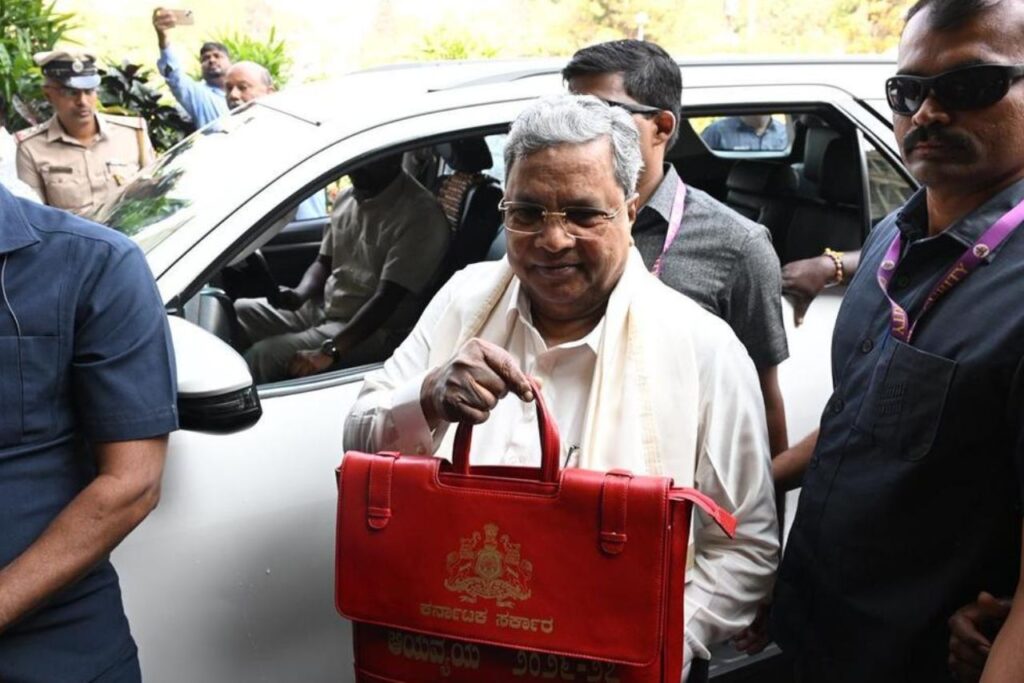
Karnataka Budget 2026: Infra, Energy and Other Sectors Where the Govt Will Spend ₹4.48 Lakh Cr
Synopsis: The Karnataka Budget 2026–27 outlines a development-focused plan with...
5 Stocks Trading Below 5-Year PE Average with Over 100% YoY Profit Growth
Synopsis: Low P/E combined with high profit growth suggests a valuation disconne...
₹1 Lakh to ₹1,750: 6 Stocks That Wiped Out Investor Wealth
Synopsis: Six stocks have plunged 77% to 98% from their all-time highs, eroding...

Why Are Mainboard IPOs Getting Listed at Discounts in Recent Times?
Synopsis: India’s IPO momentum is slowing as many recent mainboard listings debu...