Balaji Amines: Can Its New DME Fuel Cut India’s LPG Imports and Save Foreign Exchange?
Alex Smith
3 hours ago
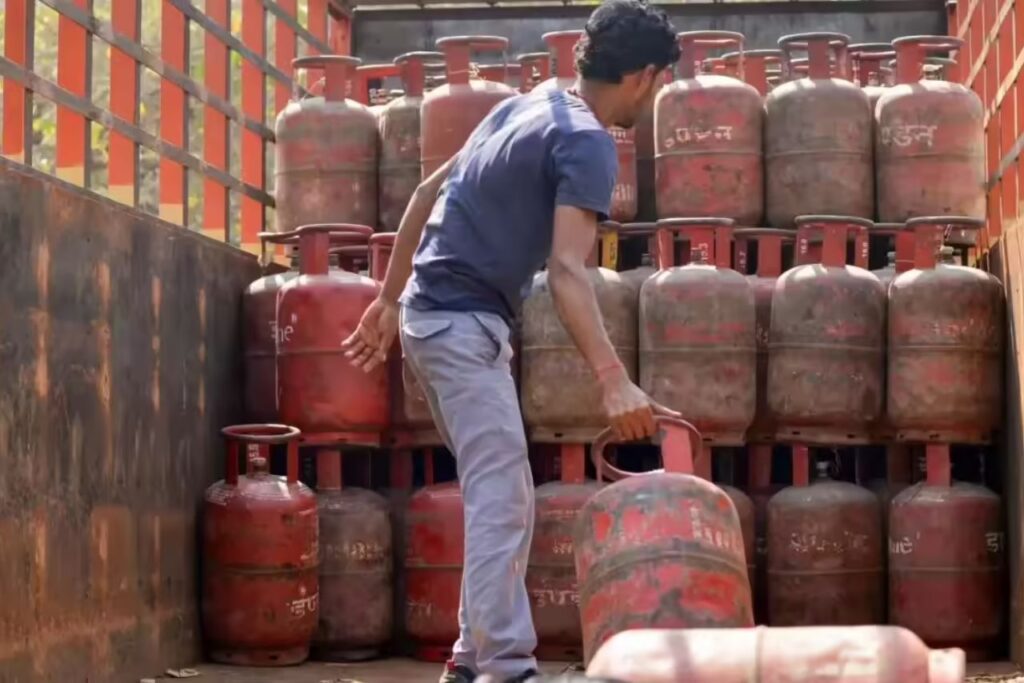
Synopsis: Balaji Amines Limited shares are in focus upon commissioned India’s first commercial Dimethyl Ether (DME) plant, a step that could enable up to 8% blending with LPG and gradually help reduce import dependence while saving foreign exchange.
The company is one of India’s leading manufacturers of aliphatic amines and their derivatives, specialising in the production of speciality chemicals, and is in focus in today’s trade as it has commissioned India’s first DME manufacturing plant. In this article, let’s see whether Balaji Amines’ new DME fuel can really cut India’s LPG imports and save foreign exchange
With a market capitalization of Rs. 5,859.88 crores in the day’s trade, the shares of Balaji Amines Ltd jumped upto 7.4 percent making a high of Rs. 1,841.30 per share compared to its previous closing price of Rs. 1,713.65 per share.
Balaji Amines’ DME Fuel: A Game-Changer for India’s LPG Import Bill?
Balaji Amines Limited has commissioned its Dimethyl Ether (DME) production plant at its Unit-IV facility in Chincholi MIDC, Solapur. Commercial production began on May 20, 2026, marking a major milestone for the company and the Indian chemical industry.
With this development, Balaji Amines becomes the first company in India to produce DME at a commercial scale, with an annual capacity of 1,00,000 metric tonnes using imported foreign technology.
DME Positioned as a Cleaner Alternative to LPG?
Dimethyl Ether is a clean-burning fuel that can be blended with LPG and is already used in several Western and European countries for cleaner energy applications. In India, the Bureau of Indian Standards (BIS) has recently issued an IS code permitting DME blending with LPG up to 8%, opening the door for early-stage adoption in the domestic energy mix.
DME blending with LPG could gradually reduce India’s dependence on imported LPG, which is a significant component of the country’s energy import bill. By substituting a portion of LPG demand with domestically produced DME, India could potentially:
- Reduce import dependency on LPG
- Improve energy security
- Save valuable foreign exchange over time
However, the actual impact will depend on large-scale adoption by Oil Marketing Companies (OMCs) and regulatory rollout. Since this is India’s first DME project, the company is currently facing challenges in obtaining statutory approvals, including PESO permissions for filling and road transportation.
The absence of established domestic standards has also created initial hurdles in storage, handling, and transport. As a result, international standards are being adopted and validated for safe commercial use.
Initial Focus: Industrial and Commercial Applications
In the early phase, Balaji Amines plans to supply DME primarily to the aerosol industry, along with select industrial heating applications and other niche commercial fuel uses. These segments offer quicker adoption since they require limited changes in existing systems.
Widespread blending of DME with LPG is expected to take longer, as it depends on the development of supporting infrastructure, safety standards, and full regulatory alignment. Broader adoption will likely accelerate only after Oil Marketing Companies (OMCs) integrate it into large-scale fuel distribution systems.
Industry Outlook: A Step Toward Energy Diversification
Speaking on the occasion, D. Ram Reddy, Managing Director of Balaji Amines, said that the project marks an important step towards India’s energy self-reliance. He stated that since DME production is entirely new for India, BIS has recently published a new IS Code stating DME can be blended with LPG up to 8%.
He emphasised that public sector Oil Marketing Companies (OMC) should now take proactive steps towards adopting DME blending initiatives. He further added that amid growing uncertainties in the global energy sector, the development of alternative fuels has become the need of the hour. The use of DME can significantly reduce India’s dependence on LPG imports, thereby lowering dependence on Imported Fuel, by saving valuable foreign exchange.
Balaji Amines Diversifies Beyond DME Into EV Battery Chemicals
Balaji Amines is actively expanding into the EV battery chemicals segment as part of its long-term growth strategy. The company is repurposing parts of its existing facilities to produce next-generation “new age” chemicals aimed at meeting rising demand from the fast-growing EV ecosystem in India.
The company sees strong potential in two critical EV battery materials. Dimethyl Carbonate (DMC – electronic grade) is widely used in EV battery electrolytes, and Balaji Amines is currently the only manufacturer of this chemical in India, with an installed capacity of 15,000 MTPA and scope for cost-efficient expansion.
Another key product is N-Methyl Pyrrolidone (NMP – electronic grade), which the company has been producing for over two decades. It is now being upgraded to serve EV battery-grade requirements, especially to support upcoming large-scale gigawatt-level battery manufacturing in India.
Financials & Others
Its revenue from operations rose by 11.9 percent YoY from Rs. 353 Crores in Q4FY25 to Rs. 395 Crores in Q4FY26, and it also increased by 19.3 percent QoQ from Rs. 331 Crores in Q3FY26 to Rs. 395 Crores in Q4FY26.
Its net profit rose by 60.4 percent YoY from Rs. 40.4 Crores in Q4FY25 to Rs. 64.8 Crores in Q4FY26, and it also increased by 110.4 percent QoQ from Rs. 30.8 Crores in Q3FY26 to Rs. 64.8 Crores in Q4FY26.
The earnings per share (EPS) for the quarterly period stood at Rs. 19.99, compared to Rs. 12.36 in the previous year’s quarter. The company has also recommended a final dividend of Rs. 11/- per equity share, i.e., 550% on the face value of Rs. 2/- per share.
Balaji Amines Limited is one of India’s leading manufacturers of Aliphatic Amines, specialising in Methylamines, Ethylamines, speciality chemical derivatives, and pharma excipients. Established in 1988, the company began commercial production of Methyl Amines in 1989 and later expanded into Ethyl Amines and downstream derivative products, catering to the pharmaceutical, pesticide, and speciality chemical industries.
The company has consistently expanded its manufacturing capacities and improved its processes to deliver high-quality products at competitive costs. Balaji Amines also developed indigenous amine manufacturing technology in India, strengthening its position in a sector where technology is closely guarded globally.
With certifications including ISO 9001:2015, ISO 14001:2015, and ISO 45001:2018, the company has built a strong presence in international markets. Its products meet stringent global quality standards, helping it secure continuous orders from leading global customers.
The company has reported decent profitability metrics, with a Return on Capital Employed (ROCE) of 11.0 percent and a Return on Equity (ROE) of 8.75 percent. It also maintains a healthy balance sheet with a low debt-to-equity ratio of 0.07, reflecting strong financial stability.
Additionally, the company has maintained a healthy dividend payout of 20.4 percent, highlighting its shareholder-friendly approach. Its working capital requirements have also improved significantly, reducing from 101 days to 68.5 days, indicating better operational efficiency and cash flow management.
Disclaimer: The views and investment tips expressed by investment experts/broking houses/rating agencies on tradebrains.in are their own, and not that of the website or its management. Investing in equities poses a risk of financial losses. Investors must therefore exercise due caution while investing or trading in stocks. Trade Brains Technologies Private Limited or the author are not liable for any losses caused as a result of the decision based on this article. Please consult your investment advisor before investing.
The post Balaji Amines: Can Its New DME Fuel Cut India’s LPG Imports and Save Foreign Exchange? appeared first on Trade Brains.
Related Articles
5paisa Capital Share: Why Are FIIs and Promoters Increasing Stake Despite Weak Financials?
Synopsis: Institutional and insider buying continues in a capital markets platfo...

Is CarTrade Tech The “Fallen Internet Stock” That Investors Should Watch Amid IT Bloodbath?
Synopsis: CarTrade Tech has fallen around 45 percent from its November 2025 high...
Swaraj Engines vs Kirloskar Oil Engines: Which Tractor Stock Performed Better in Q4?
Synopsis: – Two engine manufacturers from the same industrial family close...
PTC India Share: Why the Power Stock Is Betting Big on Renewable Energy and BESS
Synopsis: A leading power trading intermediary reported FY26 trading volume grow...