Bit Digital Saw Ethereum’s Strategic Value Before Institutions Caught On
Alex Smith
3 hours ago
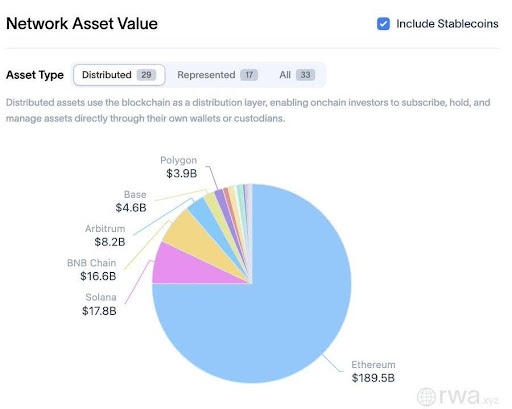
In a market where most institutions focus on crypto, Bit Digital appears to have taken a more forward-looking approach by recognizing Ethereum’s strategic importance early on. While many players were still treating ETH as a secondary asset, Bit Digital began positioning itself around ETH’s long-term potential as the backbone of decentralized finance, staking, and tokenized economies.
Ethereum’s Role As A Settlement Layer Continues To Expand
In a recent post on X, Bit Digital revealed that the company recognized Ethereum as a core strategic balance sheet asset years before the institutional consensus broadly embraced its role as the settlement infrastructure rail for crypto. Bit Digital anchored its thesis to a simple dynamic that usage and adoption continue to expand, while the price remains compressed.
As stablecoin settlement, tokenization, and on-chain financial activity continue to scale, ETH’s real-world usage has steadily increased regardless of market volatility. When the infrastructure layer individuals have been steadily accumulating becomes cheaper, and real-world utility continues to grow, the capital allocation decision becomes clearer.
The firm emphasized that its stack position has been diligently built over multiple market cycles, and its recent ETH purchase is a continuation of that strategic asset framework. Bit Digital also explains that it was early to recognize ETH as an asset suitable for a public company’s balance sheet, and that the company’s recent ETH purchase is a continuation of a long-standing thesis at a price the market made available.
One of the strongest signals emerging from the real-world asset (RWA) market is the growing dominance of Ethereum as the primary settlement layer for the majority of tokenized financial assets. According to Pharos post, this trend is not being driven by institutions suddenly becoming more crypto-native. Instead, capital markets fundamentally value neutral settlement layers, credible infrastructure, and composability across financial applications.
Meanwhile, as the RWAs sector continues to scale, chains will increasingly compete on settlement credibility rather than community culture or market narratives. The next phase of tokenization will not be defined by who can launch assets fastest, but by who can support compliant and globally coordinated financial activity that could emerge at scale.
Large ETH Holders Continue Accumulating During Market Weakness
Ethereum is showing strong signs of quiet accumulation by large holders, a pattern often associated with early-stage bullish positioning. Crypto analyst Lucky has noted that the data reveal that wallets holding 100,000 ETH have increased their collective balance to around 17.41 million ETH, marking a 9-week high and accounting for roughly 22% of the circulating supply.
This type of behavior is what long-term investors watch closely because it reflects strategic accumulation during periods of price weakness, which is a very strong bullish setup for ETH.
Related Articles
SEC Sues Texas Man For $12.3 Million Crypto Asset Fraud – Details
The US Securities and Exchange Commission (SEC) is pressing charges against Nath...

Bitcoin Indices Paint Fragile Market Position – How Close Is Relief?
Over the last month, Bitcoin prices have dipped by 3.45% net, as the leading cry...

$10M In Bitcoin: Texas Breaks From IBIT To Build Its Own BTC System
A public website showing real-time Bitcoin holdings and valuations will be requi...
What The Fed Chairman Said About XRP And Its Implications For Holders
Tom, the founder of OpenFind, has drawn attention to a research paper co-authore...