Bitcoin ETFs Extend Inflow Streak as Institutional Capital Rotates Into $HYPER
Alex Smith
21 hours ago
What to Know:
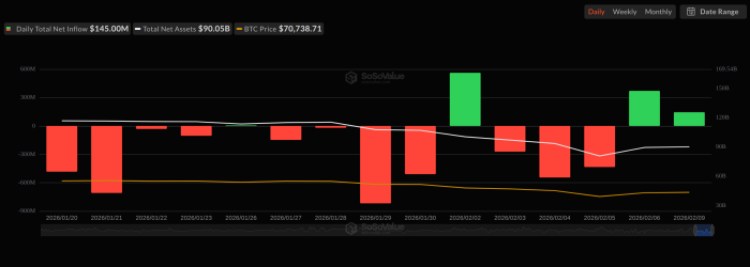
- Spot Bitcoin ETFs continue to see consistent net inflows, creating a supply shock that historically precedes capital rotation into infrastructure altcoins.
- Bitcoin Hyper differentiates itself by integrating the Solana Virtual Machine (SVM) to bring high-speed, programmable smart contracts to the Bitcoin network.
- The project solves Bitcoin’s core limitations of slow transactions and high fees while preserving the security guarantees of the Layer 1 blockchain.
Institutional appetite for digital assets isn’t showing any signs of slowing down. Spot Bitcoin ETFs just logged another week of consistent net inflows, signaling a distinct shift in market structure.
The data points to a supply shock dynamic where issuers like BlackRock and Fidelity are absorbing coins faster than miners can produce them, effectively creating a rising price floor for the premier asset.
That stability matters. Historically, when Bitcoin goes flat after a run, liquidity trickles down to high-beta infrastructure plays, specifically the ones solving Bitcoin’s scaling headaches. While Bitcoin remains the pristine collateral of the crypto economy, its network congestion and lack of programmability are still major barriers to mass adoption.
Investors are now looking past the store-of-value narrative toward the execution layer. The market is hunting for protocols that can unlock the nearly $2T of dormant capital on the Bitcoin network. Amidst this search for yield, Bitcoin Hyper ($HYPER) has emerged as a focal point for developers and smart money alike.
By integrating the speed of the Solana Virtual Machine (SVM) directly with Bitcoin’s security architecture, the project is positioning itself to capture the liquidity overflowing from the ETF-driven bull market.
Solving The Execution Bottleneck: SVM Meets Bitcoin Security
The current landscape of Bitcoin Layer 2s is a bit of a mess. Users are often forced to choose between speed and security. Bitcoin Hyper fixes this dichotomy with a modular architecture: it uses the Bitcoin L1 for final settlement while deploying a real-time SVM Layer 2 for execution.
That’s a massive technical differentiator. By using the Solana Virtual Machine, the network achieves low-latency processing and high throughput that native Bitcoin script simply can’t support.
For developers, this integration changes the calculus of building on Bitcoin. The protocol supports Rust-based smart contracts, allowing dApps to run with the performance users expect from modern DeFi, while anchoring their state to Bitcoin’s immutable ledger.
This ‘best of both worlds’ approach, Solana’s speed plus Bitcoin’s trust, aims to solve the friction of high fees and slow block times that have historically plagued the ecosystem.
The utility here extends beyond simple transfers. The infrastructure supports a decentralized Canonical Bridge for seamless $BTC transfers and offers a robust environment for NFT platforms and gaming dApps. By enabling high-speed payments in wrapped BTC and sophisticated DeFi protocols (like lending and staking), the network effectively transforms Bitcoin from a passive asset into a programmable financial instrument.
VISIT THE OFFICIAL $HYPER PRESALE SITE
Whale Accumulation Signals Confidence In Hyper’s $31M Presale
Traders often watch ‘smart money’ wallet movements to gauge a project’s viability before the public launch. On-chain metrics for Bitcoin Hyper suggest real interest from high-net-worth individuals positioning themselves ahead of the Token Generation Event (TGE).
According to the official presale page, $HYPER has already raised over $31M, a figure that underscores strong demand for Bitcoin-native DeFi solutions. With tokens currently priced at $0.0136754, the valuation reflects an early-entry opportunity relative to established L2s like Stacks or fast-execution chains like Solana.
But even more telling is the behavior of large-volume buyers. Whales have been appearing in pods, with large purchases totalling over $1M; the largest of these was $500K. This specific accumulation during a presale phase implies a long-term conviction in the project’s roadmap and its high-APY staking incentives, which are designed to reward community governance.
The combination of significant capital raises and whale activity suggests the market views this SVM-integration model not just as a technical upgrade, but as a necessary evolution for the Bitcoin ecosystem.
The information provided in this article is not financial advice. Cryptocurrency investments carry high risk and volatility. Always conduct independent research.
Related Articles
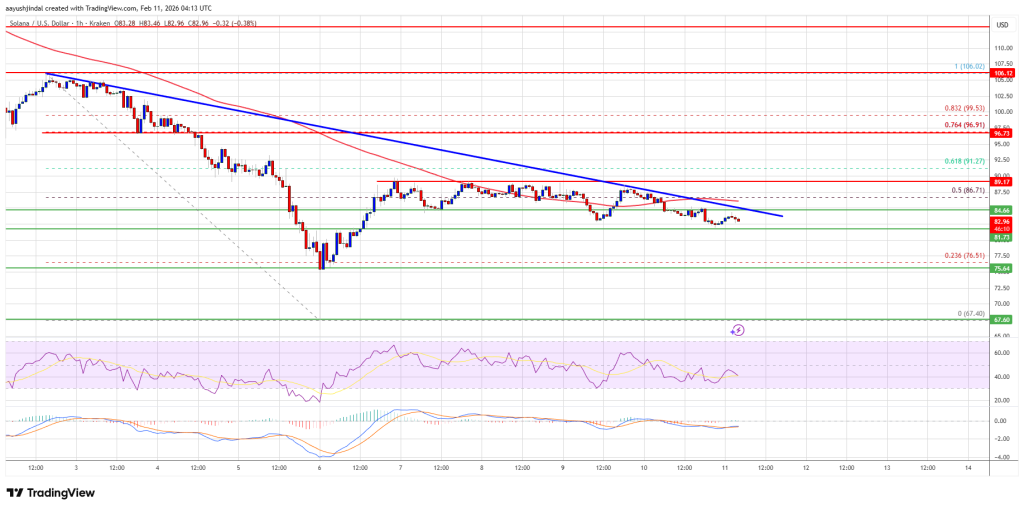
Solana (SOL) Under Pressure As Downtrend Looks Ready To Resume
Solana failed to settle above $90 and trimmed some gains. SOL price is now facin...

Ethereum Holders Shift To Self-Custody As Market Consolidates Near $2K
Ethereum is struggling to hold the $2,000 level as persistent selling pressure c...
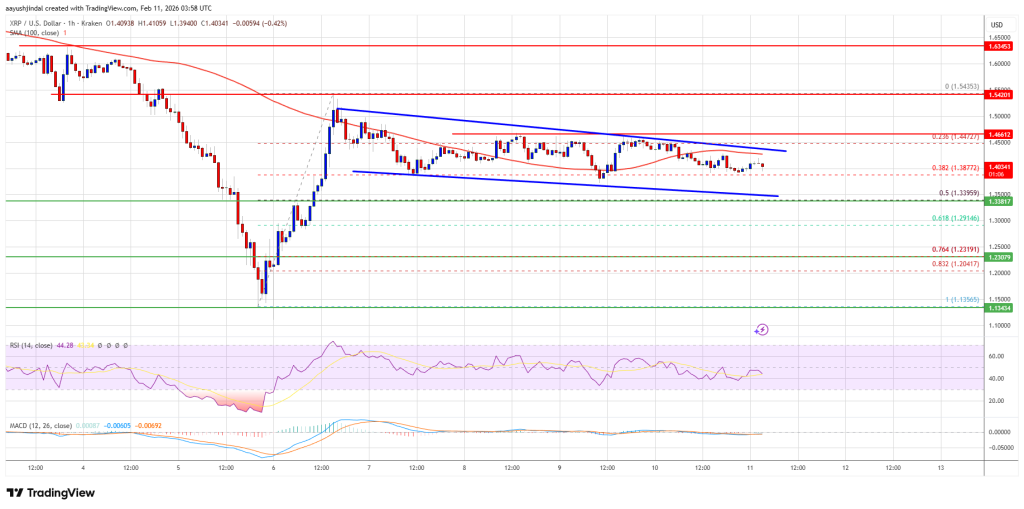
XRP Price Faces Critical Test, Failure Could Trigger Another Slide
XRP price failed to surpass $1.550 and started another decline. The price is now...
Cardano May Be At A Prime Buying Point, Analyst Says
Reports say Cardano’s price has slid low enough that a fresh wave of buyers is t...