Bitcoin ETFs Near YTD Flow Recovery Despite 40% Price Drop
Alex Smith
2 hours ago
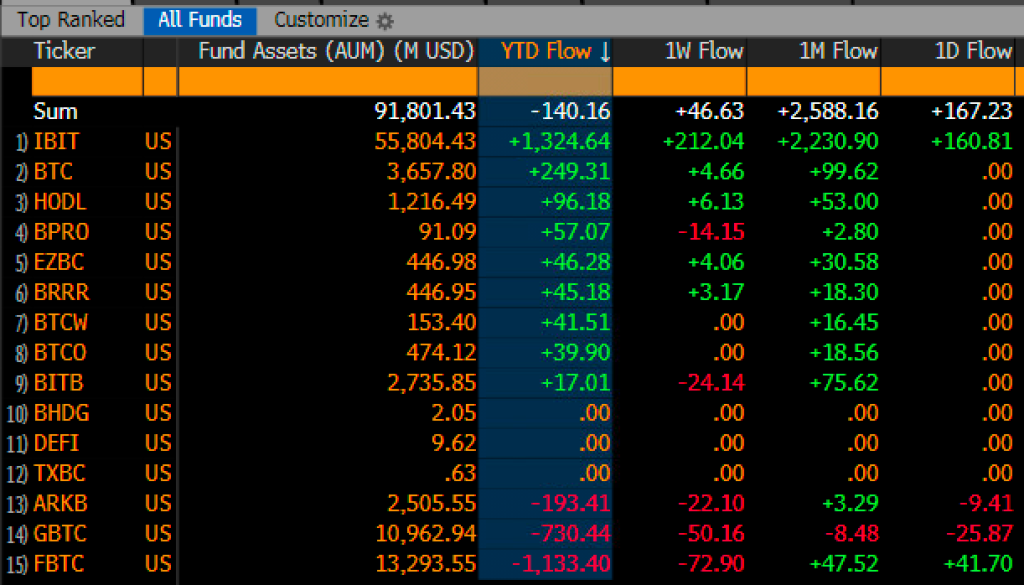
US spot Bitcoin ETFs are on the verge of fully reversing their year-to-date outflows, even after Bitcoin endured a roughly 40% drawdown over the past six months, a resilience that is beginning to stand out against historical precedent in other asset classes.
Data shared by Bloomberg ETF analyst Eric Balchunas shows aggregate Bitcoin ETF flows turning sharply positive in recent weeks. While the group still sits at approximately -$140 million year-to-date, the pace of recent inflows suggests that deficit is close to being erased. Over the past month alone, Bitcoin ETFs have attracted roughly $2.59 billion, underscoring a notable shift in investor behavior.
BlackRock’s IBIT Leads Bitcoin ETF Rebound
At the center of the rebound is BlackRock’s IBIT, which has pulled in $1.32 billion in net inflows year-to-date, placing it in the top 2% of all ETFs by flows. Over the past month, IBIT alone has attracted $2.23 billion, with an additional $212 million over the last week, signaling persistent demand despite broader market volatility.
Other funds are contributing to the recovery, albeit at a smaller scale. Fidelity’s FBTC and ARK’s ARKB remain under pressure on a year-to-date basis, posting -$1.13 billion and -$193 million respectively. Grayscale’s GBTC is also in the red with outflows at -$730 million.
Still, the broader picture has improved materially. Several mid-tier products, including BITB, BTC, and HODL, are showing positive inflows year-to-date, while smaller funds like EZBC and BRRR have quietly added tens of millions in net demand. The aggregate effect is a market that has absorbed significant selling pressure earlier in the year and is now approaching equilibrium.
Balchunas framed the development as unusual in historical context, particularly given the magnitude of Bitcoin’s recent correction. “Yeah bitcoin ETFs now $2.5b for month and one good day away from completely digging out of their YTD flow hole,” he wrote, adding that IBIT has already crossed that threshold. “Again, incredible fortitude in face of 40% 6mo price drop and widespread media pile on.”
He contrasted this behavior with gold during a comparable period of stress. “For context, when gold fell 40% in short time frame about 10yrs ago, it saw 1/3 of its investors bail (not that that’s bad either, that’s normal, btc is just abnormal).” The implication is not that Bitcoin is inherently more stable, but that its investor base—at least in ETF form—has demonstrated a higher tolerance for drawdowns.
That observation aligns with Balchunas’ broader view on how both assets function within portfolios. In a separate note, he emphasized that neither Bitcoin nor gold should be evaluated through short-term performance alone, particularly given their inconsistent correlation properties. “Bitcoin is similar but with more correlation (0.45) with stocks. Both unpredictable but valid asset classes and shouldn’t be judged based on short time frames.”
At press time BTC traded at $71,322.
Related Articles

Bitcoin Holders Pull Coins Off Exchanges, Data Points To Steady Buying
Bitcoin has been making higher highs and higher lows at least twice this month —...

Qubic Unveils 3-Phase Rollout For Dogecoin Mining Attack
Qubic will begin its staged transition from Monero to Dogecoin mining on April 1...
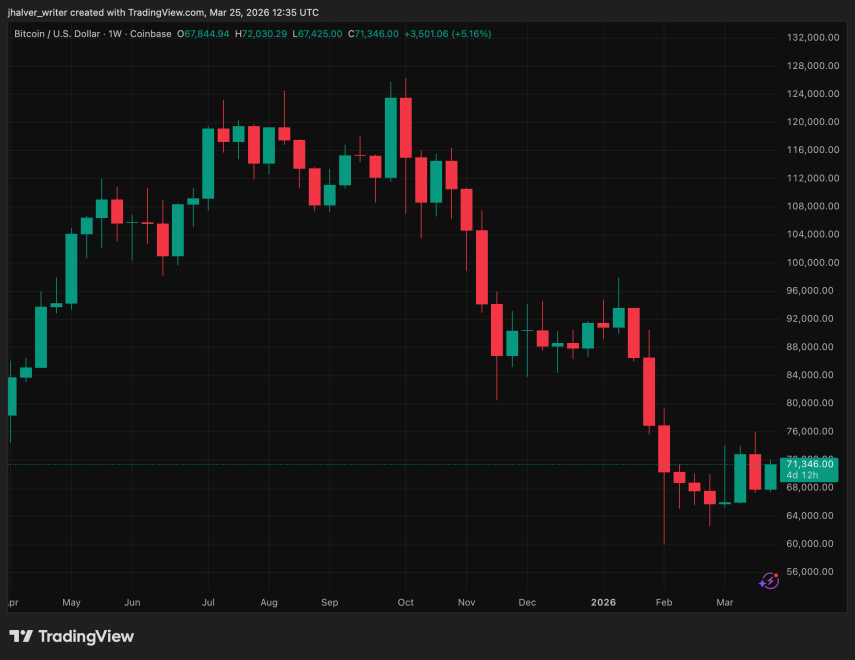
AI Ignites Crypto’s Next Supercycle With BTC And ETH In Front, BlackRock Says
BlackRock’s Robbie Mitchnick believes AI to be a bigger long-term force for cryp...
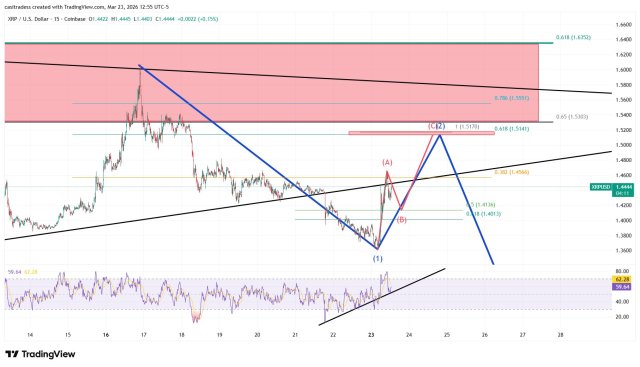
XRP Pundit Shares Why You Shouldn’t Get Tricked By The Price Rebound
Recently, the XRP price has been in an uptrend, spurred on by the improving macr...