Bitcoin vs. Gold: BTC a Better Opportunity Than in 2017, Data Shows
Alex Smith
1 week ago
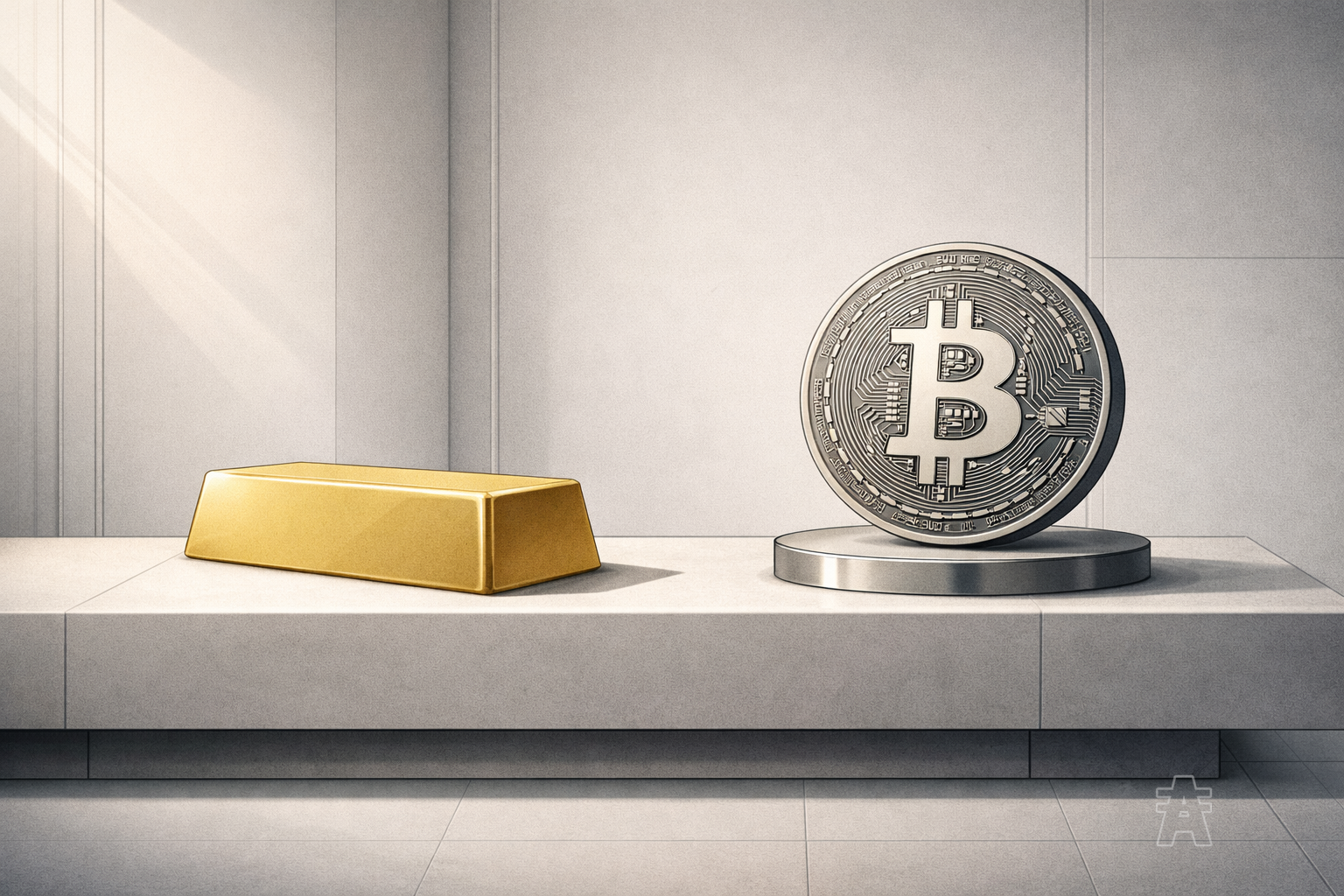
For more than a decade, Bitcoin was widely considered a volatile and speculative digital asset—a far cry from the traditional safe havens that investors have turned to for wealth preservation, like gold. However, the financial landscape of 2024 paints a very different picture. Bitcoin has evolved into a compelling investment vehicle, one that may no longer just complement gold—but potentially rival or exceed it in both performance and strategic utility.
During the 2017 bull market, Bitcoin skyrocketed to nearly $20,000 on the back of a retail-fueled mania led by Initial Coin Offerings (ICOs) and little regulatory oversight. It was a digital gold rush devoid of fundamentals. Fast forward to 2024, and Bitcoin operates in a vastly more mature ecosystem. Proper regulatory frameworks have emerged in several jurisdictions, particularly in the United States and the European Union. Institutional-grade custodians, advanced trading platforms, on-chain analytics, and capital inflows from large funds have all contributed to Bitcoin’s legitimacy—and stability.
So, why is Bitcoin in 2024 more promising than ever?
Macro Environment Tilts Toward Bitcoin
We are living in an age of economic uncertainty. Inflation remains stubbornly high in many major developed economies, while record-setting sovereign debt ratios are eroding confidence in fiat currencies. Central banks, which once held unwavering authority, are increasingly questioned on both fiscal responsibility and monetary policy transparency.
Historically, these conditions have pointed to gold as the go-to hedge. And yes, gold has performed well in its role—its price in 2024 remains at or near historical highs. But gold's upside is mostly linear and predictable.
Bitcoin, by contrast, offers an entirely new risk-reward paradigm. It blends scarcity with programmability, decentralization with transparency. Importantly, Bitcoin's hard-capped supply of 21 million coins makes it immune to inflationary policy by design. Additionally, it is borderless, censorship-resistant, and available for trading 24/7. For investors looking not just to protect wealth but to grow it meaningfully, Bitcoin's asymmetric return potential becomes hard to overlook.
On-Chain Metrics Reinforce Bitcoin’s Strength
Unlike traditional assets, Bitcoin benefits from on-chain transparency—a feature that allows near real-time observation of investor behavior, network activity, and holding patterns. According to analytics platforms like Glassnode and IntoTheBlock, long-term holders (LTHs) are accumulating Bitcoin at unprecedented levels. These holders are not just “diamond hands” looking to ride out volatility—they are often institutional investors deploying massive capital in strategically timed positions.
Notably, exchange outflows have remained consistently high throughout late 2023 and early 2024. This signals a clear reluctance to sell at current price levels and reflects high conviction in Bitcoin’s long-term value. Furthermore, many entities—including hedge funds, family offices, and even some sovereign wealth funds—have publicly disclosed their Bitcoin holdings, signaling a broader institutional realization of Bitcoin’s role as a strategic asset.
This is a stark contrast to the 2017 bull market; that era was defined largely by speculation and retail-driven FOMO (fear of missing out). Today’s market structure is more sophisticated, measured, and fundamentally supported.
Gold Is Stable—Bitcoin Is Strategic
Gold’s role as a hedge against economic instability is firmly established. With a track record spanning thousands of years, gold has earned the moniker of “store of value.” Over the past decade, it has returned about 50%, which is respectable but unremarkable given the broader macroeconomic backdrop.
Bitcoin, in contrast, has returned over 10,000% in the last 10 years, even when factoring in drawdowns and bear markets. Its performance has outpaced not only gold but also most equities and commodities.
The argument isn't necessarily gold versus Bitcoin—it’s that Bitcoin offers a strategic edge for those looking beyond capital preservation to exponential capital growth. In a world where low-interest rates and fiat erosion weigh on traditional portfolios, Bitcoin represents a viable, high-performing diversifier that traditional assets simply cannot replicate.
Regulatory Evolution Opens the Institutional Floodgates
The crypto regulatory landscape has rapidly matured. In 2024, U.S. regulators approved a number of spot Bitcoin ETFs—arguably one of the most significant milestones in Bitcoin’s journey toward mainstream acceptance. These ETFs alone have drawn in over $25 billion in capital within months of their launch and continue to experience significant inflows from retirement accounts, pension funds, and high-net-worth individuals.
The significance of these ETFs cannot be overstated. They offer a familiar vehicle for traditional investors to gain exposure to Bitcoin without dealing with private keys, self-custody, or exchange risk. Combined with robust custodial services that meet institutional compliance and regulatory standards, the process of allocating to Bitcoin has moved from risky to routine.
Moreover, clearer definitions from regulatory bodies such as the SEC, CFTC, and FINMA now provide a foundation of trust for fiduciaries managing consumer assets. This dramatically widens Bitcoin’s reach and appeal across various investor classes.
Technological Advancements Add Fundamental Value
The Bitcoin network itself has not stood still. The Taproot upgrade, implemented in 2021, enhanced scalability and privacy features. More recently, Layer 2 solutions like the Lightning Network have enabled near-instant and low-cost transactions, making Bitcoin more viable for micro-payments and global remittance services.
The development of decentralized finance (DeFi) ecosystems on Bitcoin, cross-chain interoperability protocols, and asset-tokenization platforms continuing to build on top of Bitcoin’s security layer are only accelerating the utility and stickiness of the network. These upgrades make Bitcoin not just a store of value, but a foundation for innovation in the digital economy.
The Contrarian Edge: Timing Is Everything
Markets reward risk-takers who act before consensus forms. While headlines and media analysts continue to promote gold as the steady hand during turbulence, forward-thinking investors see opportunity in being ahead of the curve. The next wave of Bitcoin adoption is already underway, and the institutional groundwork is set to send prices higher as more funds seek exposure.
Remember—early buyers in previous cycles, especially before the major bull run in 2017 and the institutional boom of 2020, saw life-changing returns. Today, the stage is arguably better set: more clarity, more infrastructure, and more demand across both retail and institutional channels. It is a moment where the upside far outweighs the downside for those willing to act with conviction.
Gold may protect your purchasing power amid economic chaos. But Bitcoin offers a redefinition of what purchasing power even means in the digital age. Its attributes—scarcity, decentralization, programmability, and transparency—position it uniquely for a world that is rapidly digitizing every asset, store of value, and medium of exchange.
In 2024, Bitcoin isn’t just a speculative asset. It’s becoming mainstream money. And now may be your best opportunity to take part.
Related Articles

How to Swap ETH to USDT on Swapter.io: A Quick & Secure Guide
The cryptocurrency market is known for its high volatility, which is why many in...
Bitcoin Whales Capitalize on $60K Dip, Acquiring 40K BTC
Bitcoin whales bought the dip, accumulating 40,000 BTC near $60K.
Bitcoin price rebounds 11% above $65K: Who is buying the dip?
Bitcoin rebounds above $65K as smart money seizes the dip opportunity.

AI Meets Crypto: Weekly Gains, Volatility & Market Shifts You Need to Know
Daily crypto insights and AI trends.