Blinkit vs Amazon Now: Can Blinkit Survive Amazon’s Rapid Expansion?
Alex Smith
2 months ago
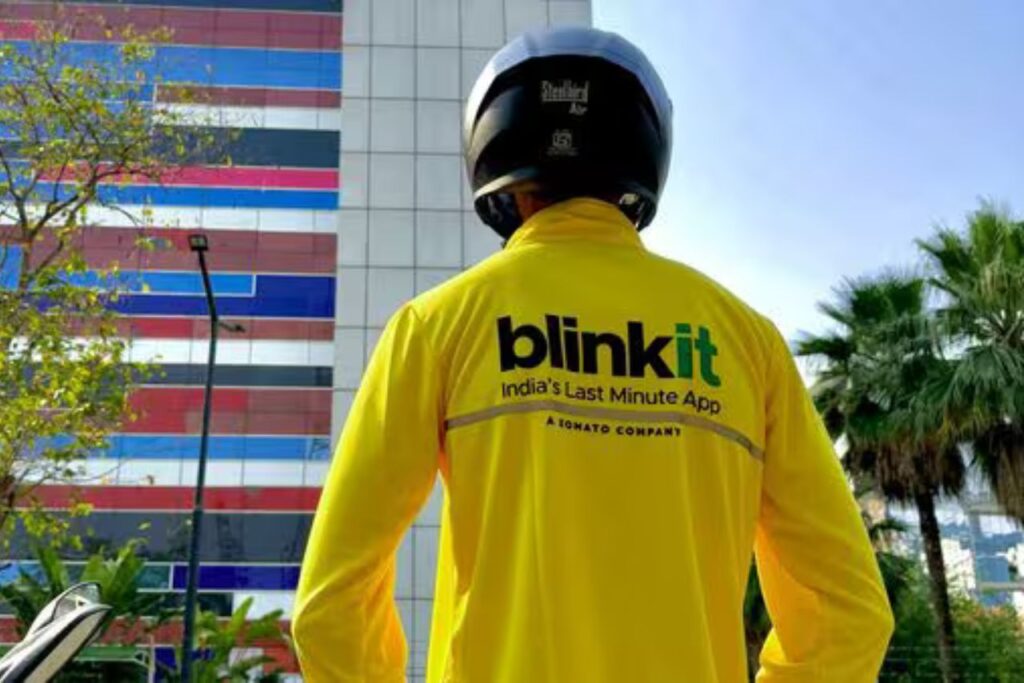
The Indian quick-commerce industry is witnessing an unprecedented surge in demand as consumers increasingly expect groceries and essentials to be delivered within 10-20 minutes. Fueled by urbanization, changing shopping habits, and a growing appetite for convenience, the sector is projected to reach multi-billion-dollar valuations in the coming years.
Intensifying competition among players is driving rapid innovation in delivery speed, micro-fulfilment networks, and customer engagement, while investors closely watch as major e-commerce platforms accelerate their expansion, signaling a potential shake-up in the market landscape.
Eternal’s Blinkit
Blinkit, now operating under Eternal Limited, stands out as a leading force in India’s quick commerce sector with impressive growth and operational strength. As of Q2FY26, Blinkit has rapidly expanded to 1,816 stores, with plans to reach 2,100 by the end of 2025. It recorded a remarkable 137 percent year-over-year growth in Net Order Value (NOV), reaching Rs. 11,679 crore, while Adjusted Revenue soared 756 percent YoY to Rs. 9,891 crore. This success is driven by Blinkit’s shift to an inventory ownership model covering 80 percent of sales, enabling better control over delivery speed and customer experience.
Following aggressive expansion and investments in market share, Blinkit has improved its profitability metrics, with reduced losses compared to the previous two quarters, showcasing a sustainable, confident growth trajectory that solidifies its leadership in the fast-evolving quick commerce space in India.
Amazon Now’s Rapid Expansion Plans
Amazon is aggressively scaling its quick-commerce business, Amazon Now, in key metros including Bengaluru, Delhi, and Mumbai. The company plans to open two new micro-fulfilment centres every day, taking the total to over 300 by year-end, up from around 250 currently, reflecting a rapid push to compete with Flipkart, Eternal-owned Blinkit, Zepto, Instamart, and other players. Amazon Now delivers essentials within minutes while offering a broader grocery selection and over 40,000 items in hours, more than one million same-day items, and four million next-day items.
Premium Prime members have reportedly tripled their shopping frequency after using the service, underscoring strong customer adoption. According to Amazon India’s Country Manager Samir Kumar, “This rapid scale-up reflects our commitment to serving more neighbourhoods with the speed and selection customers expect from Amazon – from essentials in minutes through Amazon Now and a broader selection with deliveries in a few hours, the same day or next day.”
With this expansion, Amazon is positioning itself to become a leader in India’s thriving quick-commerce market, intensifying competition in a sector already growing under rivals like Blinkit, Instamart, Zepto, and new entrants including BigBasket Minutes, Flipkart Minutes, and JioMart.
Competitive Landscape: Blinkit vs Amazon Now
In the competitive landscape of India’s quick-commerce sector, Blinkit and Amazon Now are increasingly jockeying for market leadership, though their strategies and operational footprints show distinct characteristics.
Blinkit, under Eternal Limited, operates 1,816 stores across the country, with plans to reach 2,100 by December 2025 and 3,000 by March 2027, giving it a dense hyperlocal network that enables high-frequency deliveries in urban clusters. Amazon Now, by contrast, is rapidly scaling its presence in Bengaluru, Delhi, and Mumbai, with over 100 micro-fulfilment centres operational as of September and plans to open two new centres daily, targeting more than 300 by year-end, representing a strategic metro-focused expansion rather than nationwide density at this stage.
Delivery speed remains a key differentiator as Blinkit emphasizes 10-20 minute deliveries for high-demand groceries and essentials, while Amazon Now offers essentials in minutes in select neighbourhoods, alongside 2-hour, same-day, and next-day deliveries for a broader assortment, including over 40,000 items in hours, one million same-day items, and four million next-day items, effectively catering to both instant and extended basket needs.
Average order value (AOV) and basket composition also vary, with Blinkit focusing heavily on fresh produce, hyperlocal essentials, and daily-use groceries, while Amazon can leverage its broader e-commerce ecosystem to include electronics, higher-value items, household goods, and grocery essentials, resulting in a higher ASP (average selling price) per order for Amazon in its quick-commerce segment.
From a unit economics perspective, Blinkit has transitioned about 80 percent of Net Order Value to an inventory ownership model, which has expanded its adjusted revenue to Rs. 9,891 crore in Q2FY26, with Adjusted EBITDA losses reducing slightly to Rs. 156 crore and margins improving from -1.8 percent to -1.3 percent of NOV QoQ, reflecting operational efficiency and scale benefits from its dense store network.
Amazon Now, though still in the early phase of expansion, leverages Prime logistics, supplier reach, and a vast product catalogue, enabling it to drive higher order frequency with Prime members reportedly tripled their shopping frequency but profitability trends remain unreported, as the model is heavily focused on rapid customer acquisition and market penetration.
Overall, Blinkit benefits from wider geographic coverage in terms of store density, faster hyperlocal fulfilment for essential goods, and improving profitability trends, whereas Amazon Now leverages strategic metro concentration, broader product categories, higher AOV, and Prime integration to challenge incumbents.
The two models represent complementary competitive pressures: Blinkit dominates in rapid, everyday essentials within its dense urban networks, while Amazon Now is aggressively building infrastructure to deliver both speed and scale, potentially reshaping the quick-commerce landscape in India in the coming quarters.
Blinkit’s Strengths
Blinkit’s position in India’s quick-commerce sector is reinforced by several defensive strengths that help it withstand intensifying competition from Amazon Now and other entrants. The company commands a significant market share in high-frequency grocery and essential deliveries, underpinned by a dense network of 1,816 stores, soon expanding to 2,100 by December 2025 and 3,000 by March 2027, which ensures hyperlocal reach and rapid fulfilment.
A core part of Blinkit’s strategy is its high-frequency customer base, particularly urban households that order essentials daily, ensuring repeat business and stable unit economics. The company is also expanding into adjacent categories, including gifting, electronics, and small appliances, which broadens basket size and increases per-customer lifetime value. Operationally, Blinkit leverages warehouse and dark-store efficiencies, optimizing stock allocation, last-mile delivery routes, and fulfilment speed to improve store-level economics.
In addition, synergies with Zomato’s platform, including shared delivery infrastructure and customer acquisition channels, provide cost savings and cross-selling opportunities. These factors collectively support a path toward profitability, with Adjusted EBITDA losses narrowing and margins improving, demonstrating that Blinkit’s network expansion and operational improvements are translating into stronger unit economics while maintaining growth momentum.
Is Amazon Now A Threat To Blinkit?
While Amazon’s rapid expansion through Amazon Now represents a formidable challenge, the company does not yet pose an immediate material threat to Blinkit’s established quick-commerce leadership. Blinkit’s head start in store density, geographic coverage, and high-frequency customer base provides a defensible moat, particularly in urban clusters where hyperlocal fulfilment and sub-20-minute deliveries are critical.
Amazon’s aggressive incentives and heavy investment in micro-fulfilment centres, while enabling rapid market penetration, may not be sustainable over the long term, especially given the high operational costs and the need to scale across multiple metros simultaneously.
Strategically, Blinkit’s 10-20 minute instant delivery model focuses on daily essentials and fresh groceries, catering to high-repeat, low-ticket transactions, whereas Amazon’s delivery combines essentials with a much broader assortment, including higher-value items, making the models complementary rather than identical; speed alone may not be the deciding factor in customer retention.
Overall, Blinkit’s operational efficiencies, improving margins, and Zomato-driven synergies position it well to defend market share, while Amazon’s scale and broader catalogue create a competitive tension that will likely intensify over the next few years, particularly in metros where delivery density and customer habituation are key.
Written by Manan Gangwar
Disclaimer
The views and investment tips expressed by investment experts/broking houses/rating agencies on tradebrains.in are their own, and not that of the website or its management. Investing in equities poses a risk of financial losses. Investors must therefore exercise due caution while investing or trading in stocks. Trade Brains Technologies Private Limited or the author are not liable for any losses caused as a result of the decision based on this article. Please consult your investment advisor before investing.
The post Blinkit vs Amazon Now: Can Blinkit Survive Amazon’s Rapid Expansion? appeared first on Trade Brains.
Related Articles
Gulshan Polyols and 9 Stocks That Hit 20% Upper Circuit Today; Are You Holding Any?
Synopsis: Ten stocks, including Quest Laboratories Limited and Munish Forge Ltd,...

Siyaram Recycling stock jumps 5% after securing 3 orders from Supreme Industries and more
Synopsis: Siyaram Recycling Industries Ltd shares rose 4.8% after securing three...

G R Infraprojects stock in focus upon securing rail link project worth ₹1,897 Cr
Synopsis: Shares of one of the leading infrastructure companies gain attention a...

Greenply and 5 other stocks in which promoters increased their stake; Do you hold any?
Synopsis: Promoters increased stakes on 10th February 2026 in Greenply Industrie...