Can the U.S. Take Control of Venezuela Through War?
Alex Smith
1 month ago
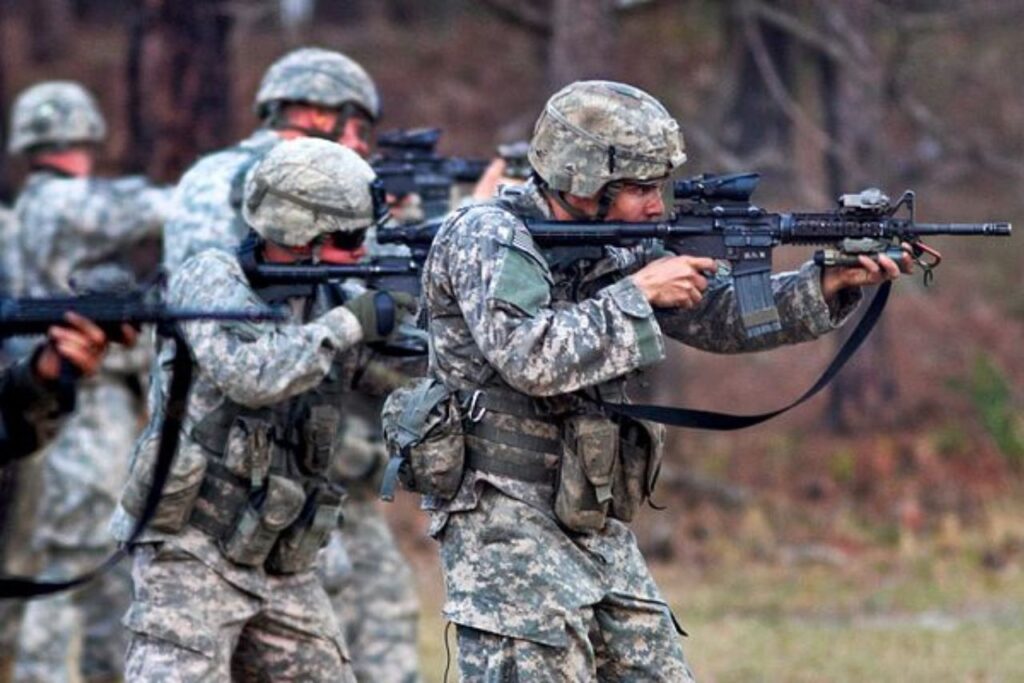
Synopsis: Despite Venezuela’s 303-billion-barrel oil reserves and 31-million population, collapsing output at 0.9–1.1 mbpd, legal barriers, internal resistance, and geopolitics make U.S. control unsustainable.
The question of whether the United States can take over Venezuela has resurfaced amid escalating geopolitical tensions, renewed U.S. involvement, and Venezuela’s deepening political and economic crisis. With the world’s largest proven oil reserves, a collapsed economy, and a sharply divided political system, Venezuela represents both a strategic opportunity and a significant risk for Washington.
The debate is less about whether the U.S. has the capability to intervene, and more about whether such a move is practical, sustainable, or even achievable in today’s global order.
Recent Developments
In a dramatic turn of events in early January 2026, U.S. forces reportedly captured Venezuelan President Nicolás Maduro during a military operation, and U.S. President Donald Trump stated that the United States would run Venezuela temporarily until a political transition could be arranged. He also said U.S. oil companies would rebuild the country’s oil infrastructure.
However, U.S. officials later clarified that Washington does not intend to govern Venezuela’s day‑to‑day affairs indefinitely. Secretary of State Marco Rubio stressed that the U.S. does not plan to directly control or administer Venezuela.
Why did the U.S attack Venezuela?
The United States attacked Venezuela in early January 2026 primarily to capture President Nicolás Maduro and his inner circle on charges of drug trafficking, terrorism, and undermining regional security, as part of a broader effort to weaken his regime, curb the influence of allied powers like Russia, China, and Cuba, and gain strategic leverage over Venezuela’s vast oil reserves. The operation was framed as a targeted law-enforcement and military action rather than a formal occupation, highlighting Washington’s aim to disrupt Maduro’s control while promoting a political transition favorable to U.S. interests.
Venezuela’s Strategic Importance
Venezuela possesses the largest proven oil reserves in the world, estimated at around 303 billion barrels, accounting for roughly 17 percent of global crude reserves. Much of this oil is extra‑heavy crude located in the Orinoco Belt, which requires advanced technology and investment to extract efficiently, obstacles that have been compounded by years of underinvestment and sanctions.
Despite its enormous reserves, Venezuela’s oil production has dramatically declined from historical highs of more than 3 million barrels per day in past decades to roughly 860,000 – 1.1 million barrels per day recently, representing only about 1 percent of global crude output. Exports and revenues have similarly lagged, with crude exports generating about $4.05 billion in 2023, far below major producers such as Saudi Arabia or the United States.
Population and broader economic indicators also reflect struggle: with an estimated population of about 31.2 million people, the economy has suffered from hyperinflation, a collapse in living standards, and heavy dependence on oil for government revenue and export earnings. Long‑term decline in production has had a deep impact on GDP and public services.
Military Capabilities and Political Realities
From a military standpoint, the U.S. possesses overwhelming capabilities compared to Venezuela’s armed forces, which are sizable but less advanced. Analysts note that while a targeted military operation might be feasible, a sustained occupation would be highly risky, costly, and likely face widespread resistance. Past interventions in countries like Iraq and Afghanistan illustrate the challenges of controlling a nation militarily even after initial success.
Politically, Venezuela is deeply polarized. While some factions might welcome external support, large segments of the population and portions of the military remain loyal to the current government. Any attempt at takeover could spark prolonged unrest or insurgency.
Regional and International Law Constraints
Under international law, direct military intervention or occupation without United Nations authorization is generally prohibited. The Venezuelan government and many global actors have condemned U.S. actions as violations of sovereignty.
Additionally, while some regional figures argue for external action against Nicolás Maduro’s government, others stress the importance of respecting domestic political processes and sovereignty.
Internal Venezuelan Dynamics
Even if the U.S. could militarily remove one government, controlling the country politically would be far more difficult. Venezuela’s population is deeply divided, and significant portions of the military and public support nationalist leadership. Prolonged unrest, insurgency, or guerrilla resistance could emerge in response to foreign intervention, making sustainable governance difficult.
Geopolitical Considerations
Venezuela has long‑standing ties with external powers such as Russia, China, and Cuba, which complicate U.S. actions and could influence regional responses. For instance, Cuba reported that its military personnel were killed in recent clashes tied to U.S. operations, highlighting the broader geopolitical stakes.
Conclusion
While the U.S. can exert influence in Venezuela through military, diplomatic, or economic pressure, a literal, permanent “takeover” is highly unlikely. The costs, including military, economic, humanitarian, and reputational, would outweigh potential gains.
The situation illustrates a broader lesson in modern geopolitics: even powerful nations face limits when intervening in countries with complex internal dynamics and strong external alliances.
Disclaimer: The views and investment tips expressed by investment experts/broking houses/rating agencies on tradebrains.in are their own, and not that of the website or its management. Investing in equities poses a risk of financial losses. Investors must therefore exercise due caution while investing or trading in stocks. Trade Brains Technologies Private Limited or the author are not liable for any losses caused as a result of the decision based on this article. Please consult your investment advisor before investing.
The post Can the U.S. Take Control of Venezuela Through War? appeared first on Trade Brains.
Related Articles

EV Stock Hits 10% Upper Circuit After Reporting 1,620% YoY Increase in Revenue
Synopsis: Ampvolts Ltd hit a 10% upper circuit after its Q3 results, and Revenue...

Jewellery stock in focus after its net profit increases by 700% YoY
Synopsis: Jewellery stock gained attention after strong Q3FY26 performance, with...
Infra stock that can deliver return of up to 57%; Recommended by Axis Direct
Synopsis: G R Infraprojects Ltd gained attention after Axis Direct initiated a ‘...

Va Tech Wabag and 4 other stocks with order book exceeding their market cap to keep an eye on
Synopsis: Several Indian infrastructure and engineering companies, including NCC...