Can This Small-Cap Retailer Become the DMart of Ethnic Wear?
Alex Smith
2 hours ago
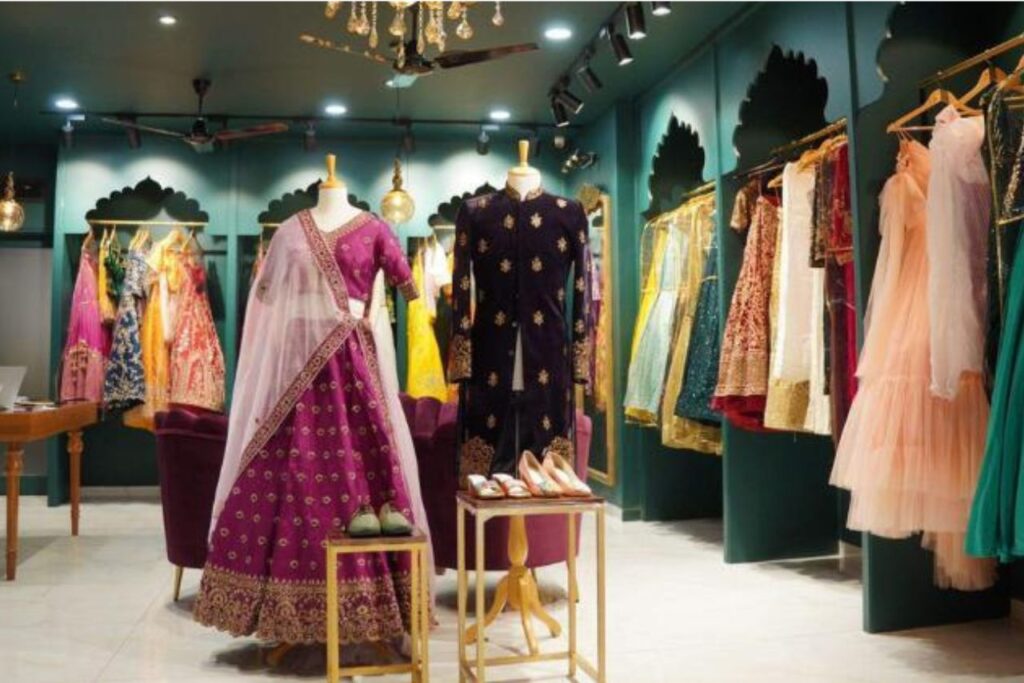
Synopsis: A South Indian ethnic wear retailer has scaled from a single store to a multi-format chain spanning four states, riding India’s shift from unorganized to organized apparel retail. Its cluster-based expansion and multi-brand strategy raise an interesting question for investors tracking small-cap retail plays
India’s ethnic wear market has long been dominated by neighbourhood stores and regional players, but organized retail is steadily eating into that share. One South-based apparel chain has built its growth story around this shift, expanding methodically rather than chasing scale for its own sake. Here’s a closer look at how it’s positioned.
With a market capitalization of Rs. 1,412 crore, the shares of Sai Silks (Kalamandir) Limited were trading at Rs. 92 per share, with a 52-week range of Rs. 223 to Rs. 89.76, and they are trading at a P/E of approximately 10x.
A Store Network Built for Scale
Sai Silks (Kalamandir) is one of South India’s largest ethnic apparel retailers, known primarily for sarees but also offering lehengas, men’s and children’s ethnic wear, and value fashion for weddings, festivals, and daily wear. The company has come a long way from its first outlet in Ameerpet, Hyderabad, back in 2005, when the business started as a partnership firm. Today, it runs 83 stores across 24 cities, spanning 8.14 lakh sq. ft. of retail space, with an average store size of 9,813 sq. ft.
The company crossed the 50-store mark only in 2022, which means it has added over 30 stores in roughly four years, a meaningfully faster clip than its earlier years of growth. It was listed on the BSE and NSE in 2023 and employs 6,315 people as of June 2026. What stands out isn’t just the number of stores but the pattern of growth, steady, store-by-store additions built on a repeatable model rather than sporadic expansion.
Clustering Instead of Scattering
Rather than spreading stores thin across the map, Sai Silks concentrates its presence within specific South Indian markets, a cluster-based approach that improves inventory rotation, keeps logistics costs in check, and creates cross-selling opportunities within the same geography. For the quarter ended June 2026, Telangana and Andhra Pradesh led the pack with 29 and 24 stores respectively, each contributing roughly ₹109 crore in revenue and together accounting for close to 58% of quarterly revenue.
Karnataka added ₹66.03 crore from 15 stores, while Tamil Nadu, with fewer stores at 14, still delivered a strong ₹86.16 crore, nearly 23% of revenue, marking it out as an emerging third growth market. Pondicherry rounded off the mix with a single store.
One Company, Five Brands, Every Budget
Sai Silks doesn’t rely on a single format to capture customers; it operates five distinct brands, each targeting a different price band. Kalamandir, the oldest brand from 2005, serves the middle-income segment (₹1,000–₹100,000) across 12 stores. Mandir, launched in 2011, sits at the ultra-premium end (₹6,000–₹350,000) but remains small-format with just 3 stores. Also from 2011, Vara Mahalakshmi targets premium wedding and occasion wear (₹4,000–₹250,000) and leads the portfolio with 38 stores, underlining how central weddings are to the business.
KLM Fashion Mall (2017) covers value fashion and western wear (₹200–₹75,000) across 19 large-format stores, while the newest brand, Valli Silks (2025), targets entry-level shoppers (₹250–₹35,000) across 11 stores. Together, the five brands let the company serve everyone from budget shoppers to premium wedding buyers, spreading risk across segments rather than depending on one.
Healthy Numbers Per Square Foot
Retail businesses live and die by how efficiently they use space, and Sai Silks appears to be doing reasonably well on that front. The company reported an average revenue of ₹21,070 per sq. ft. and roughly ₹20.4 crore in revenue per store for FY25-26. Productivity at this level indicates the company isn’t simply relying on adding new stores to grow; its existing stores are pulling their weight too.
A Growing Digital Footprint
Beyond physical stores, the company has been building out its omnichannel presence. Its websites collectively draw 1,02,665 visits per day, serving customers across 25 states and 6 union territories, with an average order value of ₹4,744. Its social media reach spans 1.26 million Facebook followers, 8.15 lakh Instagram followers, and 4.15 lakh YouTube subscribers, supported by live shows and video-based commerce.
Riding India’s Formalization Wave
The broader industry backdrop also favors organized players. Per the company’s own disclosures, organized retail’s share of India’s apparel market rose from 14% in FY2007 to 32% in FY2020, with consumers steadily moving away from unbranded, unorganized sellers. India’s female population aged above 25, the core saree-buying demographic, is projected to grow from 37.6 crore in 2021 to 45.5 crore by 2031, adding further tailwind to the category.
Anchored in Weddings and Festivals
Roughly 71.5% of the company’s FY25 revenue came from its saree segment alone, a category deeply tied to India’s wedding and festival calendar. On the sourcing side, the company works with over 4,000 master weavers, weavers, and vendors across India, backed by an 80-member procurement team and 2,20,360 sq. ft. of warehousing capacity spread across Karnataka, Andhra Pradesh, Telangana, and Tamil Nadu.
Financial Snapshot & Business Overview
For the quarter ended June 2026, Sai Silks reported revenue from operations of ₹375.08 crore, down from ₹419.06 crore in the previous quarter and largely flat against ₹379.02 crore in the same quarter last year. Gross margin stood at 41.93%, compared to 42.08% the previous quarter. EBITDA came in at ₹51.85 crore, translating to a margin of 13.83%, against 14.61% in Q4 FY26. PAT stood at ₹25.64 crore, down from ₹32.65 crore quarter-on-quarter and ₹30.06 crore year-on-year, with the PAT margin easing to 6.84% from 7.93% a year ago.
For the full year ended March 2026, the company posted revenue of ₹1,653.67 crore, up from ₹1,462.01 crore in FY25, while PAT rose sharply to ₹140.92 crore from ₹85.39 crore. The company runs a front-end and back-end in-house ERP system with AI/ML integration for store-level insights and real-time tracking of fast- and slow-moving inventory.
Conclusion:
Sai Silks is following a playbook that, in some ways, resembles DMart’s expanding through regional clusters, focusing on operational efficiency, and prioritizing profitable growth over rapid expansion. While ethnic wear is a far more seasonal business than grocery retail, the company’s disciplined execution and multi-brand strategy position it well to benefit from India’s shift toward organized apparel retail. Whether it can consistently replicate this model will determine if the comparison ultimately holds true.
Disclaimer: The views and investment tips expressed by investment experts/broking houses/rating agencies on tradebrains.in are their own, and not that of the website or its management. Investing in equities poses a risk of financial losses. Investors must therefore exercise due caution while investing or trading in stocks. Trade Brains Technologies Private Limited or the author are not liable for any losses caused as a result of the decision based on this article. Please consult your investment advisor before investing.
The post Can This Small-Cap Retailer Become the DMart of Ethnic Wear? appeared first on Trade Brains.
Related Articles
FMEG vs Wires and Cables: Which Business Contributes More to Polycab’s Growth?
Synopsis: Polycab delivered another strong quarter, with both its core Wires ...
8 Stocks Powering India’s Vande Bharat Revolution; Do You Own Any?
Synopsis: India’s Vande Bharat expansion is creating opportunities across...

5 Stocks with Rising EPS and a Low PEG Ratio to Add to Your Watchlist
Synopsis: Companies with improving earnings and low PEG ratios can indicate grow...

Stock to Watch: Can the Data Centre Infra Boom Become a Growth Driver for This Global Leader?
Synopsis: As global AI investments accelerate, the infrastructure required to su...