Canadians: Here’s How Much You Need in Your TFSA to Retire
Alex Smith
1 hour ago
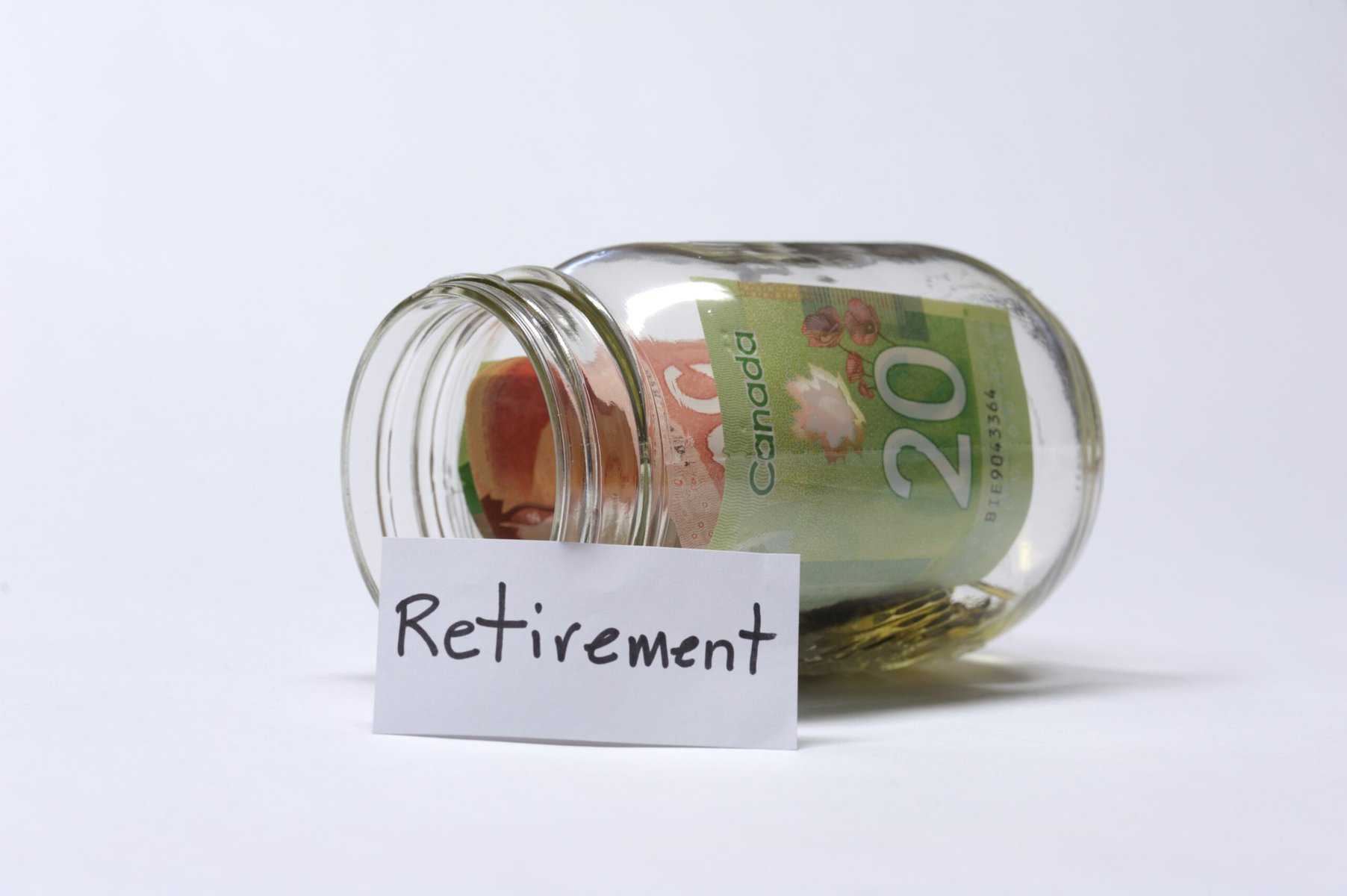
Retirement feels fuzzy until you put a number on it. That is why figuring out how much you need in your Tax-Free Savings Account (TFSA) matters. It turns âI hope Iâm fineâ into a target you can actually chase. It also keeps you honest about trade-offs, like spending less, working a bit longer, or taking more market risk than you really want.
The numbers
How much you need in your TFSA to retire depends on one thing: the income gap. Start with the annual after-tax income you want in retirement, then subtract the income you expect from Canada Pension Plan (CPP), Old Age Security (OAS), workplace pensions, and any rental or business income. Whatever is left is the annual amount your TFSA needs to cover. The nice part is that TFSA withdrawals do not count as taxable income, and they do not affect OAS or GIS eligibility, so the TFSA can act like a clean top-up tool.
Then convert that annual income gap into a lump-sum goal using a withdrawal rate. A common planning shortcut uses a 4% starting withdrawal rate, which means you divide the yearly TFSA income you want by 0.04 to estimate the portfolio size you need. If you want $24,000 per year tax-free from your TFSA, that rough target lands around $600,000. If you want $36,000 per year, you land around $900,000. This rule is not magic, but it gives you a starting point you can adjust as life changes.
Finally, stress-test it. Retirement can last longer than you think, and markets can misbehave right after you stop working, which is the worst timing. Many planners now talk about being a bit more conservative than 4% in tougher market outlooks, or using a flexible approach where you spend a little less after weak years and a little more after strong years. The point is not to find the perfect number once. The point is to pick a number, build toward it, and revisit it each year so you do not drift.
VBAL
If you want a simple TFSA building block while you work toward that number, Vanguard Balanced ETF Portfolio (TSX:VBAL) sits in the sweet spot for a lot of Canadians. It aims for roughly 60% equities and 40% fixed income, and it rebalances along the way. That mix tries to give you growth without making every market dip feel like an emotional event. It is also designed to be a one-ticket portfolio, which matters as complexity often kills consistency.
The biggest news lately was that Vanguard cut the management fee from 0.22% to 0.17%, which is exactly the kind of change long-term investors should care about because fees quietly compound in reverse. The audited MER (management expense ratio) listed for VBAL has sat around 0.24% in recent disclosures, and it may take time for the full fee cut to show up in that headline number.
The other headline is that VBAL keeps doing what it is supposed to do: it distributes income and rebalances. Vanguardâs own distribution history shows regular income payouts across 2025, plus year-end distributions that can include reinvested capital gains allocations. It currently offers a yield around 2.2%, with the exact figure moving as prices and distributions change. Here’s what $20,000 could bring in today for investors.
COMPANYRECENT PRICENUMBER OF SHARESANNUAL DIVIDENDANNUAL TOTAL PAYOUTFREQUENCYTOTAL INVESTMENTVBAL$38.00526$0.83$435.74Monthly$19,988Bottom line
So could VBAL be a buy for someone trying to create TFSA income to retire? It could, as the biggest driver of retirement success is staying invested and steadily contributing, and VBAL makes that easier by keeping the portfolio simple and balanced. It could also be a ânot for youâ choice if you crave higher growth and can handle bigger swings, because the 40% bond sleeve will usually hold returns back in roaring equity markets. Still, for a lot of Canadians, the best retirement TFSA is the one you can hold through ugly headlines without blowing it up, and VBAL was built for that kind of behaviour.
The post Canadians: Here’s How Much You Need in Your TFSA to Retire appeared first on The Motley Fool Canada.
Should you invest $1,000 in Vanguard Balanced ETF Portfolio right now?
Before you buy stock in Vanguard Balanced ETF Portfolio, consider this:
The Motley Fool Canada team has identified what they believe are the top 10 TSX stocks for 2026⦠and Vanguard Balanced ETF Portfolio wasnât one of them. The 10 stocks that made the cut could potentially produce monster returns in the coming years.
Consider MercadoLibre, which we first recommended on January 8, 2014 … if you invested $1,000 in the âeBay of Latin Americaâ at the time of our recommendation, youâd have $20,155.76!*
Now, it’s worth noting Stock Advisor Canada’s total average return is 90%* – a market-crushing outperformance compared to 81%* for the S&P/TSX Composite Index. Don’t miss out on our top 10 stocks, available when you join our mailing list!
Get the 10 stocks instantly #start_btn6 { background: #0e6d04 none repeat scroll 0 0; color: #fff; font-size: 1.2em; font-family: 'Montserrat', sans-serif; font-weight: 600; height: auto; line-height: 1.2em; margin: 30px 0; max-width: 350px; text-align: center; width: auto; box-shadow: 0 1px 0 rgba(0, 0, 0, 0.5), 0 1px 0 #fff inset, 0 0 2px rgba(0, 0, 0, 0.2); border-radius: 5px; } #start_btn6 a { color: #fff; display: block; padding: 20px; padding-right:1em; padding-left:1em; } #start_btn6 a:hover { background: #FFE300 none repeat scroll 0 0; color: #000; } @media (max-width: 480px) { div#start_btn6 { font-size:1.1em; max-width: 320px;} } margin_bottom_5 { margin-bottom:5px; } margin_top_10 { margin-top:10px; }* Returns as of February 17th, 2026
More reading
- The Top Canadian Stocks to Buy Right Away with $45,000
- My Top Canadian Dividend Stocks Youâll Want to Own Forever
- Cash-Rich Canadian Companies That Thrive in Economic Downturns
- Billionaires Are Selling Amazon Stock and Betting on This TSX Stock
- 2 Growth Stocks Set to Skyrocket in 2026 and Beyond
Fool contributor Amy Legate-Wolfe has no position in any of the stocks mentioned. The Motley Fool has no position in any of the stocks mentioned. The Motley Fool has a disclosure policy.
Related Articles

2 Canadian Growth Stocks Supercharged to Surge in 2026
Two Canadian growth stocks are flashing big 2026 potential, one riding e-commerc...

A Scorching Hot ETF Worth the Growth Jolt
Vanguard Mega Cap Growth Index Fund (NYSEMKT:MGK) is a popular ETF among Canadia...
2 TSX Stocks Under $50 That Could Skyrocket
With durable business models, competitive advantages, and solid growth prospects...

The Top Canadian Stocks to Buy Right Away with $45,000
Top Canadian stocks outside the basic materials and technology sectors are stron...