Canadians: How Much Money Should Be in a TFSA to Retire?
Alex Smith
9 hours ago
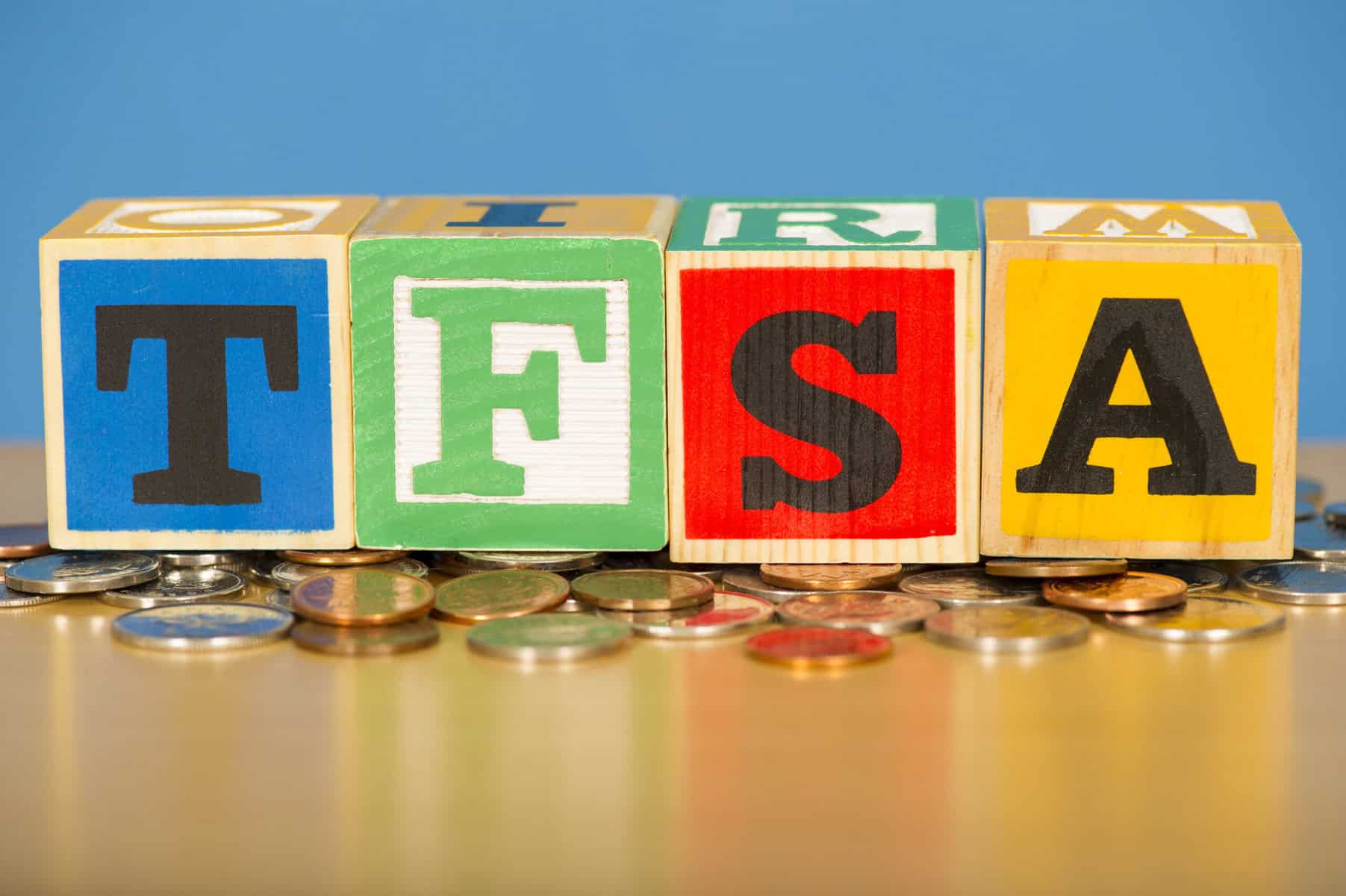
Are you planning to retire on time? If you are still young and have plenty more years in you to stay in the workforce, you should start thinking about it now. A solid retirement plan looks at the big picture rather than a short-term outlook on finances. Buying and holding some of your investments in a Tax-Free Savings Account (TFSA) can be part of an excellent retirement plan.
The account lets you withdraw money held inside it without incurring taxes. Why? Because youâre paying into the account using after-tax dollars. This means any cash or other eligible investments held in the account can grow your account balance tax-free. If you arenât already, you should be investing in a TFSA.
Today, I will discuss how much money you might need in your TFSA to enjoy an excellent quality of life in your golden years.
How much money should you have in a TFSA for retirement?
Right from the get-go, you must understand that there is never a one-size-fits-all solution when assessing exactly how much a person might need in their TFSA to retire. This question has a subjective answer that depends on tax rates, dependents, and living expenses. Despite each Canadian having unique requirements, you can get ballpark figures for the kind of TFSA income someone might need to retire.
To illustrate the examples, I will come up with two fictitious profiles: Tom and Jonathan.
Suppose Tom is a high-earning professional who primarily invests in dividend stocks like one of my favourites, Fortis (TSX:FTS). Since he invests in a TFSA, he doesnât need to worry about taxes on the returns in his TFSA. Now, Tomâs annual household income after taxes is $250,000; he pays $5,000 per month in rent for their apartment, and his familyâs overall expenses come up to around $160,000 per year.
In this case, Harry would ideally like to have around $4.5 million in his TFSA during retirement to maintain the same kind of lifestyle and expenses without getting worried. This is the kind of TFSA account balance you can have with disciplined and long-term investing.
Now, we have Jonathan, who is a single guy who doesnât have family or other dependents. He just has to pay around $1,500 in rent; his total living costs add up to around $38,000 per year. For a comfortable retirement, Jonathan might need as much as $1.1 million in his TFSA to retire using the income from his investments.
Foolish takeaway
You cannot retire on a TFSA alone in 2026. You will need to realize substantial long-term gains, leverage dividend income, and unlock the power of compounding to accumulate enough wealth so you can live off of investment income during your golden years.
The only way that can happen is by making solid and well-informed long-term investments in your TFSA. Building up a well-balanced portfolio, saving diligently, and being disciplined as a stock market investor can help you make it work.
The post Canadians: How Much Money Should Be in a TFSA to Retire? appeared first on The Motley Fool Canada.
Should you invest $1,000 in Fortis Inc. right now?
Before you buy stock in Fortis Inc., consider this:
The Motley Fool Canada team has identified what they believe are the top 10 TSX stocks for 2026⦠and Fortis Inc. wasnât one of them. The 10 stocks that made the cut could potentially produce monster returns in the coming years.
Consider MercadoLibre, which we first recommended on January 8, 2014 … if you invested $1,000 in the âeBay of Latin Americaâ at the time of our recommendation, youâd have $21,827.88!*
Now, it’s worth noting Stock Advisor Canada’s total average return is 102%* – a market-crushing outperformance compared to 81%* for the S&P/TSX Composite Index. Don’t miss out on our top 10 stocks, available when you join our mailing list!
Get the 10 stocks instantly #start_btn6 { background: #0e6d04 none repeat scroll 0 0; color: #fff; font-size: 1.2em; font-family: 'Montserrat', sans-serif; font-weight: 600; height: auto; line-height: 1.2em; margin: 30px 0; max-width: 350px; text-align: center; width: auto; box-shadow: 0 1px 0 rgba(0, 0, 0, 0.5), 0 1px 0 #fff inset, 0 0 2px rgba(0, 0, 0, 0.2); border-radius: 5px; } #start_btn6 a { color: #fff; display: block; padding: 20px; padding-right:1em; padding-left:1em; } #start_btn6 a:hover { background: #FFE300 none repeat scroll 0 0; color: #000; } @media (max-width: 480px) { div#start_btn6 { font-size:1.1em; max-width: 320px;} } margin_bottom_5 { margin-bottom:5px; } margin_top_10 { margin-top:10px; }* Returns as of January 15th, 2026
More reading
- When Doing Nothing Is the Smartest Investment Move
- 2 Dividend Stocks for Canadian Investors to Hold Through Retirement
- A Safer Dividend Stock to Buy With $20,000 Right Now
- The 3 Best Canadian Stocks to Buy With $1,000 Right Now
- Quality Over Hype: The Boring Investment Strategy Thatâs Winning
Fool contributor Adam Othman has no position in any of the stocks mentioned. The Motley Fool recommends Fortis. The Motley Fool has a disclosure policy.
Related Articles

Missed Out on Nvidia? My Best AI Stocks to Buy and Hold
Celestica (TSX:CLS) and another stock that could be a better buy as AI valuation...

2 of the Best TSX Stocks to Buy Before They Start to Recover
Buy these two stocks at current levels and hold on to the shares for the long ru...
Top Canadian Stocks to Buy With $10,000 in 2026
A $10,000 investment can buy four Canadian stocks and build a diversified founda...

Power Up Your TFSA: This TSX-Listed ETF Delivers Tax-Free Monthly Cash Flow
Hamilton Enhanced Multi-Sector Covered Call ETF (TSX:HDIV) pays high dividends m...