Canara Bank, UCO Bank, SBI and other PSU banks fall up to 5% as bond yields rise sharply
Alex Smith
2 hours ago
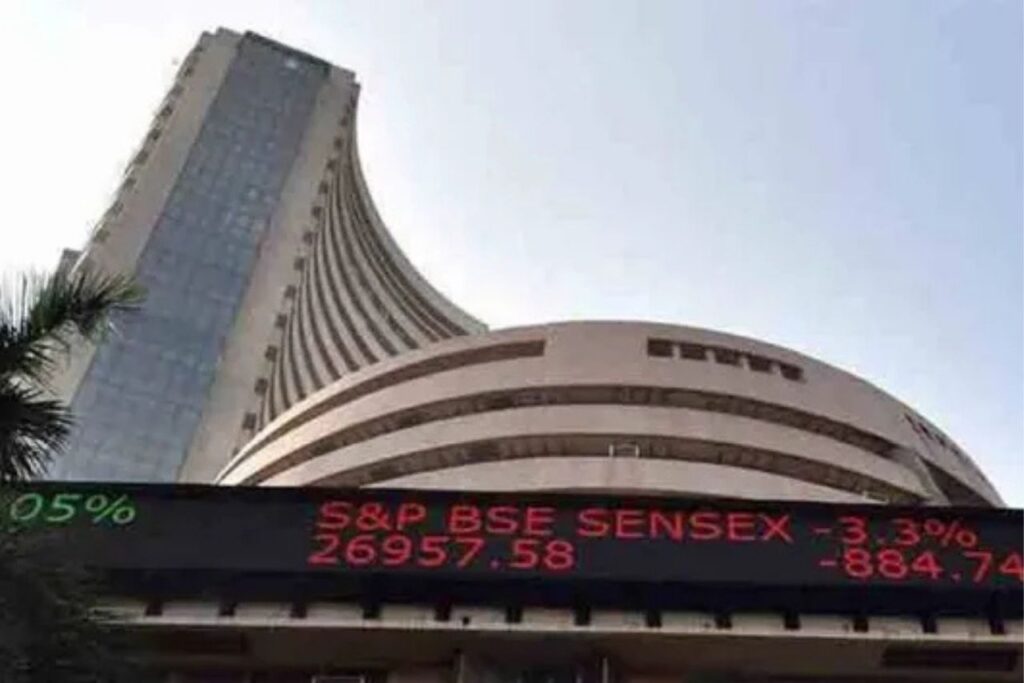
Synopsis: Public Sector Undertaking (PSU) bank stocks plummeted on March 27, 2026, as the 10-year Indian bond yield surged to 6.92%, its highest level in nearly two years. The Nifty PSU Bank index crashed 3.05%, erasing months of gains as investors braced for heavy mark-to-market (MTM) losses on bank bond portfolios.
PSU banking stocks, a favorite in the 2025 bull market, had one of their toughest days recently. A sudden rise in yields triggered by a surprise cut in fuel excise duty that raised fiscal concerns & shifted investor sentiment from risk-on to safety.
What’s the news?
The Nifty PSU Bank index faced a brutal session, closing at 8,249.45 after shedding over 331.60 points in a universal sell-off across state-run lenders. This downturn was triggered by a “double whammy” of surging global crude prices and mounting domestic fiscal jitters, leaving no
major player unscathed. Bank of Baroda spearheaded the decline, tumbling 4.40% to ₹260.70, followed closely by Canara Bank, which dropped 4.64% to ₹130.19. The pain was particularly acute for UCO Bank, which slid nearly 3.90% to hit a fresh 52-week low of ₹23.65.
The primary catalyst for this rout was a sharp spike in the benchmark 10-year G-Sec yield, which touched 6.95% intraday. The mechanical effects of the bond market are that an increase in yield causes a decrease in price, since the proportion of PSU banks to its Statutory Liquidity Ratio (SLR) requires that it maintain a large portfolio of government securities to meet its bond obligations, the decrease in bond price causes it to record a large Mark-to-Market (MTM) loss, directly damaging its bottom line.
Added to these technical forces were systemic fears of fiscal deficit after the government had decided to cut excise duties on petrol and diesel to protect consumers against $115 Brent crude. Although this may be good news to the people, analysts perceive this as a fiscal shock, which would cost the exchequer 1.6 lakh crore in FY27.
This forecasted revenue shortfall will most probably cause the government to increase the rate of borrowing, which will continue to add new bonds to the market, and maintain an upward pressure on yields.
Business Overview
The PSU banking story has shifted from “recovery” to “vulnerability.” While these banks have cleaned up their balance sheets with Canara Bank’s Net NPA falling to 0.45% they remain highly sensitive to interest rate volatility. The current P/E ratio of the PSU Bank index (9.36x) suggests the sector is still fundamentally cheap, but the “Treasury Income” cushion that boosted profits in 2025 has evaporated.
The current credit growth is normalizing and banks such as SBI (-4.64%) and PNB (-4.61%) are currently experiencing a high cost of borrowing. The “Golden Era” of PSU bank outperformance seems to be in tactical recess until the West Asia conflict falls into stabilization, and the fiscal trend clears.
Disclaimer: The views and investment tips expressed by investment experts/broking houses/rating agencies on tradebrains.in are their own, and not that of the website or its management. Investing in equities poses a risk of financial losses. Investors must therefore exercise due caution while investing or trading in stocks. Trade Brains Technologies Private Limited or the author are not liable for any losses caused as a result of the decision based on this article. Please consult your investment advisor before investing.
The post Canara Bank, UCO Bank, SBI and other PSU banks fall up to 5% as bond yields rise sharply appeared first on Trade Brains.
Related Articles

6 Adani Group Stocks with Capex Plans of up to $100B to Keep an Eye On
Synopsis: Adani Group’s expansion plans include investments up to $100 billion a...

Is Middle East Disruption Pushing India’s Chemical Sector into a Margin Squeeze Phase?
Synopsis: Middle East disruptions cause oil prices to rise above $100, increasin...

Omax Autos Reports Ransomware Attack — IT Systems Under Investigation After Cyber Breach
Synopsis: Omax Autos Limited (OMAXAUTO) confirmed a ransomware attack on its IT...
Bharti Airtel requests AGR relief similar to Vodafone Idea’s Rs. 40,000 Cr relief
Synopsis: With its AGR repayment scheduled in March 2026, this telecom giant has...