Crypto Tokenization Boom Or Time Bomb? Four Hidden Risks Wall Street Is Ignoring
Alex Smith
3 hours ago

A new report claims crypto tokenization is a structural overhaul of market plumbing, not just an efficiency tweak.
Crypto Tokenization: The Hot New Thing?
The International Monetary Fund (IMF) released a new report with fresh warnings related to crypto tokenization. Shifting Wall Street’s trading rails onto blockchain-based systems could speed up financial crises beyond regulators’ capacity to react, even as the technology vows to reduce costs and wipe out settlement lags, Bloomberg says.
Tokenization is a process that moves assets and liabilities onto programmable ledgers, embedding settlement, margin and compliance into code. Tobias Adrian’s report claims that such “atomic settlement”, plus 24/7 markets and smart contracts can accelerate liquidity strains and market shocks, potentially outpacing regulators’ ability to respond.
The Fund sees the “most consequential” shift happening inside the regulated system itself (banks, FMIs, asset managers), not just on DeFi rails.
Currently, real world assets (RWAs) amount for above roughly mid‑tens of billions. According to Bloomberg, major banks, clearing houses and asset managers such as BlackRock and JPMorgan are already running live pilots of the technology, aiming to lift fee income by making trading in traditional assets like stocks and bonds smoother and easier.
On the decentralized exchange’s side, Hyperliquid has recently started trading more volume in tokenized commodities than digital assets. Since the conflict began, tokenized oil has ranked among the five most‑liquidated instruments on the leading perp DEX at least three times.
On the CEX’s side, NewsBTC reported that Binance has just joined the RWA’s trading hub bandwagon, with its recently released Gold (XAU) and silver (XAG) futures climbing into the top five by trading volume on Binance Futures. Crude oil benchmarks CL and BZ also posted volumes of $760 million and $358 million respectively.
The Four Main Risks According To The ReportThe report highlights the risk of interoperability and fragmentation risk. Liquidity split across siloed chains and platforms, makes trading less efficient, increases slippage, and complicates risk management.
Another one of the dangers of tokenization is that with instant, continuous settlement, trades close immediately instead of over 1–2 days, so there’s no natural “pause” in the system. Adding to that, with automated margin calls, once prices drop to a certain level, positions are liquidated by code, not humans, adding more sell orders into a falling market.
In a tokenized system, some of the roles once played by regulated human institutions are now played by code and new types of infrastructure. Those come with their own failure modes, like smart-contract bugs, oracle failures or opaque governance.
There is also a macro and emerging-markets (EM) risk. In EMs and smaller economies, large, fast flows of crypto tokens and dollar‑pegged stablecoins can weaken the local central bank’s ability to manage its own currency and interest rates. In simpler words, crypto and stablecoins can create a parallel, dollar‑based monetary system that can undermine local policy tools in smaller or weaker economies.
The IMF itself also concedes crypto tokenization an upside: lower settlement frictions, 24/7 liquidity, more transparent collateral chains, and potential gains in cross‑border payments and inclusion.
A Need For Clearer Legal Frameworks And International CooperationFor all these reasons, the organization is urging for sharper legal rules and tighter international coordination. Without them, tokenized finance might worsen market fragmentation instead of delivering efficiency gains, the report warns.
The report asks for safe settlement assets (central bank money, wCBDCs), clear legal treatment of tokenized claims, common standards for finality/interoperability, and upgraded crisis‑management tools for 24/7 market. Besides that, it places emphasis on governance of code (who controls upgrades and kill‑switches), cross‑border coordination, and the risk that poorly harmonized rules leave tokenized markets “fragmented and peripheral”.
If tokenization really does restructure global market plumbing, crypto‑adjacent rails could sit much closer to the core of the financial system in the next cycle. This is why the IMF is intervening early.
Traders can expect growing institutional flows into tokenized RWAs and money‑market products, but also more regulatory scrutiny on leverage, settlement, and platform governance. Tail‑risk dynamics may change: less settlement friction can mean sharper intraday moves and more binary liquidity squeezes during stress.
Jurisdictions that move fastest on legal clarity and standards are likely to capture tokenization volume and set de facto rules for the rest.
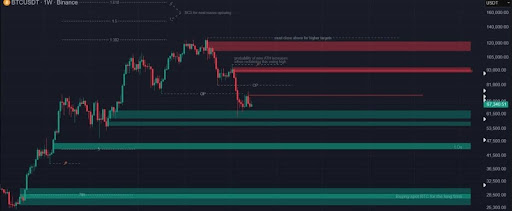
Cover image from Perplexity. BTCUSD chart from Tradingview.
Related Articles

Ethereum Trading on Binance Has Gone Quiet, Discover What Happens When That Changes
Ethereum has reclaimed $2,100. The level is back. The market that produced the r...
What Does The Japanese Bond Gap Have To Do With The XRP Price Reaching $150?
Crypto pundit Remi has explained the impact that the Japanese Bond gap could hav...

XRP Headed For A Price Shock, Japan’s Financial Heavyweight Says
A 10 billion yen blockchain bond launched earlier this year by SBI Holdings may...
Analyst Who Called Bitcoin Price Crash Above $100,000 Predicts Crash To $29,000
The Bitcoin price has surged back above $69,000 after experiencing a major decli...