DOJ Crypto Unit Closure Sparks Scrutiny Of Deputy AG’s Personal Crypto Stakes
Alex Smith
1 week ago
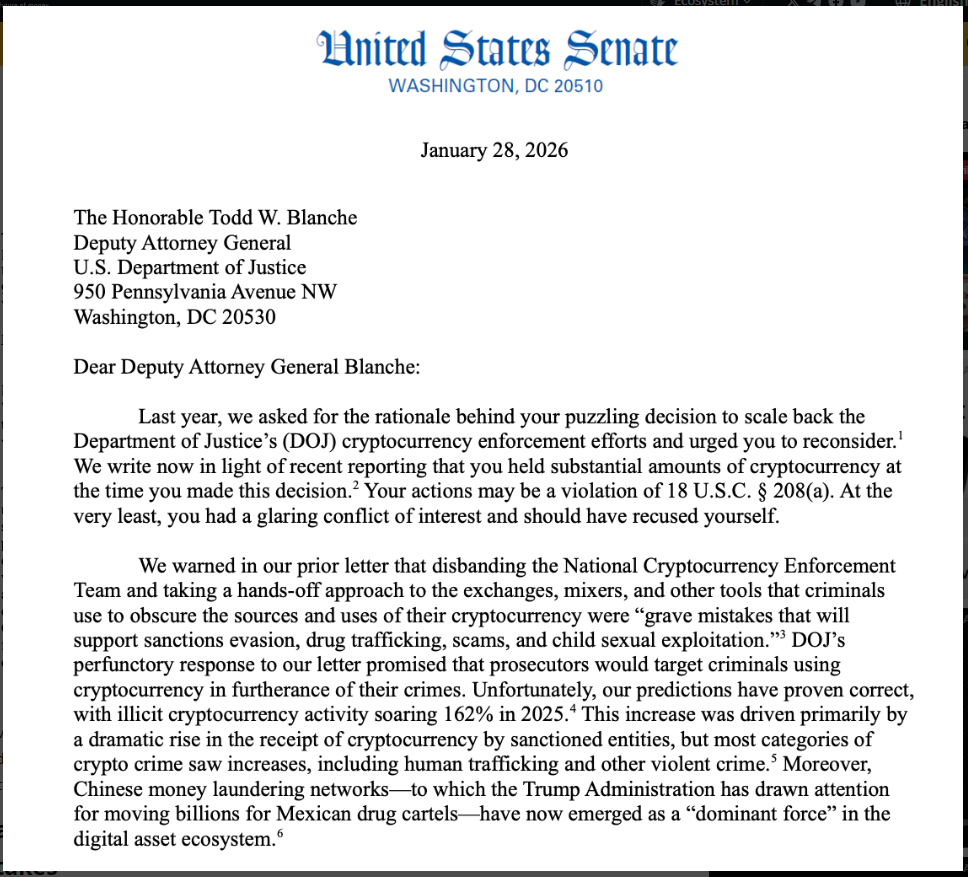
The Justice Department’s move last year to shut a specialized crypto enforcement team is drawing fresh fire after six US senators pressed the deputy attorney general for answers about his personal stakes in digital assets.
The lawmakers say the timing and Deputy Attorney General Todd Blanche’s holdings raise real questions about conflicts that need clear records and a full explanation.
Senators Demand Answers
Reports say the letter, dated January 28, 2026, was sent by Senator Mazie Hirono and joined by Senators Elizabeth Warren, Richard Durbin, Sheldon Whitehouse, Chris Coons, and Richard Blumenthal.
They asked Blanche to provide documents and explain why the National Cryptocurrency Enforcement Team (NCET) was disbanded in April 2025 and whether his own finances played any role in that decision. The lawmakers pointed to federal conflict rules and asked for the timeline and approvals behind the memo.
The memo at the center of the row told prosecutors to stop using enforcement actions as a kind of regulation. It said the department is “not a digital assets regulator” and ordered the NCET closed, shifting focus to crimes like trafficking, terrorism, and fraud that use crypto as a tool. That memo came from Blanche in April 2025 and marked a sharp change in how US prosecutors would treat many crypto cases.
Who Owned What And When
Reports note Blanche had sizable crypto holdings when the policy was issued. Public ethics filings and reporting put his assets in a wide range — between $158,000 and $470,000 — mostly in major coins such as Bitcoin and Ethereum, with some other crypto-related investments as well.
He agreed to divest, and some sales or transfers happened weeks to months after the memo. Critics say that sequence looks bad and could run afoul of conflict rules; supporters say the matters were cleared by ethics officials.
People On Both Sides Are TalkingProponents of the policy change argued it would avoid “regulation by prosecution” and let regulators handle oversight instead of criminal cases.
Industry groups welcomed the move as a way to reduce legal uncertainty for exchanges and developers.
Opponents, including the senators, say scaling back a focused enforcement unit risks leaving gaps that bad actors can exploit, especially as illicit activity in crypto has shown sharp swings in recent years.
What Comes NextLawmakers are now pushing for documents and sworn answers. They want to see when Blanche learned of the holdings, how fast divestment happened, and who inside DOJ reviewed and approved the memo.
The senators pointed to federal law that bars an official from participating in a matter when they have a financial interest, and they requested a timeline and supporting records to judge whether that law was respected.
Featured image from Getty Images, chart from TradingView
Related Articles
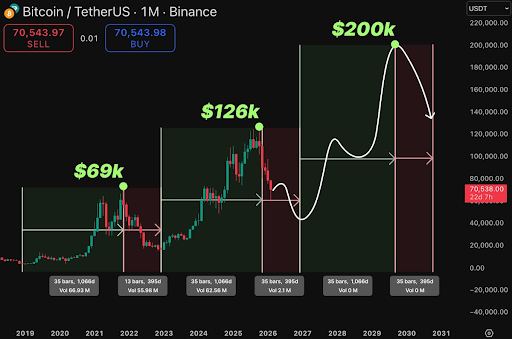
Analyst Reveals The Best Time To Buy Bitcoin And The Best Time To Sell
Bitcoin’s long-term price structure may look chaotic on lower timeframes, but on...
Crypto Dream Turns Nightmare As SafeMoon CEO Gets 100 Months In Jail
Braden John Karony, the one-time CEO of SafeMoon, has been sentenced to 100 mont...
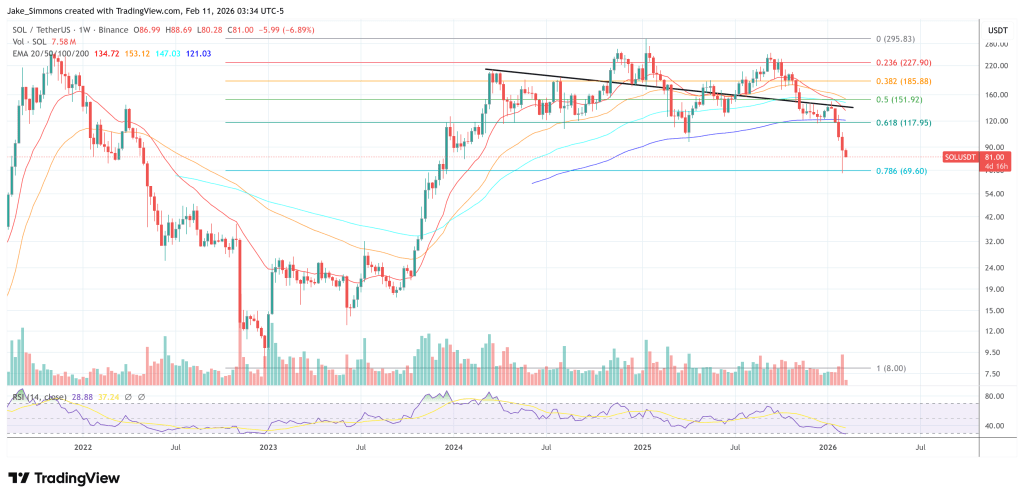
Solana Gets A Big Infra Signal As Alibaba Demos High-Performance RPCs
Solana picked up an infrastructure vote of confidence on Wednesday after Alibaba...

Ethereum Price Drifts Lower as Bearish Pressure Mounts: SUBBD Community Grows
Quick Facts: ➡️ Ethereum is facing significant bearish pressure, struggling belo...