From Real Estate to Power: How Data Centers Are Driving India’s Next Investment Cycle
Alex Smith
2 hours ago
Synopsis: Data centers have quietly become one of the more interesting stock market themes in India, spanning real estate developers, EPC contractors, power utilities and cloud infrastructure companies, and understanding what these facilities actually do is the first step to reading the sector sensibly instead of chasing every stock with “AI” or “cloud” in its investor deck.
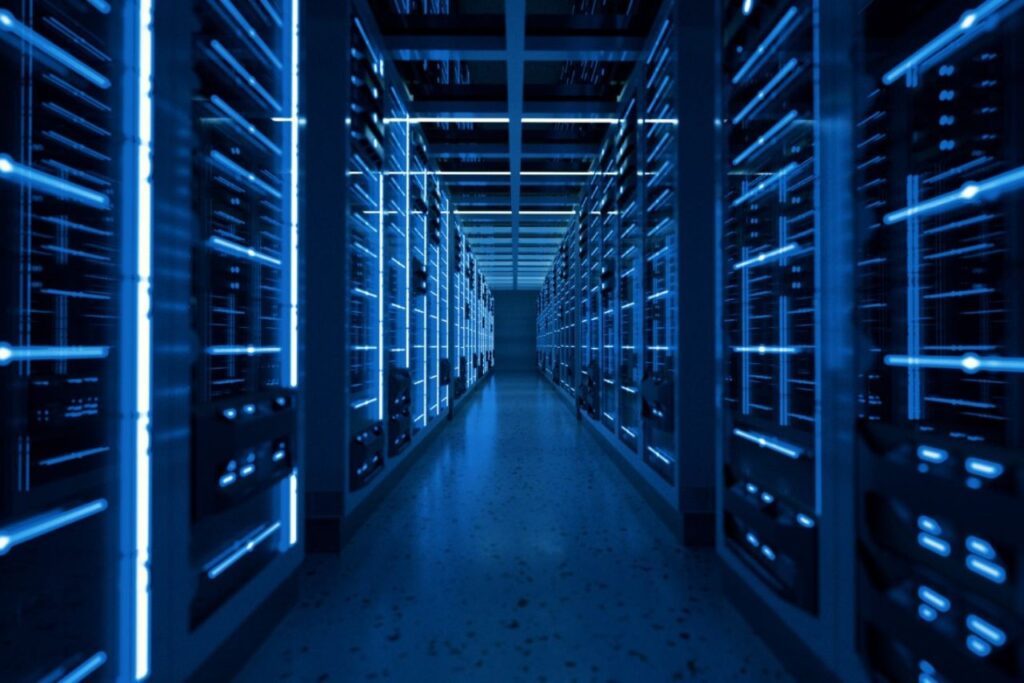
A data centre is, at its core, just a building full of computers. Strip away the buzzwords and that’s the whole idea: racks of servers, storage systems and networking equipment, housed in a facility built to keep them running around the clock.
These machines store data, run applications, and power everything from your UPI transactions to the AI chatbot you might be using right now. What makes a data center different from an ordinary office with some computers in it is the infrastructure wrapped around those servers, the cooling systems that stop them from overheating, the backup power that kicks in the moment the grid fails, and the physical security that keeps unauthorised people away from equipment holding sensitive information.
India has turned into a genuinely large market for this over the past two years. CBRE projects the country could see more than 54 billion dollars committed to data center investment this year alone, and total data center stock across major cities is expected to grow around 30 percent year-on-year in 2026.
It shows up in real estate, in power demand forecasts, in EPC order books, and increasingly in quarterly earnings calls of companies you wouldn’t normally associate with technology infrastructure.
Why Investors Keep Hearing About This Sector
The stock market angle here isn’t a single company or a single trade. It’s a chain of businesses that all benefit when a new data center gets built, and each link in that chain carries a different risk profile.
Anant Raj Ltd is perhaps the clearest example of how a traditional real estate developer is evolving into digital infrastructure. The company isn’t just operating data centers anymore; it’s building a long-term platform with a targeted 357 MW IT load capacity by FY32, of which 28 MW is already operational across Manesar and Panchkula.
Another 35 MW is scheduled to come online over the next financial year, while the medium-term roadmap targets 117 MW by FY28, supported by large campuses in Manesar, Rai, Panchkula and Andhra Pradesh. The company has also signed an MoU with the Andhra Pradesh government for a 50 MW data center involving around ₹4,500 crore of investment, while management has separately outlined plans to invest over ₹20,000 crore to expand its data center footprint in Haryana.
Beyond colocation, Anant Raj is moving up the value chain through its Ashok Cloud platform, with roughly a quarter of its planned capacity earmarked for cloud services and AI-ready infrastructure developed in partnership with global technology providers. That makes the story much broader than real estate; it’s increasingly a play on recurring digital infrastructure revenues rather than simply commercial property development.
Netweb Technologies represents the hardware layer of India’s AI infrastructure story. Unlike developers building the facilities, Netweb manufactures the high-performance computing (HPC) systems, AI servers and supercomputers that power modern data centres, making it India’s only listed pure-play company in this segment.
The company has strengthened its position through a collaboration with NVIDIA, under which it manufactures AI systems based on the NVIDIA MGX architecture, including Grace CPU Superchip and Grace Hopper Superchip server designs. These systems are designed for large language models, AI training and inference, edge computing, enterprise AI and supercomputing applications, while supporting the government’s broader Make in India initiative.
Financially, the momentum has been equally strong, with FY26 revenue rising around 90% year-on-year to about ₹2,184 crore and profit increasing nearly 81%, reflecting the surge in demand for AI computing infrastructure.
Hardware suppliers tend to be more exposed to global AI spending cycles than domestic demand. That became evident when the stock corrected sharply following weaker-than-expected guidance from Broadcom, highlighting how sentiment around global semiconductor and AI spending can influence Indian AI infrastructure stocks even when their own business fundamentals remain intact.
Techno Electric & Engineering offers a different way to play the data centre theme by combining power infrastructure expertise with digital infrastructure development. Unlike pure real estate developers, the company’s edge lies in designing and executing mission-critical electrical systems, an advantage management believes will become increasingly valuable as AI workloads make data centres significantly more power intensive.
Its Chennai data centre has been operational since September 2025 and, while management acknowledged that leasing has been gradual due to the city’s customer mix, around 0.5 MW has already been booked within six months, with an active pipeline exceeding 2 MW and expectations of leasing the entire commissioned capacity during FY27.
Looking further ahead, the company sees India’s data centre industry expanding from roughly 1.5 GW today to at least 4.5 GW by 2030, supported by cloud adoption, AI, data localisation and favourable government policies. Rather than betting solely on data centre real estate, Techno Electric is positioning itself to benefit from the growing demand for the reliable power infrastructure that underpins every large-scale AI facility.
The Real Benefits, Beyond the Hype
Setting aside stock prices for a moment, data centers genuinely matter for the Indian economy. They reduce dependence on foreign servers for storing Indian user data, which has become a regulatory priority under India’s data localisation rules. They create long-duration, capital-intensive projects that support construction, power, and cooling equipment industries for years, not months.
They position India as an alternative location for global cloud providers looking to diversify away from concentration in the US and Europe, something the government leaned into directly with the tax holiday for foreign cloud service providers announced in Budget 2026, a move that sent data center stocks up as much as 10 percent in a single session.
What Investors Should Watch Out For
The demerits are less discussed but just as real. Data centers are enormously power and water hungry, and India’s grid and water infrastructure in several states are already stretched. Land and capital requirements are steep, which is why smaller developers struggle to compete with well-capitalised players.
The sector is exposed to a genuinely global risk that has nothing to do with India at all: when US AI infrastructure spending wobbles, as it did after Broadcom’s chip revenue guidance disappointed markets in early June, Indian data center and AI stocks fall in sympathy even though the underlying Indian business hasn’t changed.
For anyone looking at this theme, the honest takeaway is that the underlying demand story is real and probably has years left to run, but the individual stocks tied to it are priced for that growth already, and priced to fall hard whenever the global AI narrative wobbles.
Disclaimer: The views and investment tips expressed by investment experts/broking houses/rating agencies on tradebrains.in are their own, and not that of the website or its management. Investing in equities poses a risk of financial losses. Investors must therefore exercise due caution while investing or trading in stocks. Trade Brains Technologies Private Limited or the author are not liable for any losses caused as a result of the decision based on this article. Please consult your investment advisor before investing.
The post From Real Estate to Power: How Data Centers Are Driving India’s Next Investment Cycle appeared first on Trade Brains.
Related Articles
Top 10 Stocks That Will Trade Ex -Dividend Next Week
Synopsis: 10 stocks that have announced dividends for their shareholders of up t...

Top 4 High-Growth SFB Stocks to Watch in 2026
Synopsis: India’s Small Finance Banks are quietly building one of the most...
5 Indian CDMO Stocks Benefiting from the Global Pharma Outsourcing Boom
Synopsis: Global pharmaceutical companies are rapidly diversifying their manufac...

4 Small-Cap Stocks Where FIIs Increased Their Stake in Q1 FY27; Do You Hold Any?
Synopsis: Institutional investors have been quietly building positions across a...