GMR Hyderabad Airport’s slowdown came before the war; is the headwind short lived?
Alex Smith
1 hour ago
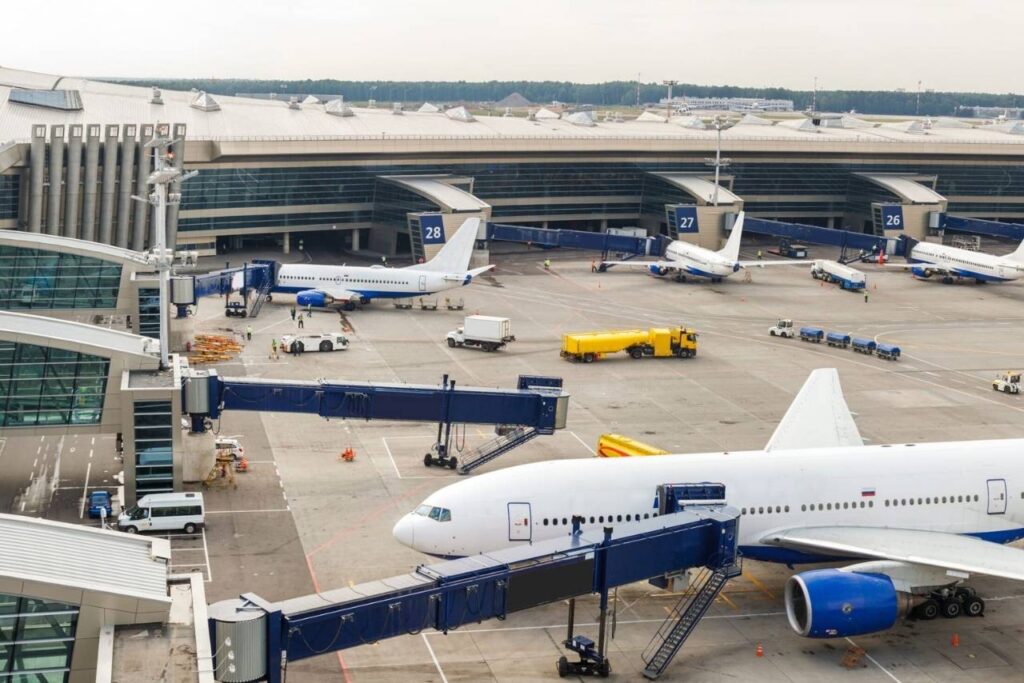
Synopsis: GMR Airports reported strong Q3 results, but Hyderabad’s traffic had already started slowing before the war. February data shows a drop in domestic traffic, while March shows further pressure from international routes. With Delhi still stable, the data suggests the slowdown began earlier and was not caused only by geopolitical issues.
A major airport platform can look healthy at the group level even when one key airport starts showing stress underneath. That seems to be the case here. GMR Airports entered the final quarter of FY26 with strong Q3 earnings, record traffic at the portfolio level, improving non-aero businesses, and a much stronger profit profile than a year ago. But when the February and March traffic updates are analysed together with Q3FY26 data, a more layered picture begins to emerge. The weakness at Hyderabad did not begin with the Middle East disruption. It was already visible before that, especially in domestic traffic, and the war appears to have added a second layer of pressure rather than starting the problem.
That is what makes the latest data interesting. The March traffic update makes it easy to blame the slowdown on geopolitics because management explicitly said international traffic was impacted by the ongoing instability in the Middle East since February 28, 2026. But the February traffic data shows Hyderabad had already reported a 9.8 percent year-on-year decline in total passenger traffic, driven by a 12.2 percent drop in domestic passengers, while international traffic was still up 2.8 percent. In other words, the first crack appeared on the domestic side, before the geopolitical issue could have meaningfully affected a full month’s numbers.
A Strong Q3 Made The Group Look More Comfortable
The reason this traffic weakness was not immediately obvious is that GMR’s Q3 numbers were strong enough to overshadow it. In the Q3FY26 concall, management reported consolidated gross income of Rs. 40.8 billion, up 49 percent year-on-year, while EBITDA rose 65 percent to Rs. 17.9 billion. Reported PAT excluding exceptional items turned positive at Rs. 3.6 billion versus a loss in the year-ago period. Management also described this as the first positive and highest profit since the demerger. The 9MFY26 data further supports this with gross income at Rs. 112 billion, EBITDA of Rs. 46 billion, and aero yield per passenger of Rs. 432, up 60 percent year-on-year.
This matters because a company showing that kind of earnings improvement does not immediately look like one facing an operational problem. Management said the business had reached a takeoff stage, suggested that the Rs. 1,800 crore quarterly EBITDA run-rate could be treated as a base, and argued that a large share of future EBITDA growth should flow through to profit as interest costs decline. On the surface, the message was simple: tariffs had improved, non-aero was scaling, debt should peak in FY26, and the platform was moving into a much stronger phase.
Delhi Carried The Earnings Story
The biggest reason the group looked so strong was Delhi. In Q3FY26, Delhi Airport’s total income rose 41 percent year-on-year to Rs. 20.2 billion. The main driver was aero revenue, which jumped 173 percent because of the revised tariff implementation. Quarterly EBITDA rose 89 percent year-on-year to Rs. 8.2 billion, and Delhi reported a profit of Rs. 2.3 billion for the quarter. Management also explained that investors should continue to model the headline revenue share at 46 percent, even if inclusions and exclusions under the OMDA create small quarterly variations.
This is important for the broader analysis because Delhi gave GMR a powerful earnings cushion. Even where traffic growth was not especially strong at the group level, the airport’s tariff-led monetization changed the earnings profile. The management also showed that Delhi was not only benefitting from tariffs. The overall group duty-free achieved its highest ever monthly sales in December 2025, the Delhi cargo terminal handled its highest ever monthly tonnage. That meant Delhi was contributing through both its core airport charges and its commercial businesses.
Hyderabad Was Still Growing In Q3, But The Traffic Trend Was Less Comfortable
Hyderabad did not look weak in the Q3. Total income rose 8 percent year-on-year to Rs. 6.6 billion, non-aero revenues rose 24 percent, EBITDA increased 11 percent to Rs. 4.3 billion, and the airport remained PAT positive. Traffic also appeared stable, with the airport handling 7.8 million passengers in Q3FY26, up 0.3 percent year-on-year, while 9MFY26 traffic stood at 23.2 million, up 7.3 percent. The company was also expanding the duty-free departure store from 350 square metres to 1,200 square metres, and phase-wise opening of food and beverage outlets was under way and all major outlets were expected to open by Q4 or end of this quarter of FY26.
But the traffic trend was beginning to tell a more cautious story. The February update showed Hyderabad’s total passenger traffic fell 9.8 percent year-on-year to 2.3 million. Domestic traffic fell 12.2 percent, while international traffic still rose 2.8 percent. This was due to muted growth in domestic traffic from December 2025 to February 2026 was attributable to temporary disruptions in flight operations caused by industry-wide applicable factors. In Q3FY26, management said traffic had been flattened by aircraft issues, the Air India crash, and other disruptions, though it expected improvement as new aircraft deliveries come through.
That combination is what makes February so revealing. It suggests Hyderabad’s problem at that point was not geopolitical. It was more likely domestic aviation supply stress, including airline and aircraft-related constraints, which hit Hyderabad harder than Delhi.
March Made The Slowdown Harder To Ignore
The March update then changed the shape of the problem. Hyderabad’s traffic fell 12 percent year-on-year in March and 7.4 percent in Q4FY26. According to the management, muted growth in domestic traffic from December 2025 to March 2026 was due to industry-wide factors, while international traffic was impacted by the ongoing geopolitical instability in the Middle East since February 28, 2026. The numbers fit that explanation. In March, Hyderabad domestic traffic fell 9.5 percent, but international traffic fell a much sharper 24.7 percent. That is very different from February, when international traffic was still growing.
Hyderabad did not suddenly weaken because of the war. It first showed stress in domestic traffic before the geopolitical issue could have materially affected the month, and only later did the international side deteriorate sharply. The war did not create the slowdown from nothing. It appears to have intensified an already softer traffic pattern.
Delhi’s Resilience Makes The Contrast Even Sharper
The Hyderabad trend becomes more striking when placed beside Delhi. In February, Delhi’s passenger traffic rose 3.6 percent year-on-year to 7.0 million, with domestic traffic up 5 percent and international traffic nearly flat. Delhi had also recorded its highest-ever single-day passenger traffic of about 2.58 lakh on February 8 and highest-ever international passengers on a year-to-date basis. In March, even with one runway under rehabilitation and despite geopolitical disruption, Delhi’s total monthly traffic was nearly flat, down only 0.2 percent, while Q4 traffic still grew 2.7 percent year-on-year to a record 21.2 million passengers (the highest ever).
The problem is not that GMR’s entire network froze. Delhi remained resilient, supported by scale, connectivity, tariff-led earnings, and wider commercial monetization. Goa’s Mopa airport also continued to ramp up strongly, with Q4 traffic up 21.3 percent and FY26 traffic up 15.2 percent. Hyderabad, then, is not a signal that the whole group is broken. It is a signal that one airport became more exposed to domestic capacity pressure first, and later to geopolitical disruption.
The deeper takeaway is that GMR’s FY26 story now has two layers. The reported financials show a company moving into a much stronger earnings phase, led by Delhi’s tariff reset and a scaling non-aero platform. But the traffic filings show that Hyderabad had already begun slowing before the war narrative arrived. That does not mean there is a hidden structural collapse. The airport still reported record annual passengers, record cargo, and remained profitable in Q3FY26. But it does mean investors should be careful about using geopolitics as a complete explanation. The data suggests the weakness began earlier, and the war only made it easier to see.
Disclaimer: The views and investment tips expressed by investment experts/broking houses/rating agencies on tradebrains.in are their own, and not that of the website or its management. Investing in equities poses a risk of financial losses. Investors must therefore exercise due caution while investing or trading in stocks. Trade Brains Technologies Private Limited or the author are not liable for any losses caused as a result of the decision based on this article. Please consult your investment advisor before investing.
The post GMR Hyderabad Airport’s slowdown came before the war; is the headwind short lived? appeared first on Trade Brains.
Related Articles

Hitachi Energy, Groww, and 6 Other Midcap Stocks Likely to Enter Large Cap Segment
Synopsis: Around eight mid-cap stocks may be upgraded to large-cap in AMFI’s H2...

Trade Brains Smallcase Picks: 4 AI and Data Center Stocks to keep on your radar
Synopsis: This smallcase highlights four Indian AI and data center-focused stock...

4 Stocks in which Ashish Kacholia Increased Stake in Q4 FY26; Do you hold any?
Synopsis: Ace investor Ashish Kacholia increased his stake in stocks like Techer...
Rishabh Instruments Share: How Does the Company’s Future Look?
Synopsis: Rishabh Instruments is emerging as a key play on India’s electrificati...