GNG Electronics: How Is India’s Largest Refurbisher Turning Used Laptops Into a Global Opportunity?
Alex Smith
2 hours ago
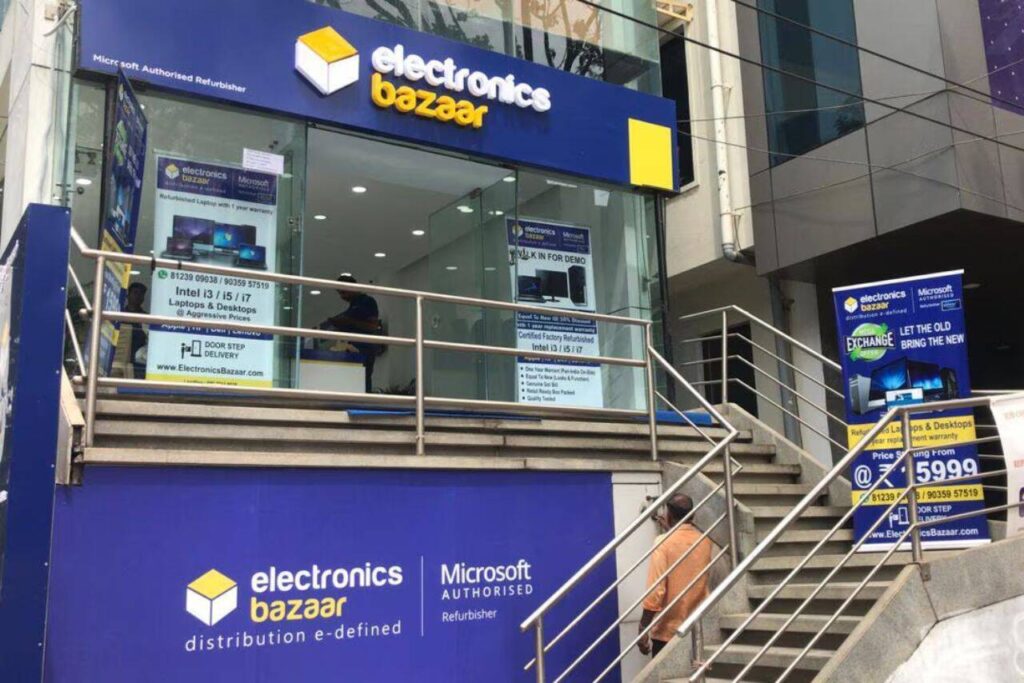
Synopsis: GNG Electronics Limited is transforming from India’s largest refurbisher into a global computing alternative. With laptops contributing 81% of revenue, presence across 46 countries, strategic inventory positioning, and structural supply shortages in new PCs, the company is leveraging trust, affordability, and global distribution to turn refurbished laptops into a scalable worldwide opportunity.
As AI-driven component shortages and rising laptop prices reshape the global PC industry, GNG Electronics Limited is emerging as an unexpected beneficiary. Through its platform, Electronics Bazaar, the company is building a global refurbished computing ecosystem backed by warranties, distribution partnerships, and strategic inventory management. With operations across 46 countries, strong margin expansion, and growing acceptance of “equal-to-new” laptops, GNG is positioning refurbished computing as a credible alternative to traditional new-device markets worldwide.
With a market cap of Rs 4,800 crore, the shares of GNG Electronics Ltd are trading at Rs 423 and are trading at a PE of 37 compared to their industry’s PE of 23. The shares have given a return of more than 35% since its listing in August last year.
From a Niche Refurbisher to a Global Circular Technology Player
Within the span of several years, the global personal computing industry has seen a number of structural changes, from rising remote work needs to supply chain problems and now an AI-induced component shortage problem, which is changing the way computing demand is met.
Amidst all this, GNG Electronics Limited has quietly established one of the most scalable refurbished computing companies to come out of India. For FY26, the year turned out to be pivotal for the company, not only for its best-ever financial results but also for showing that refurbished computing is no longer a niche segment but is becoming a mainstream global option.
According to management, FY26 was a year where the company increased its reach, strengthened client relations, and beat initial guidance for the year by a large margin. These results speak volumes about the company’s confidence in its business model.
Consolidated revenues grew by 34% YoY to ₹1,891 crore, while profit after tax increased 91% YoY to ₹132 crore. EBITDA margins jumped from 8.9% to 10.6%. But more importantly, the company expects these trends to persist due to a structural change within the industry rather than being purely cyclical.
A Record Year Built on Scale, Profitability, and Execution
The last quarter of FY26 has seen GNG sustain the momentum that the company was building during the course of the fiscal year. QoQ consolidated revenue for the company increased by 43% to ₹651.7 crore, with quarterly profit after tax almost tripling to ₹42.1 crore.
The EBITDA margin stood at 9.8% during the quarter, while the PAT margin improved to 6.5%. In their statements, the management highlighted how profitability is improving even faster than revenues, owing to more efficient procurement, improved realisations, efficient execution, and intelligent inventory management.
The gross margin of the company witnessed a sharp improvement to 19.2% for the quarter compared to 15.1% last year, while the gross margin for the full year stood at 20.1%. This indicates that the company is not just focusing on scaling volume but also achieving more value as they manage to sell more of their refurbished devices to various markets around the world.
Laptops Remain the Core Growth Engine
Even though GNG refurbishes a range of device segments, the laptop remains the most popular in terms of the company’s business strategy. Management revealed that laptops have been the source of 81% of FY26 total revenue, whereas other devices generated 19%. For FY26, GNG refurbished and sold around 7.27 lakh devices, compared to 5.90 lakh devices in FY25.
Within FY26 Q4, the firm has managed to sell around 2.41 lakh devices, out of which there were about 1.76 lakh laptops. The average selling price (ASP) has seen an increase too. For example, the ASP of laptops reached ₹30,000 in the current quarter, while the annual average was ₹28,800.
Taking everything together, ASP increased to ₹27,000 in Q4. According to management, the improvement in ASP is not only related to the changing mix of products but also to the increasing popularity of premium refurbished laptops, which are now considered “equal-to-new” devices due to reliable warranty coverage.
Building a Truly Global Distribution Network
The primary factor behind the scaling ability of GNG has been the increasing geographical footprint for its distribution channels. By the end of FY26, the company was providing refurbished devices in 46 countries, compared to 38 countries at the start of the year. Customer touchpoints have grown from 4,154 to 4,895 within the enterprises, institutions, distributors, and channel partners.
The contribution to revenue from the geographic regions has been diverse. India contributed 33%, the US contributed 21%, Europe contributed 20%, the UAE contributed 12%, and other parts of the world contributed 14%. Geographic diversity helps mitigate the risk to the company due to any particular country. Additionally, the company can be in the demand cycle for several regions together. The management indicated that talks with the distribution partners are progressing well in Europe and the US.
The company has successfully formed strategic partnerships with key technology distributors, and the management expects significant scaling of such arrangements going forward. While the contribution to revenue from the arrangement remains minimal currently, the management views the acceptance positively.
Capacity Expansion to Support the Next Growth Cycle
In order to cater to rising demands, GNG has made great strides to expand its capacities across various regions. There has been an addition of about 1,000 employees in FY26 to take the employee number to 2,148 in FY26.
A large portion of this is attributed to an increase in engineering, sales, purchasing and manufacturing departments. Of these, about 1,800 employees work in production. Capacity has seen a considerable boost as well. For instance, in Mumbai, there has been expansion of refurbishing capabilities from one to two facilities.
In the UAE region, there has been expansion in the number of facilities from three to eight. As per the management, the present infrastructure caters to a capacity of 150,000 units per month for refurbishments, which is way higher than the existing monthly volume of 60,000 units per month on an annualised basis.
Why the Global PC Supply Crisis Is Creating Opportunity
The theme of structural disruption in the global PC market was among the most pronounced ones during the earnings call. The management team pointed out that the current disruption is caused by AI-driven demand from hyperscalers that is causing a diversion of key parts’ supply, including memory, storage, and processor, resulting in price hikes and shortages in new PCs.
For example, the cost of an 8GB DDR5 module was USD23.35 in October 2025 but reached USD120 by April 2026. A 1TB SSD increased from USD70 to USD249, while high-end processors saw an increase of about 45% during the same time frame. Now, this is driving the price hikes in finished laptops. For instance, a low-end laptop was available for ₹25,500 in India in December 2025 but costs ₹40,000 now – an almost 57% hike within half a year.
The management team stated that this situation might persist until the end of 2027, meaning that prices will remain high up until January 2028. It creates a favorable environment for premium refurbished laptops because customers could buy premium refurbished laptops for less money compared to low-end new models.
Strategic Inventory as a Competitive Advantage
By realising the cycle of rising prices at an early stage, GNG has proactively stocked up inventories to ensure its availability before price hikes occur again. The rise in inventory has been from about ₹490 crore to ₹743 crore for the period ending in March 2026.
It was noted time and again that it was an intentional move to stock up ahead of the price hikes so that profitability in the future is ensured. On the other hand, net debt fell from ₹383 crore in March 2025 to about ₹300 crore in March 2026. Management felt that this kind of flexibility in the balance sheet enabled them to ride on the current industry tailwinds without having to raise any further equity.
Additionally, it was also emphasised that inventory had been purchased at reasonable rates so that there would be little chance of compressing margins if there were eventual price corrections in the components market.
Building Trust, Affordability, and Category Leadership
Apart from supply issues, management sees the longer-term potential in trust and category creation. To increase its customer base, GNG is implementing a financing programme where refurbished high-end laptops can now be purchased on EMI instalments as low as ₹1,000 per month.
The company is also working on channel partnerships, digital marketing, and influencer marketing, including partnerships with technology influencer Rajiv Makhni, to promote its Electronics Bazaar proposition internationally. The management stressed several times that demand was not a concern – trust was.
With products having one-year to three-year warranties, looking as good as brand-new, and increasing institutional backing from global distributors, management claims that GNG is bridging the trust gap in refurbished products that had limited its adoption in the past.
As new PCs become increasingly difficult to source and the price increases, GNG seems to have positioned itself not just as a refurbisher but as an alternative in computing worldwide. It seems that GNG’s transition from being the world’s biggest refurbisher to being a global circular computing platform is only beginning based on FY26 results.
Disclaimer: The views and investment tips expressed by investment experts/broking houses/rating agencies on tradebrains.in are their own, and not that of the website or its management. Investing in equities poses a risk of financial losses. Investors must therefore exercise due caution while investing or trading in stocks. Trade Brains Technologies Private Limited or the author are not liable for any losses caused as a result of the decision based on this article. Please consult your investment advisor before investing.
The post GNG Electronics: How Is India’s Largest Refurbisher Turning Used Laptops Into a Global Opportunity? appeared first on Trade Brains.
Related Articles
Multibagger: Top 7 Stocks That Rallied Up to 140% in the Last 30 Days
Synopsis: Over the past 30 days, several Indian stocks have experienced signific...

Fertilizer Stocks: How Pressure From China’s Ban and West Asia Chaos Is Affecting the Sector
Synopsis: India’s fertilizer sector is facing simultaneous pressure from rising...
Paytm: First-Ever Full-Year Profit Since IPO, Can this drive future upside and investor interest?
Synopsis: Posting its first-ever annual net profit and a 22 percent jump in reve...

7 Small-Cap Stocks in Which FIIs and DIIs Increased Their Stakes in Q4
Synopsis: Marksans Pharma, GMDC, Data Patterns, Voltamp Transformers, Inox Green...