Got $14,000? Here’s a TFSA Setup That Can Pay You Every Month in 2026
Alex Smith
1 month ago
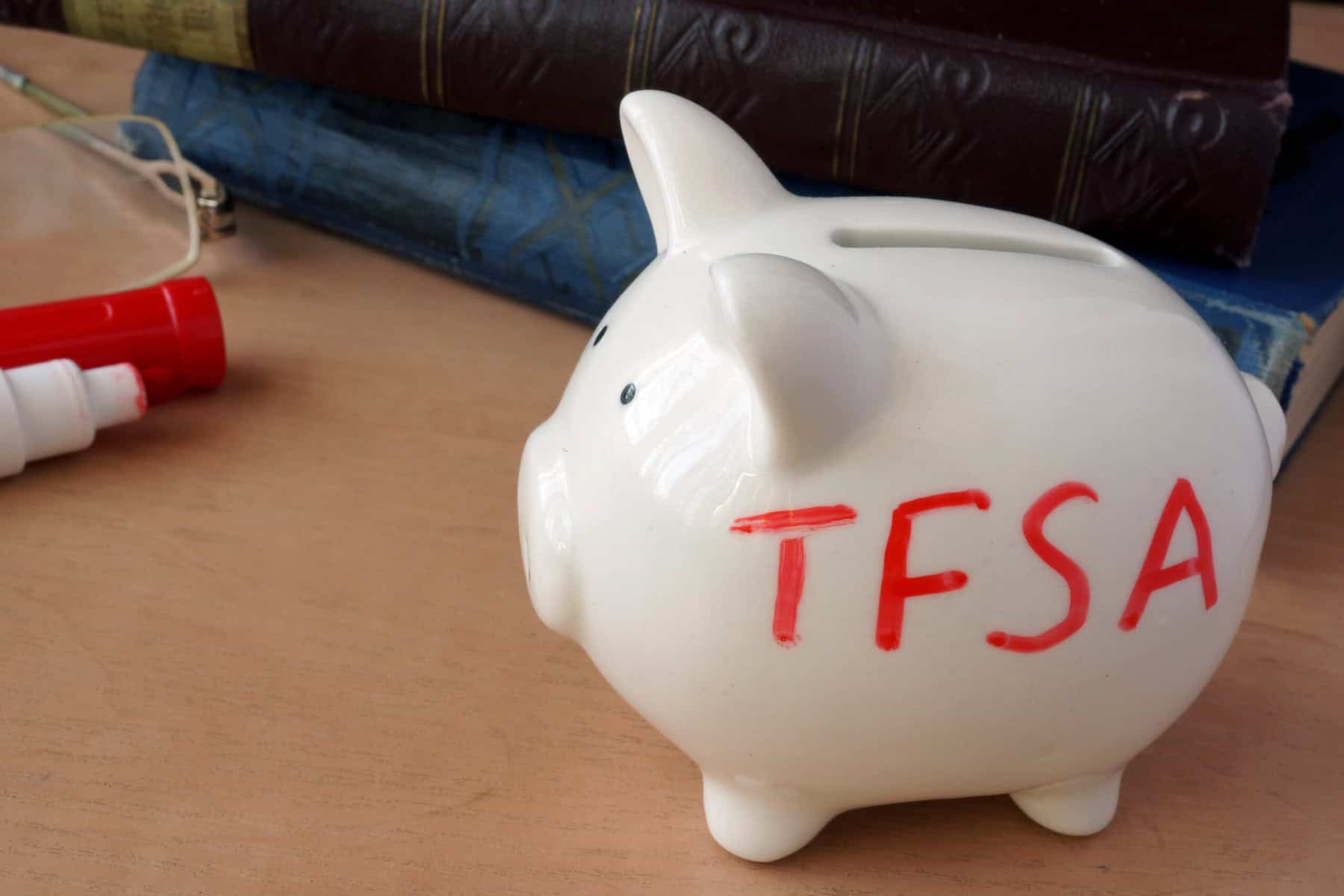
A $14,000 investment in a Tax-Free Savings Account (TFSA) can start a monthly income habit. Yet the sleep-well part comes from structure, not a headline yield. The structure is to buy a couple of reliable payers, keep a small cash buffer inside the TFSA so you are not forced to sell at a bad time, and reinvest most distributions while you are still building. Monthly income doesn’t require that every holding pays monthly. It can mean your account gets cash often enough that saving and investing feel less like a tug of war between today and tomorrow. So let’s look at some monthly dividend stocks to consider.
NPI
Northland Power (TSX:NPI) could look more attractive if the Bank of Canada signals multiple rate cuts as rate expectations often lift dividend stocks. A power producer is capital-intensive, so lower rates can improve refinancing math over time and make long-lived cash flows look more valuable. That can support a higher valuation, even if operating results don’t change overnight. It also matters for sentiment, since investors tend to rotate back into yield when it feels like the higher for longer era is ending.
The beginner trap is assuming rate cuts automatically make the dividend safer. What matters is whether the company can fund distributions from recurring cash generation after maintenance spending. Look for a clear bridge from operating cash flow to free cash flow and then to distributions. If free cash flow is consistently thin, the payout can become a balancing act when projects slip, wind and power prices disappoint, or interest costs bite before cuts flow through. You also want to know how much debt is floating versus fixed, and when it renews.
If those boxes look healthy, Northland Power can play a useful role as it adds an income stream that is not tied to the Canadian housing-credit cycle the way banks are. It can still be volatile, though, as seen during recent earnings. A beginner should size it so a drawdown feels annoying, not terrifying, and should avoid concentrating the TFSA in one sector just because the dividend arrives more often.
BCE
BCE (TSX:BCE) is a different income story. It’s a mature telecom that has shifted from dividend first to cash flow first. In Q2 2025, revenue rose to $6.1 billion and free cash flow increased to $1.2 billion, helped by a 22% year-over-year drop in capital expenditures as the Canadian fibre build slowed. But adjusted earnings before interest, taxes, depreciation and amortization (EBITDA) slipped 0.9% while adjusted earnings per share (EPS) fell to $0.63. This showed competitive pricing and legacy declines are still real headwinds.
For TFSA beginners, the key point is the dividend has already been reset. BCE guides an annualized dividend of $1.75 per share. That can be appealing, but it comes with balance-sheet risk. Debt sits around $37.6 billion and the current ratio is about 0.61. Therefore, the market is watching whether free cash flow keeps covering the new payout while it integrates Ziply and deals with regulation and pricing pressure.
If the Bank of Canada signals multiple cuts, BCE can benefit through lower future interest expense and a friendlier valuation backdrop for slower growers. Still, execution matters more than the macro outlook. Watch wireless discounting and annual revenue per user (ARPU) trends, CRTC and wholesale dynamics, and whether lower capital expenditure is sustainable without eroding network quality. Rate cuts can help the math, but it does not fix strategy by itself.
Bottom line
Put together, a $14,000 TFSA split between one power income name and one telecom can create a steady drip of cash. Yet it should still be built like a beginner portfolio, not a stunt. For now, here’s what that $14,000 could bring in from these dividend stocks.
COMPANYRECENT PRICENUMBER OF SHARESDIVIDEND TOTAL ANNUALPAYOUTFREQUENCYTOTAL INVESTMENTBCE$32.49215$1.75$376.25Quarterly$6,985.35NPI$18.12386$1.16$447.76Quarterly$6,994.32Meanwhile, keep a small cash cushion, reinvest most distributions, and do not chase the highest yield on the screen. As the account grows, this approach smooths single-stock risk and makes the income feel steadier.
The post Got $14,000? Hereâs a TFSA Setup That Can Pay You Every Month in 2026 appeared first on The Motley Fool Canada.
Should you invest $1,000 in BCE Inc. right now?
Before you buy stock in BCE Inc., consider this:
The Motley Fool Stock Advisor Canada analyst team identified what they believe are the 5 best stocks for investors to buy now⦠and BCE Inc. wasnât one of them. The 5 stocks that made the cut could potentially produce monster returns in the coming years.
Consider MercadoLibre, which we first recommended on January 8, 2014 … if you invested $1,000 in the âeBay of Latin Americaâ at the time of our recommendation, youâd have $20,568.17!*
Now, it’s worth noting Stock Advisor Canada’s total average return is 99%* – a market-crushing outperformance compared to 77%* for the S&P/TSX Composite Index. Don’t miss out on our top 5 list, available when you join Stock Advisor Canada.
See the 5 Stocks #start_btn6 { background: #0e6d04 none repeat scroll 0 0; color: #fff; font-size: 1.2em; font-family: 'Montserrat', sans-serif; font-weight: 600; height: auto; line-height: 1.2em; margin: 30px 0; max-width: 350px; text-align: center; width: auto; box-shadow: 0 1px 0 rgba(0, 0, 0, 0.5), 0 1px 0 #fff inset, 0 0 2px rgba(0, 0, 0, 0.2); border-radius: 5px; } #start_btn6 a { color: #fff; display: block; padding: 20px; padding-right:1em; padding-left:1em; } #start_btn6 a:hover { background: #FFE300 none repeat scroll 0 0; color: #000; } @media (max-width: 480px) { div#start_btn6 { font-size:1.1em; max-width: 320px;} } margin_bottom_5 { margin-bottom:5px; } margin_top_10 { margin-top:10px; }* Returns as of January 5th, 2026
More reading
- Don’t Bet Against Canada’s Top Dividend Icons Going Into the New Year
- TFSA Investors: Hereâs How a Couple Could Earn Over $8,000 a Year in Tax-Free Income
- A Dividend Giant I’d Buy Over BCE Stock Right Now
- How to Rebalance Your Portfolio for 2026
- A Dividend Giant I’d Buy Over BCE Stock Right Now
Fool contributor Amy Legate-Wolfe has no position in any of the stocks mentioned. The Motley Fool has no position in any of the stocks mentioned. The Motley Fool has a disclosure policy.
Related Articles

Integrating AI and Quantitative Trading
Practical introduction to AI in quantitative trading using Python, QuantConnect...

How I’d Invest $10,000 With the Loonie in Play
The loonie’s swing can quietly change your results, so this $10,000 plan spreads...

Software Crash: Is This a Generational Buying Opportunity?
Software stocks have been obliterated in the past six months. Yet, we could be n...

Build a Cash-Gushing Passive Income Portfolio With Just $15,000
Want to earn an extra $680 of passive income per year? Here's how a five-stock p...