Greaves Cotton: After Its First Rare-Earth-Free EV Motors; Can Bigger Orders Follow?
Alex Smith
2 hours ago
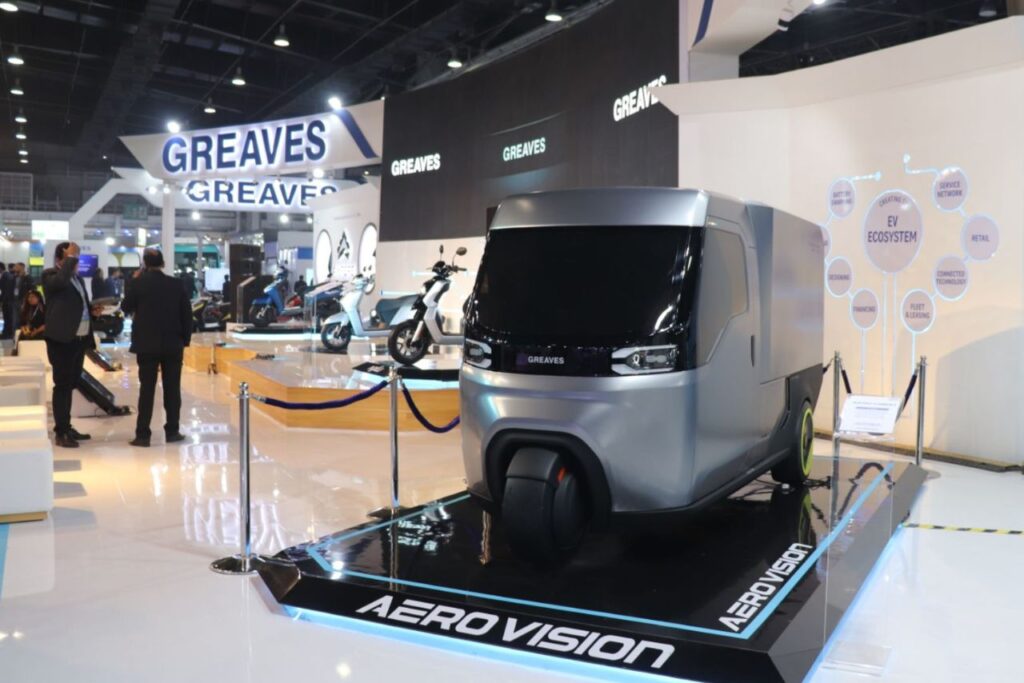
Synopsis: Greaves Cotton Limited is using its strong legacy engine business to fund future technologies under GREAVES.NEXT. FY26 delivered record revenues, but the key trigger came from its first rare-earth-free motor pilot. With firm order discussions underway, existing OEM relationships, manufacturing upgrades, and export expansion, the next question is whether this pilot can evolve into meaningful commercial orders.
For decades, Greaves Cotton Limited was known primarily for its engine business, especially in India’s three-wheeler market. But FY26 marked a strategic shift as the company repositioned itself under its GREAVES.NEXT strategy, combining strong cash-generating legacy businesses with investments in next-generation engineering technologies. While record revenues and margin expansion highlighted operational strength, the real attention came from Greaves’ first rare-earth-free motor pilot, an innovation that could potentially open the door to larger commercial opportunities in electric mobility.
With a market cap of Rs 3,800 crore, the shares of Greaves Cotton Ltd are trading at Rs 164 and are trading at a PE of 33.4 compared to their industry’s PE of 38. The shares have given a return of more than 25% in the last 5 years.
A Decade-High Performance
At the onset of FY26, Greaves Cotton Limited had one main message for its investors: Greaves was no longer a mere legacy engine manufacturing company. It now had positioned itself as an engineering company diversifying its operations as it readied itself for the next round of growth.
Through its GREAVES.NEXT strategy, the company has realigned its business activities under three pillars: energy solutions, mobility solutions, and industrial solutions. While doing this, the company has also been investing in new technologies that would help drive its business activities in the next ten years.
Based on its financials for FY26, it seems that this strategic realignment is already starting to bear fruit. Its consolidated revenue has increased by 18% to Rs 3,437 crore during FY26, which represents the highest annual revenue reported by the company in the last ten years. EBITDA, on the other hand, increased by 76% to Rs 239 crore, with profit before exceptional items increasing 118% to Rs 154 crore.
During Q4 FY26, consolidated revenue reached Rs 1,000 crore, representing an increase of 22%, while EBITDA amounted to Rs 68 crore, up 49%. As can be seen from these figures, even as Greaves undergoes its strategic transformation and invests in emerging businesses, its operating
Mobility Becomes the Growth Engine
Among the three strategic pillars of Greaves, mobility solutions seem to be the emerging strategic pillar which can serve as the critical link between the company’s profitable existing operations and its futuristic technology initiatives. This business segment comprises automotive engines, aftermarket retail, engineered components, and e-powertrain business initiatives.
For FY26, Mobility Solutions reported 16% YoY growth, while the automotive engine business alone saw a 48% rise in Q4. This has been attributed to the increasing domestic demand for three-wheeler diesel engines and increasing exports of engines that comply with the Euro V+ emission standards.
Although electric mobility solutions are gaining traction, Greaves is optimistic about the continued relevance of multi-fuel engines and expects the coexistence of both technologies for an extended period, enabling it to capitalise on both. On the other hand, Greaves enhanced its aftermarket business by signing up with around 350 retailers within a year, and it has even charted a path to grow this distribution network to 3,000 retailers by FY27.
In addition to this, Greaves also exited businesses that had no alignment with its strategy, such as the two-wheeler engine parts business, construction equipment, and some battery and digital platform businesses.
The Rare-Earth-Free Breakthrough
However, the most noteworthy news in the quarter was unrelated to any of the above categories – it came from Greaves’ e-powertrain business. Greaves revealed in the quarter that it has supplied its first pilot batch of rare-earth-free motors to one of the L5 three-wheeler OEMs it serves.
This is important for Greaves’ investors because it marks the first official confirmation of Greaves moving its alternative motor technology from a lab environment to real-world customer trials. Pilot programmes in general signify the point at which companies switch from spending money on developing new technology in the laboratory to earning money by monetising that technology in a real-world context.
The importance of rare-earth-free motors stems from their ability to cut down on reliance on imported critical minerals, as well as the associated risks to supply chain continuity and cost predictability. In a world where global supply chains continue to be susceptible to shocks and geopolitical risks are continuously threatening the availability of critical minerals, alternative technology like rare-earth-free motors could turn commercially relevant sooner than expected. The Bigger Orders Question
The Bigger Orders Question
This leads us to our main title question: can bigger orders follow? In this regard, the statements made by management at the earnings call were important. First, they said that “we are in advanced discussions for securing a firm order for supply within the year”.
This statement implies that Greaves is no longer negotiating on validating the concept but is instead negotiating for a commercial deal. It should be noted that Greaves is not entering this process as a supplier looking for its first customer. According to management, Greaves controls a 63% market share of the Indian L5 three-wheeler diesel vehicle.
Greaves’ long-standing relations with OEMs give Greaves one major advantage: it allows the company easy access to OEMs’ decision-makers, manufacturing operations, and purchasing organizations.
Thus, if the current pilot order goes well in terms of meeting performance and cost expectations, future order volumes will quickly grow from small orders into large orders. Moreover, once Greaves’ rare earth-free electric motors gain traction in an OEM, there is the potential that other OEMs will evaluate their motors as well.
Manufacturing Is Already Being Prepared
Order fulfilment will mean nothing unless there is an industrial infrastructure able to cater to large-scale production, and it seems like Greaves is geared toward that end. In FY26, the firm announced several investment projects that were targeted towards increasing manufacturing capacity, automating production and improving quality control.
Greaves increased production capacity by introducing a double-conveyor arrangement for producing single-cylinder engines. Additionally, it introduced an automated AI inspection system using robotic vision at its plant at Chhatrapati Sambhajinagar for improved quality control, traceability and efficiencies in production processes.
At Excel’s facilities in Nagpur, Greaves introduced a conveyorised cable assembly line in order to facilitate the growth of engineered components. Although these investments are not specifically linked to the rare-earth-free motors, they indicate that Greaves is building a production ecosystem that is ready to manufacture high-end technological products.
The firm reiterated its commitment to investing Rs 500 crore to Rs 700 crore within the next four to five years through its strategy known as GREAVES.NEXT. The capital expenditure is set to be focused towards product development, capability enhancement, and international market entry.
A Strong Base of Existing Customers
One of the most important strengths for Greaves’ strategy in the future is that its future technologies will not have to be developed through new sales channels but can be launched to the customer base they have today. Management mentioned that Greaves have strong relationships with OEMs in their own markets as well as through their exports.
In India, Greaves still rules the roost in the diesel three-wheeler category. Overseas, Greaves has managed to increase its exports of Euro V+ engines through partnerships like Ligier, which is one of the largest European manufacturers of microcars.
The management said that overseas income had also increased by Greaves to around 13% in FY26 from approximately 9% in FY25 on the back of strengthened global teams and expanded its footprint in Europe and the Middle East regions, among others.
The reason why this becomes significant is because once Greaves proves that its rare-earth-free motor technology works in domestic markets, the company already has sales channels through which similar technology could potentially be sold overseas, too.
Balancing Innovation With Discipline
Despite the aggressive push towards new technologies, management seems to be financially disciplined as well. In this regard, during the quarter, management made an impairment provision of around Rs 16 crore on the back of the earlier investments made in the ePowertrain technology that could not scale as initially envisaged because of changes in both the execution strategy and customer demand.
Instead of keeping underperforming assets on its balance sheet, management decided to book an accounting provision. The reason why this point matters is that it proves once again Greaves’ commitment to allocating money into those technologies that have more visible commercial prospects.
Despite the fact that the company suffered some impairment, its standalone revenues in FY26 rose by 23% to Rs 2,365 crore, while EBITDA was estimated at Rs 320 crore thanks to a 40 basis point improvement in margin performance. Furthermore, management repeated its commitment to sustain EBITDA margins of 13%-15% for its core segments in conjunction with 16%-18% organic growth in the medium-term perspective.
The Next Trigger
The company has achieved a major milestone in taking its rare-earth-free motor out of development and into customer trials. The catalyst here is not about technical validation anymore; it is now about commercialisation. The management’s hint at firm order talks being underway implies that the switch may come sooner rather than later.
Should the pilot order be turned into a manufacturing agreement in fiscal year ’27, not only will the product get validated, but the entire business model of GREAVES.NEXT, where historic cash flows are used to create future engineering businesses, will also be validated.
With robust core profitability, powerful OEM relationships, international expansion, manufacturing improvement, and a clear intention to fund scalable opportunities, Greaves seems well-positioned to take on larger orders if they materialise.
While the rare earth-free motor will not provide significant top-line contribution for the time being, it might be one of the first signs that the next phase of growth at Greaves is turning from strategy slides to reality. The technology pilot is done. The customer engagement is happening. The manufacturing base is being enhanced. The only open point is whether that pilot order turns into a much bigger commercial cycle.
Disclaimer: The views and investment tips expressed by investment experts/broking houses/rating agencies on tradebrains.in are their own, and not that of the website or its management. Investing in equities poses a risk of financial losses. Investors must therefore exercise due caution while investing or trading in stocks. Trade Brains Technologies Private Limited or the author are not liable for any losses caused as a result of the decision based on this article. Please consult your investment advisor before investing.
The post Greaves Cotton: After Its First Rare-Earth-Free EV Motors; Can Bigger Orders Follow? appeared first on Trade Brains.
Related Articles
CMS Info Systems Q4 PAT Increases 38% QoQ; Announces ₹2.5 Dividend
Synopsis: CMS Info Systems Limited has announced a triple treat for investors: a...

Mazagon Dock and 4 Other Large Cap Stocks with Profit Growth of Up to 428% in FY26
Synopsis: Five large-cap Indian companies across defence, mining, power, fintech...

Hubtown Shares Drop 5% Despite Robust ₹4,382 Cr Annual Pre-Sales
Synopsis: Hubtown Limited (HUBTOWN) witnessed a 5.49% drop in its share price on...

EV Was the Solution but Now a $13.7 Bil Battery Problem; Top Stocks Positioned to Gain
Synopsis: India’s EV boom is reducing oil dependency but creating a new $13.7 bi...