Green Energy and the Union Budget: Winners, Policies, and What Lies Ahead
Alex Smith
3 weeks ago
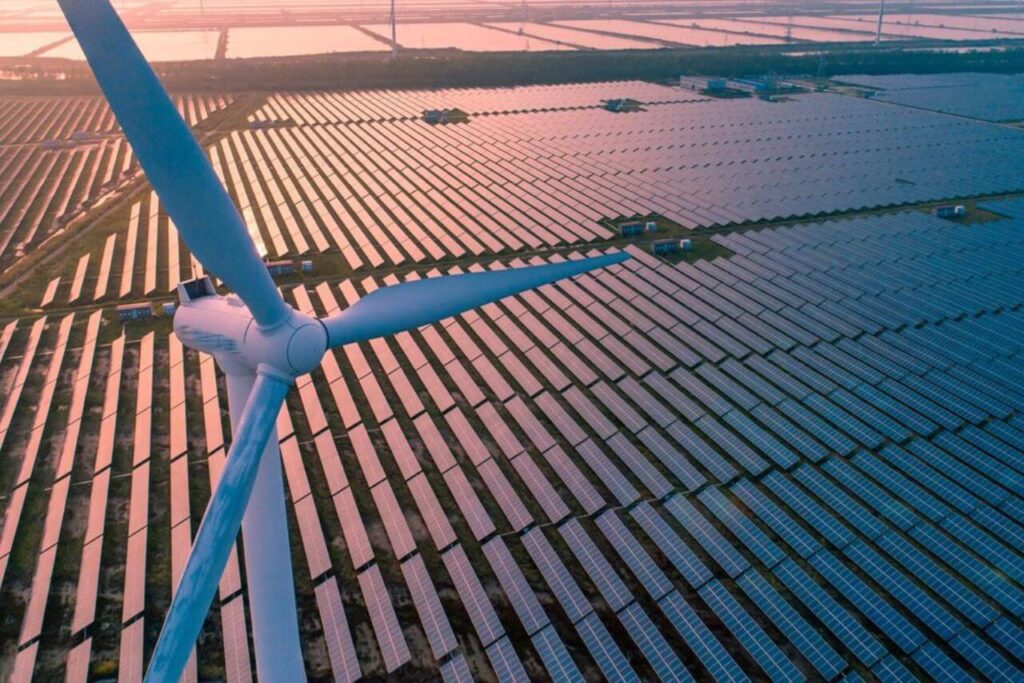
Synopsis: Renewable capacity has grown from around 76 GW in 2014 to 254 GW by December 2025. India’s budget to MNRE (Ministry of New & Renewable Energy) in the 2013-14 budget was Rs 1,521 crore, while it was increased to Rs 26,549.38 crore in 2025-26! In this editorial, we will see what initiatives or schemes have been taken in the last 3 budgets and how stocks reacted post-budget.
India’s Union Budgets from 2023 to 2025 have shaped market expectations and sectoral performance, offering valuable lessons for anticipating the 2026 Budget. India’s government has intensified its focus on green energy as part of its commitment to net-zero by 2070 and its target of achieving 500 GW of non-fossil capacity by 2030. Budget allocations for renewables have risen sharply, reflecting policy shifts from fossil fuel subsidies toward clean tech incentives.
Overview of the budget of 2023
India’s Union Budget outlined seven pivotal priorities, with Green Growth standing out as a paramount focus amid pressing sustainability needs. Across multiple sectors and ministries, it introduced a suite of forward-thinking projects and programs, including the Green Hydrogen Mission, energy transition efforts, energy storage initiatives, renewable energy evacuation infrastructure, Green Credit Initiative, PM-PRANAM scheme, and the vehicle replacement strategy.
- National Green Hydrogen Mission: Launched in January 2023, this initiative targets 5 MMT annual production by 2030, capturing 10% of the global market, and exporting up to 10 MMT. Backed by Rs 19,700 crore, it drives low-carbon economic shifts, reduces fossil fuel import dependence, and positions India as a frontrunner in green hydrogen technology and markets.
- Renewable Energy Transmission: Plans include building a 13 GW transmission network from Ladakh renewables, with Rs 20,700 crore of total investment and Rs 8,300 crore from central support, to integrate clean power seamlessly.
- Green Credit Program: A new mechanism under the Environment Protection Act incentivizes sustainable practices, fostering voluntary environmental actions.
- Energy Transition Funding: Rs 35,000 crore earmarked for strategic capex to accelerate net-zero goals, bolster energy security, and facilitate a cleaner energy paradigm.
- Battery Energy Storage: Viability gap funding supports 4,000 MWh capacity systems, addressing renewable intermittency and grid reliability.
Post-2023 Market Winners
Companies like Inox Wind Energy Ltd. and Waaree Renewable Technologies Ltd. have showcased a remarkable alignment with budget policies, particularly in the green energy sector. Waaree Renewable Technologies rose around 530% in the period between February 1, 2023, and January 24, 2024, whereas Inox Wind Ltd rose 360% in the same time period.
Overview of the budget of 2024
This year, due to the elections, Budget 2024 has been announced later on 23rd July 2024. Energy security was one of the priorities as the government launched PM-Surya Ghar: Muft Bijli Yojana. It aims to achieve 300 units of free electricity per month for 1 crore households through rooftop solarisation. A policy for promoting pumped storage projects was introduced for electricity storage and to facilitate the smooth integration of the growing share of renewable energy.
Climate finance taxonomy: The government also introduced a taxonomy for climate finance, facilitating easier access to preferential financing for green projects, including green hydrogen projects. This taxonomy will support the development of green bonds and funding for renewable energy and emerging sustainable technologies.
VGF (Viability Gap Funding): The Viability Gap Funding for the development of Battery Energy Storage Systems (BESS) scheme was launched in 2023. The scheme has an initial outlay of Rs 9,400 crores, including a budgetary support of Rs 3,760 crores to develop 4,000 Wh of BESS projects by 2030-31.
Battery energy storage: For the first time, the Budget includes an outlay of Rs 96 crores for VGF (Viability Gap Funding) to develop battery energy storage systems in 2024-2025. This push for battery storage complemented pumped storage and enabled greater integration of renewable energy into the electricity grid.
For 2024-25, the Budget allocated Rs 19,100 crore to the Ministry of New and Renewable Energy, a jump of 87% from the previous allocation of Rs 10,222 crores in 2023-24. In the Interim Budget 2024, wind power received an allocation of Rs 930 crore (Rs 916 crore in the previous year’s allocation).
Post-2024 Market Winners
NTPC rose more than 22% in just 2 months after the budget, as the government announced a joint venture between NTPC Ltd. and Bharat Heavy Electricals Ltd. to build Advanced Ultra Supercritical Thermal Power Plants of higher efficiency with 800 MW capacity. Shakti pumps also jumped more than 100% in the next 6 months after the budget.
Overview of the budget of 2025
For FY26, the Budget saw extensions of flagship schemes, which include PM Surya Ghar, Green Energy Corridors (GECs), PM-KUSUM (Pradhan Mantri Kisan Urja Suraksha evam Utthaan Mahabhiyan), Renewable Energy Parks (solar power – grid), and the National Green Hydrogen Mission. During this budget, the government raised the allocation to green energy by 53% to Rs 26,549.38 crore. PM Surya Ghar scheme got the biggest share of Rs 20,000 crore to meet the target of 50 lakh rooftop solar installations by March 2026.
PM Kusum scheme got Rs 2,600 crore for FY26, against Rs 2,525 crore (Revised Estimate) in FY25. PM Kusum was launched in February 2019, with a budget of Rs 34,400 crore, and aims to electrify agriculture with clean, decentralized solar power. 667 MW added, 9.42 lakh standalone pumps, 10.99 lakh grid pumps by November 2025.
Post-2025 Market Winners
After the announcement, the renewable energy stocks rose upto 15% on that day itself. Shares of NTPC Green Energy gained over 5%, and KPI Green Energy shares rose 5% on 1 February 2025. Shares of Suzlon Energy rose over 10% in the following week.
Current landscape of the renewable energy sector
India’s renewable energy sector scripted a landmark year in 2025, achieving the highest-ever capacity addition of 44.51 GW (till November 2025), nearly double the 24.72 GW from the prior year’s corresponding period, elevating total installed capacity to 253.96 GW, a robust 23% surge from 205.52 GW in November 2024.
Solar power dominated this acceleration, contributing 34.98 GW in additions compared to 20.85 GW last year, taking installed capacity past the 100 GW milestone in January 2025 to reach 132.85 GW by November 2025, a staggering 41% growth over 94.17 GW in November 2024. It has set a target of 280 GW by 2030, from just 3 GW in 2014.
Wind energy mirrored this momentum with 5.82 GW added against 3.2 GW previously, crossing 50 GW in March 2025 and reaching 53.99 GW by November 2025, up 12.5% from 47.96 GW a year earlier. It targets 107 GW by 2030.
This surge peaked spectacularly on July 29, 2025, when renewables powered a record 51.5% of India’s 203 GW daily electricity demand, underscoring a maturing market landscape primed for sustained investment in storage, evacuation, and green hydrogen to cement energy independence.
What to expect in the 2026 budget
India’s Union Budget 2026 is coming soon on February 1. It follows a year of record renewable energy growth and aims to support India’s long-term development goals. Industry expects PLI scheme expansion in polysilicon, ingots, and wafers, and no GST on Battery Energy Storage Systems (BESS) to cut import reliance.
The upcoming budget must strike a balance between securing long-term energy independence by sustaining bold initiatives and offering tax incentives to nascent startups in renewables, particularly Battery Energy Storage Systems (BESS) and nuclear power.
Disclaimer: The views and investment tips expressed by investment experts/broking houses/rating agencies on tradebrains.in are their own, and not that of the website or its management. Investing in equities poses a risk of financial losses. Investors must therefore exercise due caution while investing or trading in stocks. Trade Brains Technologies Private Limited or the author are not liable for any losses caused as a result of the decision based on this article. Please consult your investment advisor before investing.
The post Green Energy and the Union Budget: Winners, Policies, and What Lies Ahead appeared first on Trade Brains.
Related Articles

Shree Salasar and 2 other financial services companies report up to 300% net profit growth
Synopsis: In Q3 FY26, Pioneer Investcorp Limited reported a 23.50% YoY revenue g...

Amit Securities Shares in Focus After Announcing Strong Q3 Results; Check Details
Synopsis: A penny stock hit the 5% upper circuit after reporting 282% YoY profit...

Textile Stock Jumps 12% After Reporting 75% QoQ Increase in Net Profit
Synopsis: Garware Technical Fibres surged 12% after reporting strong Q3FY26...

₹13,188 Cr Order Book: Mukul Agrawal Stock Jumps 6% After Announcing Q3 Results and Revenue Guidance
Synopsis: Capacite Infraprojects Ltd rose by 6% after reporting Q3FY26 sales of...