Here’s the Average TFSA and RRSP at Age 45
Alex Smith
1 hour ago
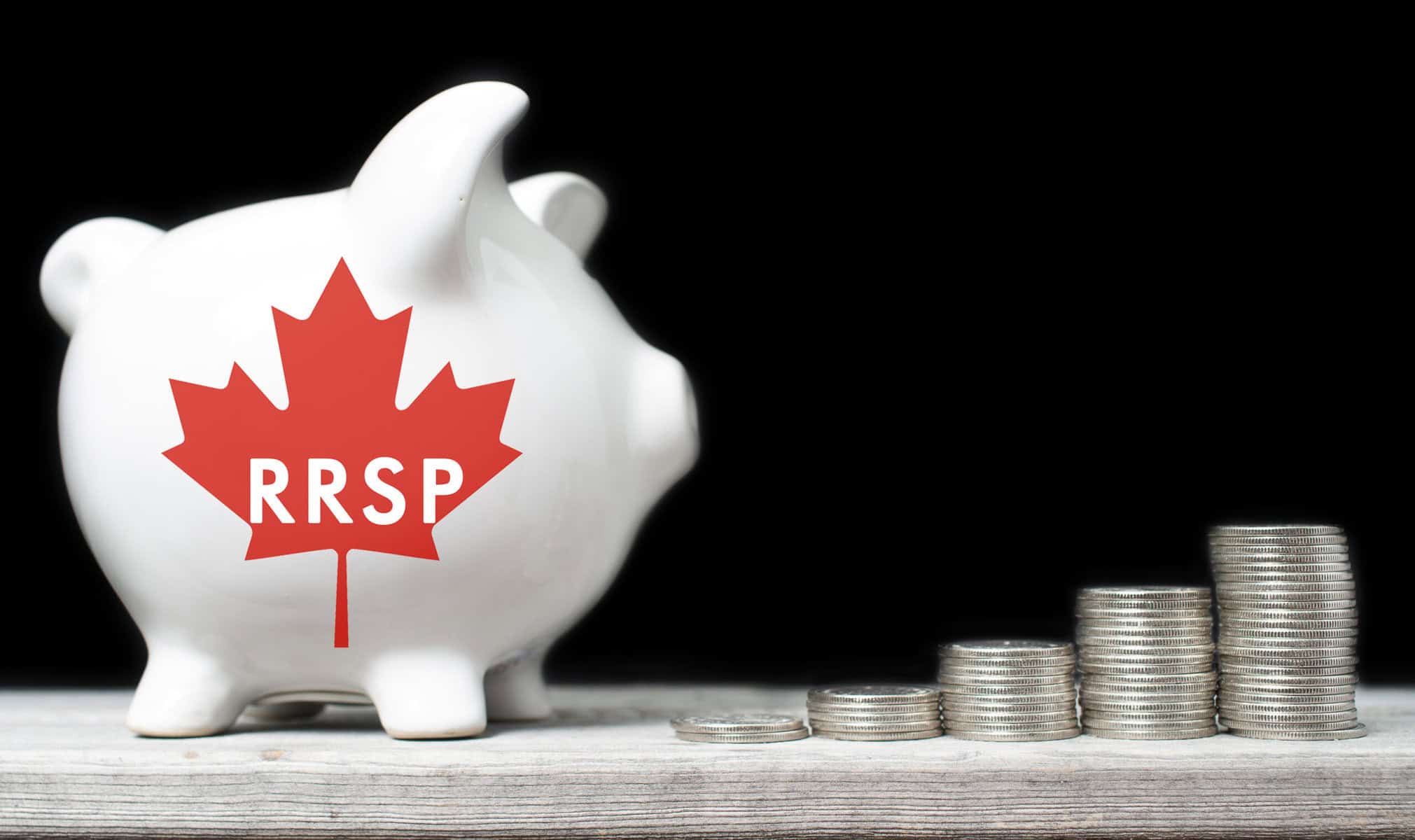
Canadians can secure their financial futures through the Tax-Free Savings Account (TFSA) and Registered Retirement Savings Plan (RRSP). Both are investment accounts for wealth accumulation. The Canada Revenue Agency (CRA) allows Canadians to hold a tax-advantaged account (TFSA) and a tax-sheltered account (RRSP) at the same time.
Eligible investments in both accounts are bonds, mutual funds, guaranteed investment certificates (GICs), exchange-traded funds (ETFs), and stocks. The difference is in the mechanics. Long-term compounding is the salient feature of the two most popular retirement accounts.
Data, however, shows that contribution rooms havenât been maximized. The average TFSA and RRSP at age 45, or of Canadians in their mid-life, is revealing.
Published benchmarks
Published reports say the combined savings (RRSP and TFSA) of 45-year-olds are approximately $90,000 to $100,000. Note that most in this age bracket are in their peak earning years.
The maximized room for an RRSP in 2026 varies because contributions are income-based, while the average balance is $82,100. For the TFSA, the maximum accumulated contribution since its inception in 2009 is $109,000. However, the average balance is $21,177.
Inflation and rising costs of living are common factors that prevent RRSP and TFSA users from maximizing their available limits or contribution rooms. The ideal RRSP balance at age 45 is $250,000 to $300,000 (dependent on 18% of earned income). Whereas, for the TFSA, the on-track balance is from $45,000 to $60,000.
Fill the pension shortfall
The Canadian Pension Plan (CPP) and Old Age Security (OAS) provide a solid foundation and safety net, but not enough to support a comfortable retirement. Many Canadians use RRSPs and TFSAs to fill the significant shortfall in government benefits, to at least maintain their standard of living.
People in the mid-life age bracket have sufficient time to take control. You can play catch-up or work to augment your CPP and OAS benefits by using the RRSP and TFSA to save and invest. With an earning potential of 20 years (to age 65), the improved risk profile of BCE (TSX:BCE) makes it a suitable core holding in either account.
Industry titan
BCE is Canadaâs most dominant telecommunications company. At $33.42 per share, the dividend yield is 5.2%. Given the low payout ratio of 25.9%, quarterly payouts are now more sustainable. The $30.9 billion industry titan had to slash dividends in 2025 to strengthen the balance sheet, reduce debt, and free capital for growth.
In Q1 2026, operating revenues and free cash flow (FCF) increased 4% and 0.8% year-over-year, respectively, to $6.2 billion and $804 million. Net earnings, however, declined 2.3% to $667 million compared to Q1 2025. BCE projects 10% FCF growth in 2026, while maintaining the annualized common dividend per share at $1.75.
BCEâs near-term plan includes growth in AI-powered enterprise solutions and the construction of the Saskatchewan AI data centre. Its President and CEO, Mirko Bibic, said, âWe look to create long-term value for our shareholders.â
Second wind
A 20-year horizon is still significant and could be a strong second wind for Canadians aged 45 to secure their financial future. Retirement pillars such as the RRSP and TFSA will be around in their lifetimes.
The post Hereâs the Average TFSA and RRSP at Age 45 appeared first on The Motley Fool Canada.
Should you invest $1,000 in Bce right now?
Before you buy stock in Bce, consider this:
The Motley Fool Canada team has identified what they believe are the top 10 TSX stocks for 2026⦠and Bce wasnât one of them. The 10 stocks that made the cut could potentially produce monster returns in the coming years.
Consider MercadoLibre, which we first recommended on January 8, 2014 … if you invested $1,000 in the âeBay of Latin Americaâ at the time of our recommendation, youâd have over $18,000!*
Now, it’s worth noting Stock Advisor Canada’s total average return is 94%* – a market-crushing outperformance compared to 85%* for the S&P/TSX Composite Index. Don’t miss out on our top 10 stocks, available when you join our mailing list!
Get the 10 stocks instantly #start_btn6 { background: #0e6d04 none repeat scroll 0 0; color: #fff; font-size: 1.2em; font-family: 'Montserrat', sans-serif; font-weight: 600; height: auto; line-height: 1.2em; margin: 30px 0; max-width: 350px; text-align: center; width: auto; box-shadow: 0 1px 0 rgba(0, 0, 0, 0.5), 0 1px 0 #fff inset, 0 0 2px rgba(0, 0, 0, 0.2); border-radius: 5px; } #start_btn6 a { color: #fff; display: block; padding: 20px; padding-right:1em; padding-left:1em; } #start_btn6 a:hover { background: #FFE300 none repeat scroll 0 0; color: #000; } @media (max-width: 480px) { div#start_btn6 { font-size:1.1em; max-width: 320px;} } margin_bottom_5 { margin-bottom:5px; } margin_top_10 { margin-top:10px; }* Returns as of April 20th, 2026
More reading
- What’s Going On With BCE’s Dividend?
- 1 Great Dividend I’d Buy Over Telus or BCE Stock Today
- BCE vs. Telus: Which Telecom Belongs in Your TFSA?
- How $30,000 Split Across Three TSX Stocks Can Generate $1,566 in Dividends
- 2 TSX Dividend Stocks Iâd Hold Through a Volatile Summer
Fool contributor Christopher Liew has no position in any of the stocks mentioned. The Motley Fool has no position in any of the stocks mentioned. The Motley Fool has a disclosure policy.
Related Articles

1 Canadian Energy Stock Poised for Big Growth in 2026
Amid the global energy shock created by the Middle East conflict, this seemingly...

This Mid-Cap Stock Surged Nearly 88% Last Year — It’s Still Dirt Cheap
Badger Infrastructure Solutions (TSX:BDGI) is a standout mid-cap that might be r...

What’s Going On With BCE’s Dividend?
BCE stock still yields over 5% after a painful dividend cut. Here is what the co...

A TSX Dividend Stock Down 18% That’s Worth Buying Before It Rebounds
This beaten-down TSX stock could reward patient dividend investors over the long...