Hidden Gem: Speciality Chemical Stock That Is A Supplier To Coca-Cola and Pepsi
Alex Smith
2 hours ago
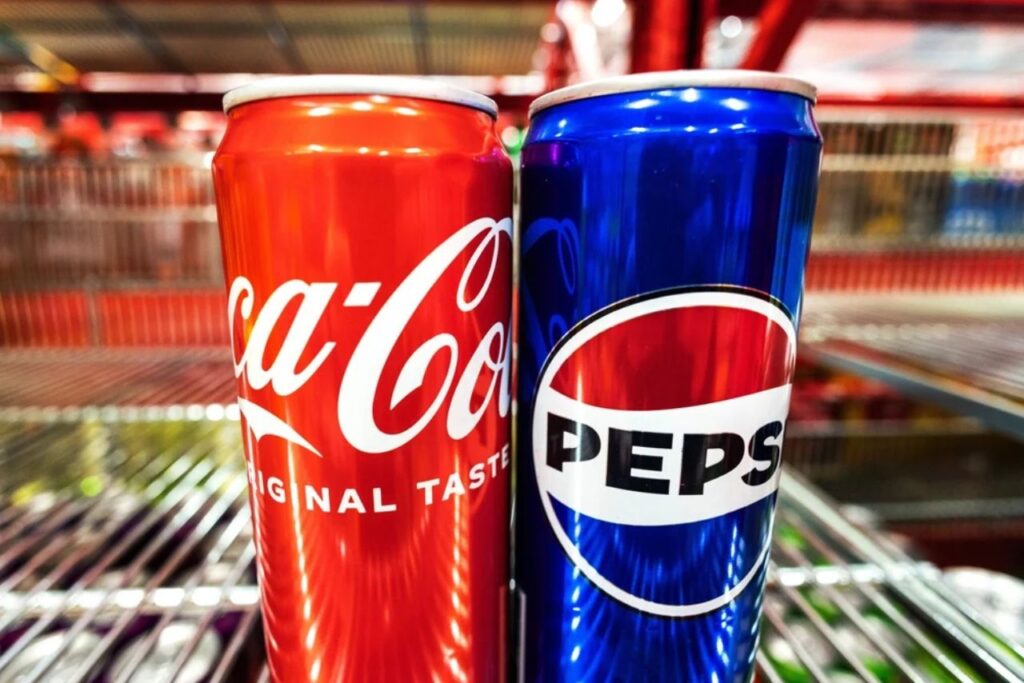
Synopsis: A lesser-known chemical company supplying to global giants is quietly building its next phase of growth. With capacity expansion, improving product mix, and strong global relationships, the business is evolving beyond its current scale. The real story lies in what could drive its future, rather than what it has already achieved.
In the specialty chemicals space, there are some companies that do not get talked about much, but quietly build scale, deepen customer relationships, and expand into better products over time. One such company is Vidhi Specialty Food Ingredients, a food colour manufacturer that supplies to large global names such as Coca-Cola, Pepsi, Nestle, Mondelez, Britannia, Pfizer, Cipla and Unilever. The company is also positioned as Asia’s second-largest food colour manufacturer, with exports to more than 80 countries, making it a niche Indian player with a meaningful global presence.
Vidhi operates in a business that may look small on the surface, but food colours are used across beverages, confectionery, bakery, pharmaceuticals, cosmetics, pet food and personal care. That gives the company a diversified end-market base, while its regulatory approvals and customer relationships give it an entry barrier that is not easy to replicate. The bigger story, however, is not just what the company does today, but what could drive the next leg of growth.
Capacity expansion is opening up the next growth phase
One of the clearest growth drivers for Vidhi is capacity expansion. The company’s Dahej plant has already added 350 metric tonnes per month of capacity, taking total capacity from 325 metric tonnes per month to 675 metric tonnes per month. This is a major jump for a company operating in a niche category. The Dahej expansion was funded through internal accruals, which also indicates that the balance sheet has not been stretched to chase growth. This move has taken it one step closer to its goal of reaching 1,000 metric tonnes per month of capacity.
The story does not stop there. The next leg is expected to come from Roha Phase II, where 360 metric tonnes per month of additional capacity is planned in two phases of 180 metric tonnes each. The company has said this new capacity will be used for manufacturing new high-margin products. In the Q2 call, management also spoke about fresh land parcels at both Dahej and Roha, and said engineering work was underway for the Roha site, while a larger capex plan would eventually come up at Dahej. That tells us Vidhi is not treating expansion as a one-time event, but as part of a longer growth roadmap.
High-margin products are becoming a bigger part of the portfolio
The second major growth driver is the company’s shift towards better products rather than just more products. In the Q2 earnings call, management said Vidhi is increasingly focusing on high-value, high-margin products and that some of the products under research and development have already been developed and are being commercialized. Importantly, management added that these products have gross margins of more than 50 percent, and in some cases even more than 50 to 60 percent. It also said the company is targeting a minimum 50 percent gross margin benchmark for the products being commercialized from the R&D pipeline.
Management further stated that these newer products are priced at more than USD 25 per kilogram, which indicates a much higher value product compared to basic colours. In simple terms, Vidhi is trying to move up the value chain. Instead of relying only on standard food colours, it wants a larger share of the portfolio to come from specialized, more profitable products. The latest data supports this direction as well, highlighting improved realizations due to product mix, a foray into new high-margin products, and a broader enhancement of the product portfolio. This is important because better product mix can improve margins even before the full benefit of capacity utilization comes through.
A cleaner business mix could support better quality growth
Another important growth driver is the changing business mix. During the Q2 call, the company gave an unusually useful detail when an investor asked for the split between trading and manufacturing revenue. Out of the Rs. 75 crore revenue reported in Q2, management said around Rs. 8 crore was inter-company sales and transfer that could be termed as trading revenue, while the rest was manufacturing revenue. That means more than 89 percent of that quarter’s revenue was manufacturing-led.
Why is this important? Because the company has repeatedly indicated that low-margin trading revenue is being substituted by high-margin manufactured products. This creates a cleaner and stronger growth profile over time. Manufacturing revenue is not only more profitable, but also reflects stronger product capability, customer stickiness and better control over the value chain. The latest data clearly says the margin profile is expected to improve as low-margin trading revenue gets replaced by high-margin manufactured products. For investors, this matters because growth driven by manufacturing and value-added products is usually more durable than growth driven by pass-through trading activity.
Global customer relationships give it room to grow wallet share
Vidhi’s customer list is another strong reason to keep it on the radar. The company supplies to large multinational names across food, beverage, pharma and personal care. It is one thing to produce food colours, but it is another to supply to customers such as Coca-Cola, Pepsi, Nestle, Mondelez, Pfizer, Cipla and Unilever. That level of customer quality suggests the company has the regulatory approvals, process consistency and product reliability needed to serve global brands.
What makes this even more interesting is that management is not only talking about adding new customers, but also about increasing wallet share from existing ones. The latest data explicitly lists addition of new customers and penetration into newer geographies among its growth levers. The company already exports to more than 80 countries and the top 10 customers contribute a meaningful share of revenue. In other words, Vidhi is not starting from zero. It already has the relationships and approvals in place, and the next phase of growth may come from selling more products to the same customers while also adding new accounts in global markets.
Operating leverage can further lift earnings as Dahej ramps up
A fifth growth driver is operating leverage. In the Q2 earnings call, management said the Dahej plant was operating at around 65 to 70 percent utilization, while Roha was already running at 100 percent utilization. It also said Dahej was expected to reach full capacity utilization by the end of the year (2025). This is important because when a new plant starts filling up, fixed costs get spread across more output, which can improve profitability even if selling prices remain stable.
The latest data shows that the company already delivered an EBITDA of Rs. 57.4 crore in the first nine months of FY26, up 18.8 percent year on year, even though revenue was down 5.7 percent year on year. While the current quarter’s profitability was partly impacted by lower exchange gains, the bigger takeaway is that margins have remained healthy as the product mix improves and the manufacturing base scales up. If Dahej ramps up further and the new Roha capacity eventually gets commissioned, operating leverage could become a meaningful earnings driver over the medium term.
The industry itself offers a long runway for niche players
The final growth driver is the market opportunity itself. According to the company’s presentation, the global food colour market is expected to grow at around 4.7 percent CAGR between 2021 and 2026, while yearly incremental demand globally is estimated at around Rs. 1,500 crore to Rs. 1,700 crore. The industry is also described as having limited competition due to high entry barriers. This matters because niche chemical companies often do well when they operate in specialized segments with tough regulatory requirements and sticky customer relationships.
Management also made an interesting point in the Q2 earnings call that synthetic food-grade colours may find newer avenues of usage in industries where certain industrial dyes are being restricted. While the company did not provide hard numbers around this opportunity, the comment suggests there could be an additional demand layer beyond the traditional food and beverage market. Even without relying heavily on that possibility, the base industry trend itself remains supportive, and Vidhi is already well placed through its export presence, product approvals and manufacturing scale.
Overall, Vidhi Specialty Food Ingredients looks like a business where the key question is not whether it has growth drivers, but how quickly they translate into numbers. Capacity expansion, higher-value products, a cleaner manufacturing-led mix, deeper customer relationships, rising plant utilization and a niche but growing end-market together create a fairly strong medium-term story. It is still a specialized small-cap name and not a mass-market story, but that is also what makes it interesting. For investors looking beyond the usual large-cap chemical names, this is one hidden gem that may deserve a closer look.
Disclaimer: The views and investment tips expressed by investment experts/broking houses/rating agencies on tradebrains.in are their own, and not that of the website or its management. Investing in equities poses a risk of financial losses. Investors must therefore exercise due caution while investing or trading in stocks. Trade Brains Technologies Private Limited or the author are not liable for any losses caused as a result of the decision based on this article. Please consult your investment advisor before investing.
The post Hidden Gem: Speciality Chemical Stock That Is A Supplier To Coca-Cola and Pepsi appeared first on Trade Brains.
Related Articles
Can EMS stocks sustain strong revenue growth despite near-term margin pressure in Q4 FY26?
Synopsis: EMS sector is expected to deliver strong Q4FY26 revenue and profit gro...

₹74,000 Cr Order Book: Defence Stock Delivers Record FY26 Revenue with 16% Growth
Synopsis: Bharat Electronics Limited reports record FY26 revenue of Rs26,750 cro...

Vijay Kedia Buys Fresh Stake Worth ₹14.1 Cr in an Auto Ancillary Stock; Do You Hold It?
Synopsis:- A fresh 1.1% stake buy worth ₹14.1 crore signals investor confidence,...

Textile Stock in Which Mukul Agrawal Made a Fresh Investment of ₹6.8 Cr in Q4 FY26
Synopsis:- Ace investor Mukul Agrawal invested ₹6.8 crore for a 1.6% stake with...