Himadri Speciality Chemical: Can It Be the Next Top EV Material Manufacturer in India?
Alex Smith
2 hours ago
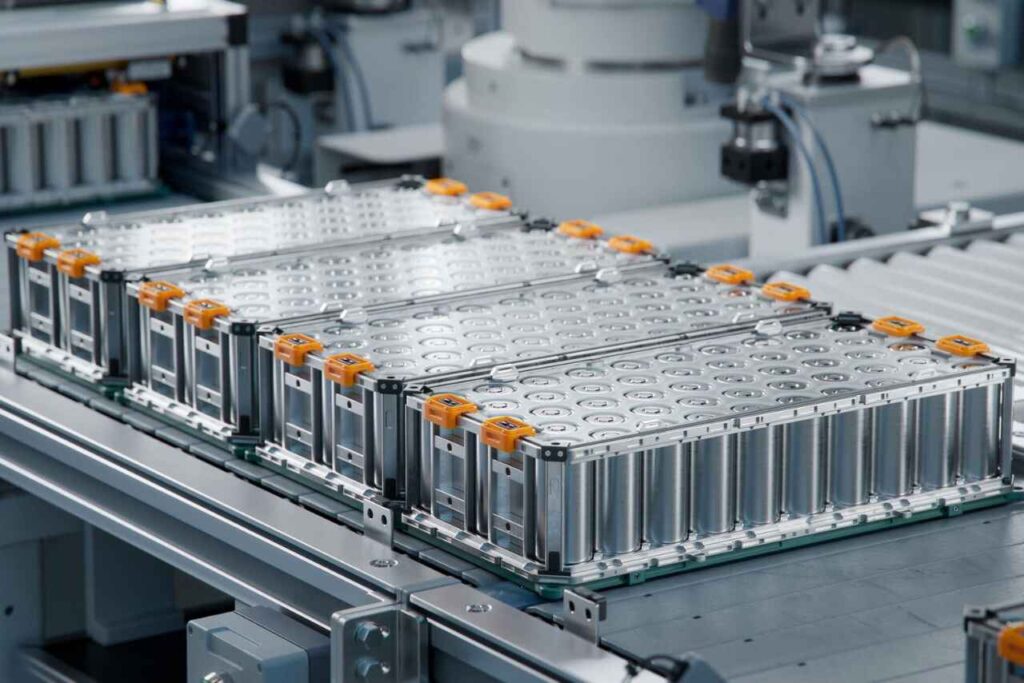
Synopsis: Himadri Speciality Chemical is leveraging its carbon chemistry expertise, deep R&D capabilities, and strategic global partnerships to build an integrated lithium-ion battery materials platform. With commercial anode production, a Rs 1,125 crore cathode project, and a 200,000-tonne long-term LFP ambition, the company appears to be positioning itself as a serious EV materials contender.
For years, Himadri Speciality Chemical built its business around carbon products, coal tar derivatives, and specialty chemicals. However, FY26 marked the beginning of a much larger transformation. Backed by over a decade of lithium-ion research, Rs 120 crore in annual R&D spending, and a growing ecosystem of global technology partnerships, the company has now entered commercial battery materials manufacturing. From anodes and cathodes to silicon-carbon technologies, Himadri is building capabilities that extend far beyond its traditional chemical roots.
With a market cap of Rs 30,880 crore, the shares of Himadri Speciality Chemical Ltd are trading at Rs 610 and are trading at a PE of 41 compared to their industry’s PE of 49. The shares have given a return of more than 1,100% in the last 5 years.
A Transformation Rooted in Research, Not Reinvention
In most of its business career, Himadri Speciality Chemicals had been building up its reputation as a producer of carbon products, coal tar products, and specialty chemicals. However, when the company’s management spoke to its stakeholders during its FY26 earnings call, it was quite clear that the future of the company was going to be driven by something more than just the core business lines of the company.
In the words of the chairman and managing director of Himadri Speciality Chemicals, Mr Anurag Choudhary, research and development was not just a driver for the company, but it was something that was ingrained in the very fabric of the company. This was proven through data.
Himadri Speciality Chemicals is currently one of the most comprehensive speciality solutions R&D platforms in India for specialty solutions with more than 180 scientists and technologists who have expertise in their fields, along with 28 PhDs from all across the world, including Japan, South Korea, Australia, the United States, Europe, and China. In FY26 alone, the company spent Rs 120 crore on research and development.
The First Commercial Anode Plant Marks a Defining Milestone
This ten-year research effort culminated commercially on 23 April 2026 with the successful commissioning of Himadri’s first anode material production plant located at Mahistikry in West Bengal. This new unit comes with an initial production capacity of 200 metric tonnes per year.
Although the initial production capacity may seem small relative to the company’s current industrial activities, management consistently pointed out that the focus here is not on achieving profitability but on commercialising the research efforts and speeding up the customer validation process.
What makes this development special is that all the technology processes involved—from the raw materials through to the production of the anode active material—have been designed internally without any reliance on licence-based or externally sourced technology.
The key ingredient behind this technology platform includes the use of a custom-designed high-purity coal tar pitch manufactured internally at Himadri, which offers the company backward integration along the entire production chain.
Why Anode Commercialization Is Only the Beginning
Management were transparent when the queries regarding the financial implications of the recently commissioned 200-tonne anode facility came up. While acknowledging that the facility will help Himadri monetise its research efforts and showcase its technology within a manufacturing setup, management stated that revenues from the facility will be modest during FY27.
However, it must be noted that the company views the facility more as a stepping stone to higher commercialisation capacity. In this regard, it was confirmed by management that all the details pertaining to the further expansion of the anode capacity, including capital investment and timeline for commercialisation, will be shared in due course.
Moreover, management was also able to provide some insight into the customer feedback for the product samples. While sample A of the product has received encouraging reviews from international customers, samples B, C, and D are also on track to be validated.
Cathode Materials Could Create Global Scale
Although the anode materials venture represents the company’s first move towards monetising its offerings in batteries, management seems to have greater plans for cathode materials. The rollout plan for Phase 1 of Himadri’s lithium iron phosphate cathode active material manufacturing project continues to be on track.
This project involves a total capacity of 40,000 metric tonnes per annum, where the initial capacity target for the project is 2,000 metric tonnes, which should be rolled out during the third quarter of FY ’27. The remaining capacity will be ramped up gradually over the next 12 months depending on approvals from customers and demand visibility.
FY29 is expected to see the first full year of operation for Phase 1 total capacity. Management reported that the total capital expenditure required for Phase 1 is Rs 1,125 crore. However, as opposed to ramping up the capacity immediately, Himadri seems to be strategically deploying this capacity, given its concern with achieving healthy ROCE.
A 200,000-Tonne Vision Could Position Himadri Beyond India
But beyond Phase 1, management has set out an even more ambitious vision of creating a globally significant LFP platform with a capacity of 200,000 metric tonnes for the long term. In their estimates, this should provide enough capacity for producing about 100 GWh of lithium-ion batteries.
Perhaps more important, as Himadri claims, by adopting this strategy, the company could become the first company globally to set up such a manufacturing plant of commercial significance outside China. This is a particularly interesting statement in a world where diversifying supply chains is becoming an increasingly important consideration. Customers have shown considerable interest in the company’s plans, according to management, especially cell makers in India and abroad.
Strategic Partnerships Are Expanding the Technology Moat
Himadri’s approach to battery materials also goes beyond R&D activities at Himadri itself. During FY26, Himadri has made significant advances in its partnership with Sicona Battery Technologies. By entering into a licensing agreement, Himadri has gained the exclusive rights to localise and commercialise the silicon carbon anode technology of Sicona Batteries in India.
Management emphasised that the Gen3 materials of Sicona Battery offer excellent energy density and better electrochemical performance, whereas the Gen4 materials provide high-capacity retention. In addition, Himadri has entered into a business relationship with International Battery Company.
With the help of IBC’s lithium-ion manufacturing facility based in South Korea, Himadri has started validating products in a practical operating environment. Himadri has also been collaborating with Invati Creations on advanced electrode materials.
The Addressable Market Goes Beyond Electric Vehicles
While electric mobility will continue to be the most evident use case for batteries, management made it clear that Himadri’s target customer base is much more expansive than the rest. Through its association with IBC, Himadri has positioned itself as a player in applications ranging from fleet mobility, two-wheelers and three-wheelers, battery exports, and battery storage systems.
However, what is more important for Himadri is that management mentioned that IBC has planned a broad array of sunrise industries in its upcoming product pipeline, which include defence applications, drones, and artificial intelligence (AI)-driven data centres.
Legacy Businesses Are Funding the Future
The first and foremost reason that makes Himadri’s battery aspirations look quite believable is because the core business itself generates robust cash flows. In FY26, the company set up one more specialty carbon black unit of 70,000 metric tonnes at Mahistikry that brings the total capacity for the specialty variety to 130,000 metric tonnes, bringing up the total carbon black capacity to 250,000 metric tonnes.
As per management, this unit can be considered the biggest specialty carbon black unit across the world, and this brings Himadri to one of the top five companies in the world producing such a product. The capacity for coal tar pitch distillation was also enhanced from 500,000 metric tonnes to 600,000 metric tonnes.
FY26 has been the best year so far in terms of finances for the company. The consolidated EBITDA figure stands at Rs 1,006 crore, profit before tax is Rs 1,001 crore, and profit after tax stands at Rs 755 crore. The net positive cash balance for the year was Rs 121 crore, and ROCE increased to 32%.
Is Himadri Building India’s Next EV Materials Giant?
One year back, Himadri informed its investors that it was entering into a transformation phase. In FY26, it seems like the company has not only made promises but actually started to act upon them. A commercial anode production facility; a Rs 1,125 crore cathode facility under implementation; LFP plans to reach 200,000 tonnes in the long term; proprietary silicon-carbon technology; investment in cell manufacturing facilities; and customer interaction with major OEM players around the world collectively indicate a company that is trying to build something much more than just expanding into specialty chemicals.
The beauty of the whole story is that all these initiatives are being financed through record profitability, positive cash position, and efficient use of capital. From management insights and execution status, it is clear that Himadri is no longer just diversifying into lithium batteries by moving away from its carbon business. Instead, it is trying to build a complete battery material production complex.
Disclaimer: The views and investment tips expressed by investment experts/broking houses/rating agencies on tradebrains.in are their own, and not that of the website or its management. Investing in equities poses a risk of financial losses. Investors must therefore exercise due caution while investing or trading in stocks. Trade Brains Technologies Private Limited or the author are not liable for any losses caused as a result of the decision based on this article. Please consult your investment advisor before investing.
The post Himadri Speciality Chemical: Can It Be the Next Top EV Material Manufacturer in India? appeared first on Trade Brains.
Related Articles
Ashish Kacholia Stock Jumps 7% After Company Expands Its Shipbuilding Business
Synopsis: A marquee investor’s portfolio pick makes a bold move into water...

Ambuja Cement Q4 Results Breakdown: Profit Growth, Margin Impact and Higher Volumes Explained
Synopsis: Ambuja Cements reported steady growth in volumes, revenue, and profit,...

Ultratech Cement And Other Cement Stocks Under Pressure as Polypropylene Price Soars 70%
Synopsis: Even as cement companies push through a second price hike of the month...

Cigniti Technologies Cancels Q4 Results as Coforge Acquires After NCLT Approval
Synopsis:- With the NCLT formally approving its merger with Coforge, Cigniti Tec...