How Does Your TFSA Compare to the $109,000 Milestone?
Alex Smith
1 hour ago
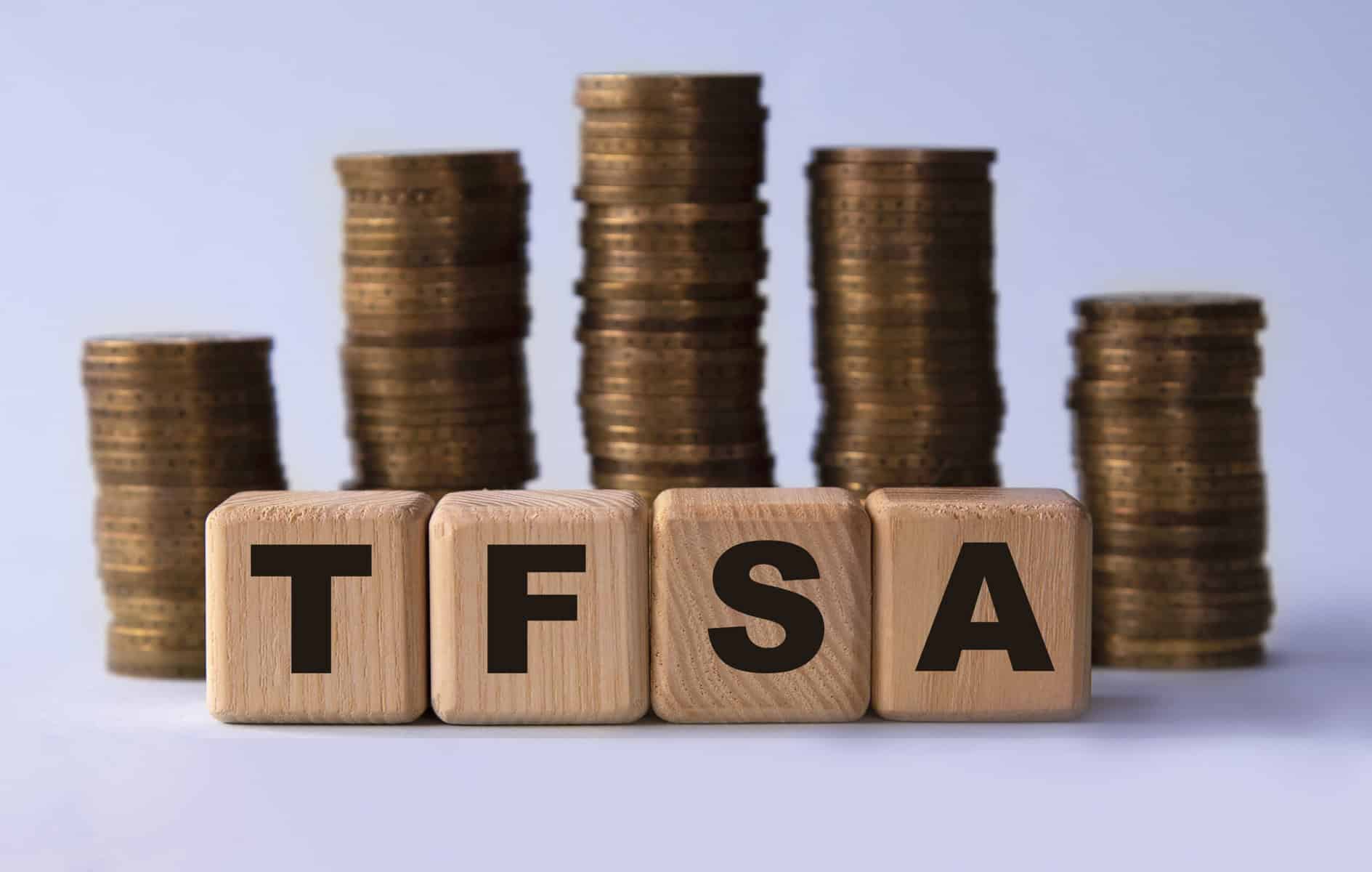
For 2026, one TFSA number stands out above all others: $109,000. That figure represents the theoretical maximum amount of Tax-Free Savings Account (TFSA) contribution room available to someone who has been a Canadian resident since before 2010, was born in 1991 or earlier, and has never made a contribution or withdrawal.
Of course, relatively few Canadians have actually accumulated the full amount of room. Life happens. People buy homes, pay down debt, raise families, and deal with unexpected expenses. Still, reaching a six-figure TFSA balance is an important milestone because it opens up a tremendous amount of flexibility.
A TFSA is not just a savings account. It can be used to generate tax-free income, pursue long-term growth, or strike a balance between the two. The key is making sure the money is actually invested rather than sitting in cash earning a modest rate of interest.
For long-term growth: ZGRO
The BMO Growth ETF Portfolio (TSX:ZGRO) is the base version designed for investors who prioritize long-term capital appreciation.
The ETF maintains a target allocation of 80% equities and 20% fixed income. Through a collection of underlying exchange-traded funds (ETFs), investors gain exposure to Canadian stocks, U.S. stocks, international developed markets, emerging markets, and global bonds.
Everything is handled internally. The portfolio automatically rebalances itself, meaning investors do not need to worry about deciding when to buy or sell different asset classes. If one region outperforms and grows too large, the ETF adjusts the allocations on your behalf.
The result is a globally diversified portfolio that can serve as a one-ticket solution for TFSA investors focused on growth. With a management expense ratio (MER) of approximately 0.18%, it also remains competitively priced for an all-in-one portfolio.
For current income: ZGRO.T
Not every investor wants maximum growth. Some investors, particularly retirees or those approaching retirement, may prefer turning part of their TFSA into a source of tax-free cash flow. That is where the ZGRO.T version comes in.
ZGRO.T holds essentially the same underlying portfolio as ZGRO. Investors still receive exposure to a globally diversified 80/20 stock-and-bond allocation. The difference is the distribution policy.
ZGRO.T is designed to provide a target annual distribution yield of approximately 6%, using a managed distribution approach. Rather than relying entirely on dividends and interest, the fund can also use capital gains and periodic asset sales to help support its target payout.
Some investors dislike that idea, but in practice, many retirees end up selling shares to fund spending anyway. ZGRO.T simply automates that process while maintaining the underlying portfolio structure.
For investors with a large TFSA balance, the choice between ZGRO and ZGRO.T ultimately comes down to whether growth or income is the primary objective, but both remain low-cost and highly diversified.
The post How Does Your TFSA Compare to the $109,000 Milestone? appeared first on The Motley Fool Canada.
Should you invest $1,000 in Bmo Growth ETF Portfolio right now?
Before you buy stock in Bmo Growth ETF Portfolio, consider this:
The Motley Fool Canada team has identified what they believe are the top 10 TSX stocks for 2026⦠and Bmo Growth ETF Portfolio wasnât one of them. The 10 stocks that made the cut could potentially produce monster returns in the coming years.
Consider MercadoLibre, which we first recommended on January 8, 2014 … if you invested $1,000 in the âeBay of Latin Americaâ at the time of our recommendation, youâd have over $16,000!*
Now, it’s worth noting Stock Advisor Canada’s total average return is 91%* – a market-crushing outperformance compared to 87%* for the S&P/TSX Composite Index. Don’t miss out on our top 10 stocks, available when you join our mailing list!
Get the 10 stocks instantly #start_btn6 { background: #0e6d04 none repeat scroll 0 0; color: #fff; font-size: 1.2em; font-family: 'Montserrat', sans-serif; font-weight: 600; height: auto; line-height: 1.2em; margin: 30px 0; max-width: 350px; text-align: center; width: auto; box-shadow: 0 1px 0 rgba(0, 0, 0, 0.5), 0 1px 0 #fff inset, 0 0 2px rgba(0, 0, 0, 0.2); border-radius: 5px; } #start_btn6 a { color: #fff; display: block; padding: 20px; padding-right:1em; padding-left:1em; } #start_btn6 a:hover { background: #FFE300 none repeat scroll 0 0; color: #000; } @media (max-width: 480px) { div#start_btn6 { font-size:1.1em; max-width: 320px;} } margin_bottom_5 { margin-bottom:5px; } margin_top_10 { margin-top:10px; }* Returns as of June 15th, 2026
More reading
Fool contributor Tony Dong has no position in any of the stocks mentioned. The Motley Fool has no position in any of the stocks mentioned. The Motley Fool has a disclosure policy.
Related Articles
2 Dividend Stocks I’d be Comfortable Holding in an RRSP Indefinitely
The two top RRSP stocks for long-term wealth creation include TD Bank and CNR Ra...

3 Stocks to Buy as Data Centre Demand Sends Spending Higher
AI data centre spending is spilling into the real economy, and these three TSX s...

AI Needs Power and Servers: 2 Stocks I’d Buy Right Now
AI needs electricity and systems that actually work, and Hydro One plus CGI offe...
1 Canadian Dividend Stock That’s Down 10% — and Worth Holding for the Very Long Term
This stock has raised dividend for six consecutive years and has fallen roughly...