How Stock Prices Are Manipulated Without Breaking Any Rules?
Alex Smith
1 month ago
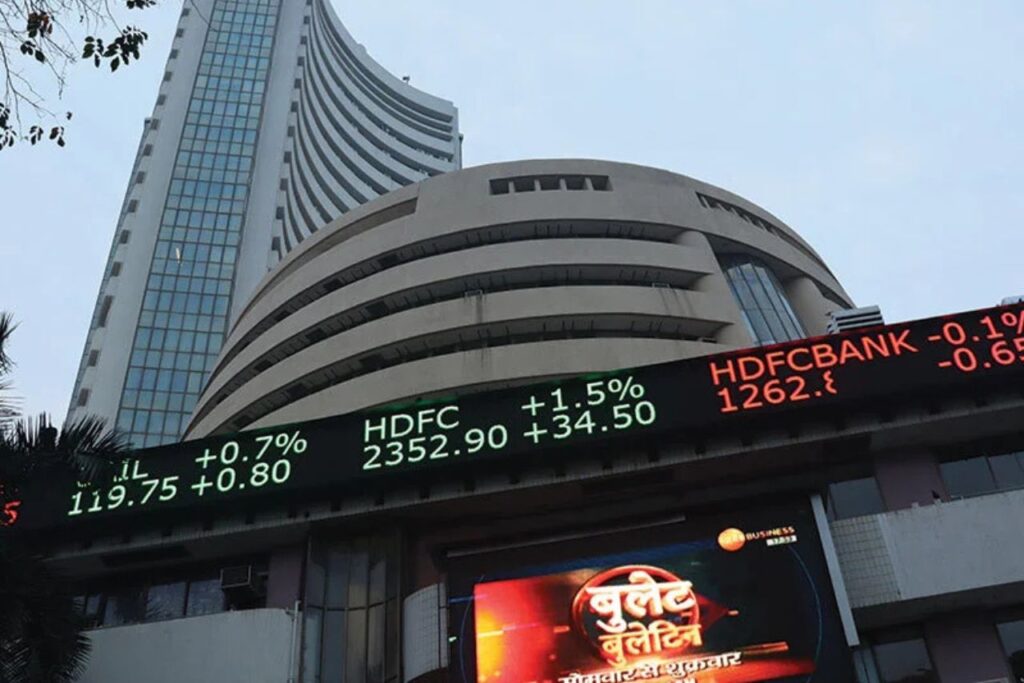
Synopsis: The article explains how stock prices can be legally manipulated through demand and liquidity rather than fundamentals, with examples like TV Vision Ltd, which surged 660 percent in 2024 despite continued losses, and RCom, which rose 187 percent in two months in 2021 before collapsing. It highlights the risks for retail investors chasing hype and stresses focusing on earnings, cash flows, and liquidity to avoid losses.
In an ideal world, stock prices should move only when a company’s business improves or worsens. In reality, prices often rise or fall even when there is no meaningful change in revenue, profits, or future prospects.
This happens because prices respond first to buying and selling pressure, not fundamentals. When demand suddenly increases, prices move up, and investors then try to find reasons to justify that move. By the time fundamentals catch up, the damage is often already done.
How Prices Are Pushed Up ?
Prices can be influenced legally by concentrating buying in stocks where trading volume is low. When a few large buyers enter such stocks, prices rise quickly due to limited supply.
The rising price attracts momentum traders and retail investors, creating a self-feeding cycle. No false statements are required. The price rise itself becomes the story, drawing in more buyers until liquidity peaks and early buyers exit.
The Teenager Who Used This Weakness
Jonathan understood this mechanism at a very young age. He identified small companies with low trading volumes, bought large quantities of shares, and then used internet chat forums to create attention around those stocks.
As more people bought in, prices rose sharply. Once sufficient demand was created, he sold his holdings quietly. By the time investors realised the companies were not performing, prices collapsed. Jonathan earned close to $800,000 before settling with the regulator and paying a fine.
Why Small and Illiquid Stocks Are the Targets
Stocks with low trading volume require very little capital to move. A few buyers can create sharp price spikes, which then attract momentum-driven investors. Once the price becomes the story, fundamentals take a back seat. This dynamic plays out repeatedly in Indian markets as well.
Some of the Indian Examples are:
Reliance Communications
RCom was once India’s leading telecom company. In recent times, it saw speculative buying based on turnaround hopes and market hype pushed its stock up repeatedly. From the price of Rs. 1.55 on April 19, 2021 the stock has rallied Rs. 4.45 on June 21, 2021 giving a return of around 187 percent.
Later, the stock fell rapidly; currently trading at Rs. 1.07. Retail investors entered the rallies, expecting recovery, but the company’s high debt, regulatory challenges, and operational losses eventually caused sharp price collapses. Many investors were trapped in the fall.
TV Vision Ltd
The stock showed a sharp price movement that did not match its business performance. From January 1, 2024, the price rose from Rs. 3.90 to Rs. 29.66 by December 9, 2024, giving a return of about 660 percent, even though the company continued to report losses. In March 2024, revenue was Rs. 14.32 crore with a loss of Rs. 5.51 crore, and in June 2024 revenue increased to Rs. 21.83 crore but losses widened to Rs. 7.01 crore, yet the share price kept moving up.
Later, in December, revenue fell to Rs. 9.72 crore while the loss stayed high at Rs. 6.60 crore. After peaking, the stock fell sharply to Rs. 3.81 by February 13, 2025, a drop of about 86 percent. Overall, the rise and fall happened without any clear improvement or decline in fundamentals, making the price movement look unrelated to the company’s actual performance.
How Big Investors Also Move Prices Legally
Large investors face the problem of size. Buying or selling quickly moves prices against them. To manage this, they spread trades over time and sometimes delay disclosures, which is legally permitted. Prices often move well before the public understands the reason, creating the illusion of insider activity.
Liquidity Matters More Than Company Size
Many investors believe large companies are safe from manipulation. In reality, liquidity is more important than market capitalisation. Stocks with low trading volume are easier to move, regardless of brand or size. Understanding liquidity helps investors identify where price manipulation is more likely. Many retail investors overlook this and focus only on headline size or brand recognition.
The Warning Signs Retail Investors Ignore
Sharp price increases without earnings support, excessive optimism on social media, low volumes followed by sudden spikes, and urgency-driven narratives are common danger signals. When price becomes the only justification, risk is already elevated.
The Core Lesson for Investors
Not all price manipulation is illegal, but much of it is harmful to uninformed investors. Markets reward patience and understanding, not excitement. Investors who focus on business fundamentals and respect liquidity risks are far more likely to protect capital and avoid becoming part of someone else’s exit strategy.
Conclusion
Stock prices can move sharply without any real change in a company’s business because demand and liquidity often matter more than fundamentals in the short term. Small and illiquid stocks are especially vulnerable, where a few buyers can push prices up and attract momentum-driven investors.
By the time fundamentals reveal the truth, early movers have already exited. For retail investors, the key lesson is to stay cautious of sudden price spikes, focus on earnings and cash flows, and always respect liquidity risks rather than chasing hype.
Written by Akshay Sanghavi
Disclaimer

The views and investment tips expressed by investment experts/broking houses/rating agencies on tradebrains.in are their own, and not that of the website or its management. Investing in equities poses a risk of financial losses. Investors must therefore exercise due caution while investing or trading in stocks. Trade Brains Technologies Private Limited or the author are not liable for any losses caused as a result of the decision based on this article. Please consult your investment advisor before investing.
The post How Stock Prices Are Manipulated Without Breaking Any Rules? appeared first on Trade Brains.
Related Articles

Solar Industries, Caplin Point and 6 other stocks delivering back-to-back EPS growth
Synopsis: Stocks like Solar Industries, Waaree Energies, and Navin Fluorine and...

Will Max Financial share price cross ₹2,000 after announcing robust Q3 results?
Synopsis: Max Financial gains after robust Q3 performance; Jefferies reiterates...

Angel One Vs Groww: Which stockbroker performed better in Q3?
Synopsis: Angel One and Groww delivered contrasting performances in Q3 FY26. Ang...

₹80,900 Cr Valuation: Why is Lenskart considered a tech company despite being a retail brand?
Synopsis: Lenskart is called a tech company because it uses advanced data and ar...