How to Use Your TFSA to Average $363 per Month in Tax-Free Passive Income
Alex Smith
2 weeks ago
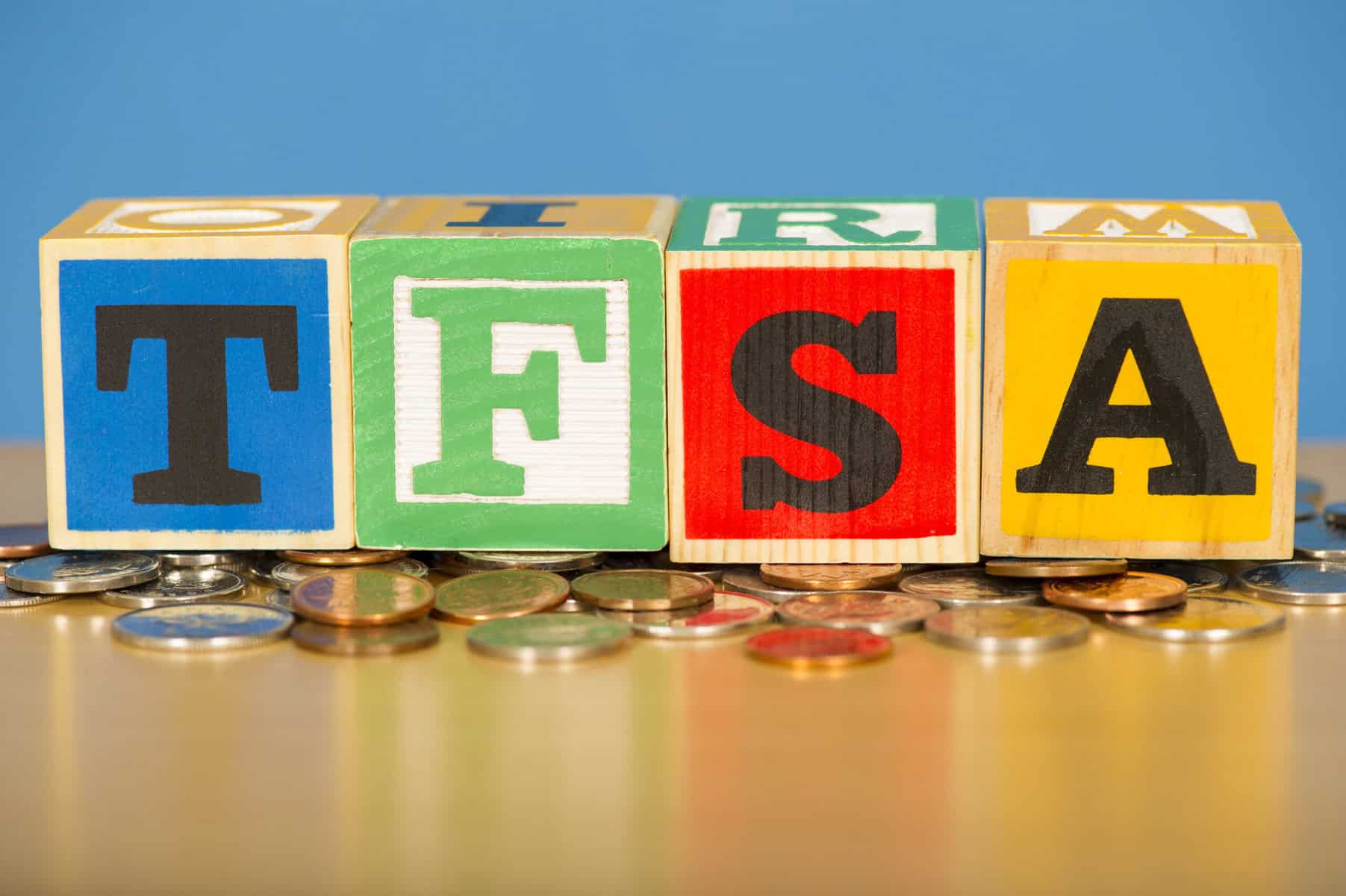
Canadian investors are using their self-directed Tax-Free Savings Account (TFSA) to build portfolios of income-generating investments that provide a source of tax-free earnings.
TFSA limit
The TFSA contribution limit is $7,000 in 2026. This brings the cumulative maximum contribution space per person to $109,000 for anyone who has qualified since the TFSA was created in 2009.
All interest, taxes, and capital gains earned inside the TFSA are tax-free and the full amount of earnings on the investments can be taken out as tax-free income. That’s good news for everyone who has a TFSA portfolio, but it’s particularly helpful for retirees who receive Old Age Security (OAS).
The CRA imposes a 15% OAS pension recovery tax on net world income earned above a minimum threshold. Company pensions, OAS, CPP, and income earned on investments held in taxable accounts all get added into the calculation. TFSA income, however, doesn’t count toward the determination of the OAS clawback.
Any funds taken out of a TFSA will open up equivalent new contribution space in the following calendar year, along with the regular TFSA limit increase. This provides flexibility for people who might need to withdraw a large amount for a short-term expense, but want to replace the TFSA funds at a later time.
GICs or dividend stocks
Guaranteed Investment Certificates (GICs) and dividend stocks are popular investment picks to generate passive income.
GICs provide interest income while protecting the invested capital, as long as the GIC is issued by a Canadian Deposit Insurance Corporation (CDIC) member and is below the $100,000 limit.
GIC rates are lower than they were two years ago, but investors can still get non-cashable GIC rates of 3% to 3.5% depending on the issuer and the term. That’s comfortably above the current rate of inflation, so it makes sense to have some GICs in the income portfolio.
The downside is that the rate earned is fixed for the duration of the GIC and rates could be lower when the GIC matures and the funds need to be reinvested. In addition, you have to lock in the funds to get the best rates. That means the invested capital is not available for emergencies.
Dividend stocks often pay dividends that deliver higher yields than GICs. In addition, dividend hikes will boost the yield on the initial investment. Stocks also provide more flexibility as they can be sold at any time to access the savings.
Share prices, however, can fall below the purchase price and dividends are not 100% safe. Companies might have to cut their payouts if they run into cash-flow challenges. That being said, the TSX is home to many top dividend-growth stocks paying solid dividends that should be safe.
Enbridge
Enbridge (TSX:ENB), for example, has increased its dividend annually for more than 30 years.
The company is a leader in its industry and has the financial clout to grow through acquisitions and development projects. The current $35 billion capital program should deliver steady growth in distributable cash flow in the coming years to enable ongoing dividend increases. At the time of writing, ENB stock provides a dividend yield of 5.9%.
The bottom line
Investors can quite easily put together a diversified portfolio of GICs and dividend-growth stocks to generate an average return of at least 4% today. On a TFSA of $109,000, this would provide annual tax-free income of $4,360, or about $363.33 per month.
The post How to Use Your TFSA to Average $363 per Month in Tax-Free Passive Income appeared first on The Motley Fool Canada.
Should you invest $1,000 in Enbridge Inc. right now?
Before you buy stock in Enbridge Inc., consider this:
The Motley Fool Canada team has identified what they believe are the top 10 TSX stocks for 2026⦠and Enbridge Inc. wasnât one of them. The 10 stocks that made the cut could potentially produce monster returns in the coming years.
Consider MercadoLibre, which we first recommended on January 8, 2014 … if you invested $1,000 in the âeBay of Latin Americaâ at the time of our recommendation, youâd have $21,827.88!*
Now, it’s worth noting Stock Advisor Canada’s total average return is 102%* – a market-crushing outperformance compared to 81%* for the S&P/TSX Composite Index. Don’t miss out on our top 10 stocks, available when you join our mailing list!
Get the 10 stocks instantly #start_btn6 { background: #0e6d04 none repeat scroll 0 0; color: #fff; font-size: 1.2em; font-family: 'Montserrat', sans-serif; font-weight: 600; height: auto; line-height: 1.2em; margin: 30px 0; max-width: 350px; text-align: center; width: auto; box-shadow: 0 1px 0 rgba(0, 0, 0, 0.5), 0 1px 0 #fff inset, 0 0 2px rgba(0, 0, 0, 0.2); border-radius: 5px; } #start_btn6 a { color: #fff; display: block; padding: 20px; padding-right:1em; padding-left:1em; } #start_btn6 a:hover { background: #FFE300 none repeat scroll 0 0; color: #000; } @media (max-width: 480px) { div#start_btn6 { font-size:1.1em; max-width: 320px;} } margin_bottom_5 { margin-bottom:5px; } margin_top_10 { margin-top:10px; }* Returns as of January 15th, 2026
More reading
- 3 Ways Canadians Can Invest Like ‘The Canadian Warren Buffett’
- Dividend Fortunes: 2 Canadian Stocks Leading the Way to Retirement
- 3 No-Brainer Dividend Stocks to Buy Right Now for Less Than $1,000
- Why Iâll Never Sell This Perfect RRSP Stock
- 7 Top-Tier Canadian Stocks That Just Bumped Up Dividends (Again!)
The Motley Fool recommends Enbridge. The Motley Fool has a disclosure policy. Fool contributor Andrew Walker has no position in any stock mentioned.
Related Articles

Energy Stocks Are Shaky: Here’s My Top TSX Pick
Energy headlines are messy, but Baytex has a clear 2026 plan and cash flow stren...

Maximum TFSA Impact: 2 TSX Stocks to Help Multiply Your Wealth
Using the TFSA just as savings account is a waste. However, when you invest in s...

Top Canadian Stocks to Buy Right Now With $5,000
These top Canadian stocks are backed by strong fundamentals and have solid growt...

3 Major Red Flags the CRA Is Watching for Every TFSA Holder
Canadian TFSA holders need to avoid these three mistakes that could attract a he...