IDBI Bank Stake Sale: What Is the Government Planning Now?
Alex Smith
2 hours ago
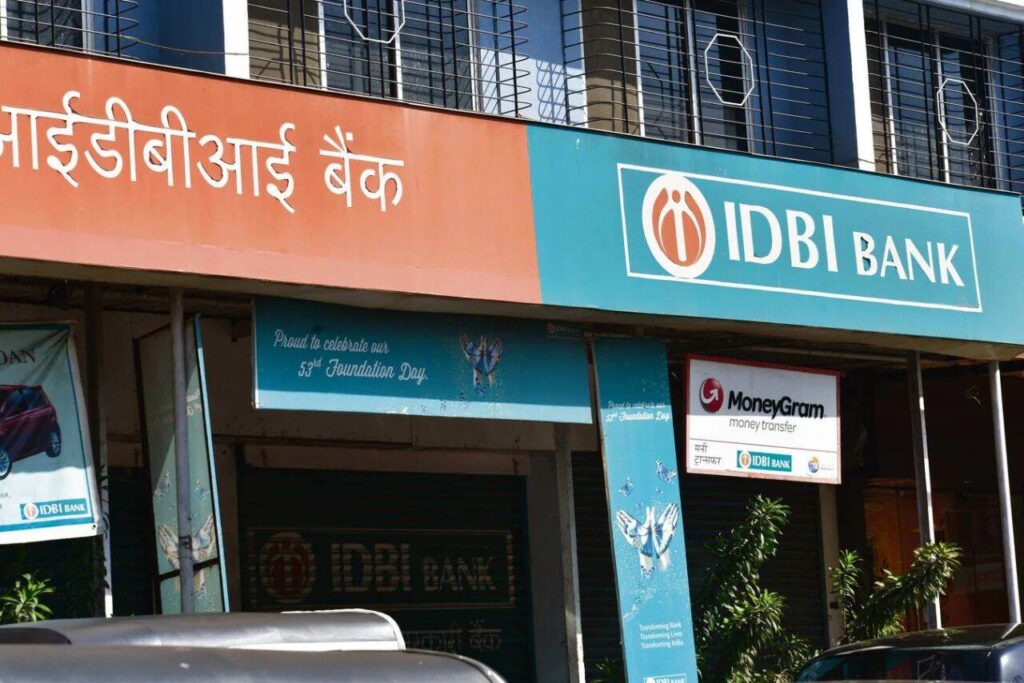
Synopsis:- Privatisation plans hit a setback as bids fell below expectations for a 60.72% stake sale. With over 94% ownership concentrated, the focus shifts to OFS, aiming to raise public float from 5.29% to around 15–20% for better valuation discovery.
The government and LIC together held about 60.72% stake in IDBI Bank and had decided to sell all of it to a private buyer. Two companies, Emirates NBD Bank and Fairfax India, placed their financial bids in February 2026 after a long due diligence period. However, both bids came in below the minimum price the government had set, commonly known as the reserve price, and as a result, the entire deal had to be called off.
Who owns IDBI Bank right now?
At present, Life Insurance Corporation of India holds the largest chunk with a 49.24% controlling stake, while the Government of India holds 45.48%. This means together they own over 94% of the bank, leaving only 5.29% available for public trading on the stock market. This extremely thin public float is one of the core problems the government is now trying to fix before attempting another sale.
What is the new plan?
Since the full privatisation attempt did not succeed, the government is now considering a smaller and more practical step, selling some shares to the general public through an Offer-for-Sale, commonly known as an OFS. This is a straightforward process where the government offloads a portion of its shares directly through the stock exchange without going through a lengthy bidding process. The idea being discussed is to increase the publicly traded portion of IDBI Bank by around 10% to 15%, which would take the public float from its current low of 5.29% to somewhere closer to 15–20%.
Only 5.29% of IDBI Bank shares are available for public trading, one of the lowest public floats among major Indian banks, making fair price discovery extremely difficult.
Why does a larger public float matter?
When very few shares of a company are available for public trading, the share price becomes unreliable. A small buy or sell order can push the price sharply up or down, which does not reflect the true value of the business. A larger public float brings more buyers and sellers into the market, which leads to more stable and realistic pricing. For IDBI Bank, expanding this float would give potential strategic buyers a clearer benchmark for what the bank is actually worth, making any future sale attempt more credible and transparent.
A long history of trying to privatise IDBI Bank
The idea of privatising IDBI Bank dates back to February 2016, when it was first proposed in the Union Budget by Arun Jaitley. However, due to valuation concerns, the plan did not materialise. Instead, LIC stepped in and acquired a 51% stake in January 2019 for ₹21,624 crore to stabilise the stressed lender.
Following this, the bank underwent structural changes, including reclassification as a private-sector bank by the RBI. LIC’s stake was later reduced to 49.24% by December 2020, making it an associate. Meanwhile, efforts to privatise regained momentum in May 2021 with Cabinet approval for strategic disinvestment and management transfer.
Subsequently, multiple steps were taken, including appointing KPMG in October 2022 and inviting bids. SEBI also approved the reclassification of shareholders. However, despite strong groundwork, final bids in February 2026 from Emirates NBD and Fairfax India came below expectations, delaying the privatisation process once again.
What comes next?
The government has not given up on privatisation. The current thinking is to use one or two rounds of OFS to first build up the public shareholding in IDBI Bank. Once the bank has a healthier public float and a well-established market valuation, a fresh attempt at a full strategic sale to a private buyer can be made on firmer ground. The OFS route is seen as a way to prepare the bank for a better and more successful privatisation in the future, rather than abandoning the goal altogether.
Disclaimer: The views and investment tips expressed by investment experts/broking houses/rating agencies on tradebrains.in are their own, and not that of the website or its management. Investing in equities poses a risk of financial losses. Investors must therefore exercise due caution while investing or trading in stocks. Trade Brains Technologies Private Limited or the author are not liable for any losses caused as a result of the decision based on this article. Please consult your investment advisor before investing.
The post IDBI Bank Stake Sale: What Is the Government Planning Now? appeared first on Trade Brains.
Related Articles

Pharma Stocks: Which Company Is Likely to Lead India’s Weight-Loss Injection Market?
Synopsis: India’s semaglutide market is opening up rapidly after patent expiry,...

Why Did NOCIL Shares Skyrocket 15% in Today’s Trading Session? Check the Reason
Synopsis: Shares of NOCIL surged 15% despite a weak broader market, aided by a m...
Stock in Focus After Securing Orders Worth ₹41 Cr from BHEL, Thyssenkrupp and SMS Group
Synopsis: Shares of this microcap company are in focus after securing crore orde...

Petronet LNG: What the Energy Crisis Means for the Company’s Financial Performance Ahead
SYNOPSIS: Geopolitical tensions disrupt LNG supply, dragging volumes, earnings,...