IndiGo Performance Analysis: Climate Issues, Regulatory Changes, Lower Revenue and more
Alex Smith
1 month ago
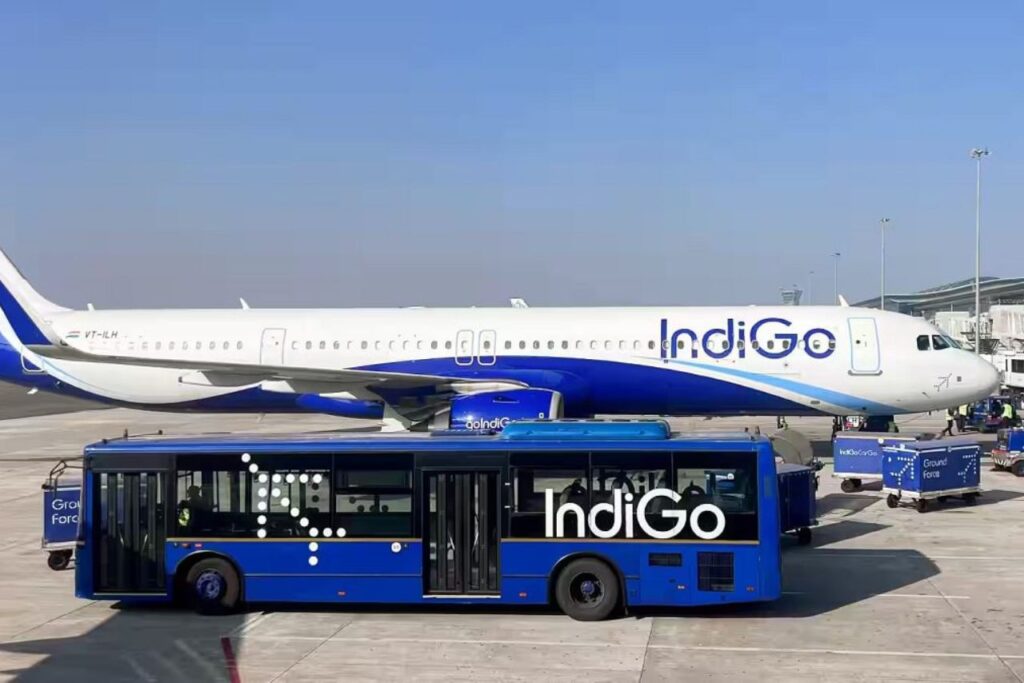
SYNOPSIS: IndiGo, India’s largest airline with a 65% market share and 434 aircraft, faces operational and climatic challenges with over 5,000 December cancellations, Rs. 1,100 crore refunds and fog disruptions, pressuring revenue, margins and customer trust.
India’s largest airline, IndiGo, operates in a highly dynamic environment where both market forces and weather conditions play a crucial role in its performance. Factors such as fluctuating fuel prices, improper planning, regulatory changes, rising operational costs, and shifts in passenger demand directly impact profitability, while seasonal weather disruptions like fog, storms, and heavy rainfall can lead to flight cancellations and delays.
These combined market and climatic challenges not only affect day-to-day operations but also have broader implications for revenue, customer satisfaction, and overall financial results.
InterGlobe Aviation Limited, with a market capitalization of Rs. 1,95,498.87 crore, is trading at Rs. 5,057 per equity share, down by 0.56 percent from its previous day’s close price of Rs. 5,085.50 per equity share.
About the Company
InterGlobe Aviation Limited, founded in 2004, the company is headquartered in Gurugram, India, operating as IndiGo, is a major Indian airline offering passenger and cargo air transportation, along with pre- and post-flight ground handling and related services.
The company also provides aircraft leasing, financial services, charter flights, hotel bookings, and pilot training through its cadet program. As of March 2025, IndiGo had a fleet of 434 aircraft serving a wide range of customers, including businesses, leisure travelers, students, and families.
Operational Disruptions
In early December, IndiGo faced one of the most severe operational breakdowns in its history, with over 5,000 flights cancelled in the first 10 days of the month, following nearly 900 cancellations in November.
The disruption was so widespread that crew were stranded at incorrect stations, baggage reached destinations without passengers, pilots waited without duty assignments, and call centres collapsed under pressure. These issues highlighted how even India’s largest airline, operating on tight schedules and high utilisation, is vulnerable to sudden shocks in market conditions.
Why is this happening?
No Proper Planning
IndiGo attributed the crisis to planning gaps in pilot rostering and misjudgement of pilot availability after new DGCA rules on pilot rest and duty hours came into effect from November 1. The airline was short of around 65 pilots-in-command and even requested pilots to return from sick leave or cancel privilege leave, offering 1.5 times daily allowance. These measures underline how aggressive cost control and hyper-efficiency left little buffer to absorb regulatory or staffing changes.
Regulatory Changes
The disruption is closely linked to the long-standing conflict over Flight Duty Time Limitations (FDTL). While the 2011 rules were designed to reduce fatigue and improve safety, the 2019 revisions allowed airlines greater flexibility in night operations.
Revised norms notified in January 2024 tightened rest requirements again, with night-duty rules implemented from November 1, 2025. IndiGo sought and received exemptions until February 10 due to large-scale passenger impact, showing how regulatory shifts can directly affect capacity, costs, and operational stability.
Why Were Other Airlines Less Affected?
Airlines like Air India, Akasa, and SpiceJet did not face similar disruption from the new duty rules, largely because excess pilots were available due to aircraft groundings, delayed deliveries, or limited fleet availability.
IndiGo’s consistently rising market share from about 47 percent pre-pandemic to around 65 percent, combined with employee costs declining from 11 percent to 8 percent, suggests that its efficiency-driven model left thinner margins for error when external pressures hit.
Massive Passenger Impact
The cancellations affected nearly 12.5 lakh passengers by December 9. IndiGo released around Rs. 1,100 crore in refunds and offered Rs. 10,000 vouchers to severely impacted passengers between December 3 and 5. Such large payouts reflect the immediate financial strain that operational disruptions can impose, even on a market leader with strong scale advantages.
Climatic Conditions Add a Second Layer of Stress
Just as IndiGo began stabilising operations, dense winter fog across Delhi and other northern cities triggered fresh disruptions. On December 19 alone, the airline cancelled around 90 flights across key routes such as Delhi–Mumbai, Delhi–Nagpur, and Delhi–Hyderabad, following 59 cancellations the previous day.
Fog-related low visibility, a seasonal but unavoidable climatic factor, compounded delays and cancellations, showing how weather risks can quickly undo operational recovery efforts.
How will it affect its future performance?
Lower Revenue in the Near Term
Large-scale cancellations and delays directly reduce flying capacity, which limits seat availability and passenger volumes. With over 5,000 flights cancelled in early December and fresh cancellations due to dense fog, IndiGo risks lower load factors and lost ticket revenue in the near term. Even when demand remains strong, disrupted schedules prevent the airline from fully monetising its dominant market share.
Margin Affected
Refunds of around Rs. 1,100 crore and compensation in the form of Rs. 10,000 vouchers indicate immediate cash outflows. In addition, offering higher allowances to pilots, managing re-accommodation, and handling operational recovery increase costs. These pressures may offset the benefits of IndiGo’s traditionally low-cost structure, leading to margin compression in upcoming quarters.
Operational Impact
IndiGo’s success has been built on tight cost controls and high aircraft utilisation. However, the recent crisis shows that hyper-efficiency leaves limited room for regulatory or weather-related shocks. To prevent recurrence, the airline may need to hire more pilots, maintain higher standby capacity, or adjust rostering systems, which could structurally raise operating costs over time.
Productivity Risks
The disruptions exposed a leadership–employee disconnect, with pilots being asked to cancel leave or return from sick leave. If morale issues persist, productivity and reliability could suffer. Rebuilding trust with pilots, cabin crew, and ground staff may require better work conditions or higher employee costs, affecting long-term profitability.
Brand Perception and Customer Loyalty
Large-scale passenger inconvenience, terminal protests, and baggage chaos can hurt brand perception, even for a market leader. While IndiGo’s scale offers resilience, repeated disruptions may push some passengers toward competitors, especially on high-frequency routes, affecting pricing power in the long run.
Conclusion
IndiGo’s recent problems show that a strong market position alone is not enough. Poor planning, sudden regulatory changes, and bad weather together disrupted operations, leading to cancellations, refunds, and higher costs.
While the impact may hurt revenue and margins in the short term, IndiGo’s future performance will depend on how well it improves planning and builds flexibility to handle regulatory and climatic challenges without affecting customers.
Disclaimer: The views and investment tips expressed by investment experts/broking houses/rating agencies on tradebrains.in are their own, and not that of the website or its management. Investing in equities poses a risk of financial losses. Investors must therefore exercise due caution while investing or trading in stocks. Trade Brains Technologies Private Limited or the author are not liable for any losses caused as a result of the decision based on this article. Please consult your investment advisor before investing.

The post IndiGo Performance Analysis: Climate Issues, Regulatory Changes, Lower Revenue and more appeared first on Trade Brains.
Related Articles
Why did KPIT Technologies share crash up to 29% in one month?
Synopsis: KPIT Technologies Limited shares fell nearly 29% in a month amid Europ...

Solar Industries, Caplin Point and 6 other stocks delivering back-to-back EPS growth
Synopsis: Stocks like Solar Industries, Waaree Energies, and Navin Fluorine and...

Will Max Financial share price cross ₹2,000 after announcing robust Q3 results?
Synopsis: Max Financial gains after robust Q3 performance; Jefferies reiterates...

Angel One Vs Groww: Which stockbroker performed better in Q3?
Synopsis: Angel One and Groww delivered contrasting performances in Q3 FY26. Ang...