J&K Bank Shares Surge 4% as Q1 Advances Leap 25% to ₹1.30 Lakh Cr Amid Turnaround Momentum
Alex Smith
2 hours ago
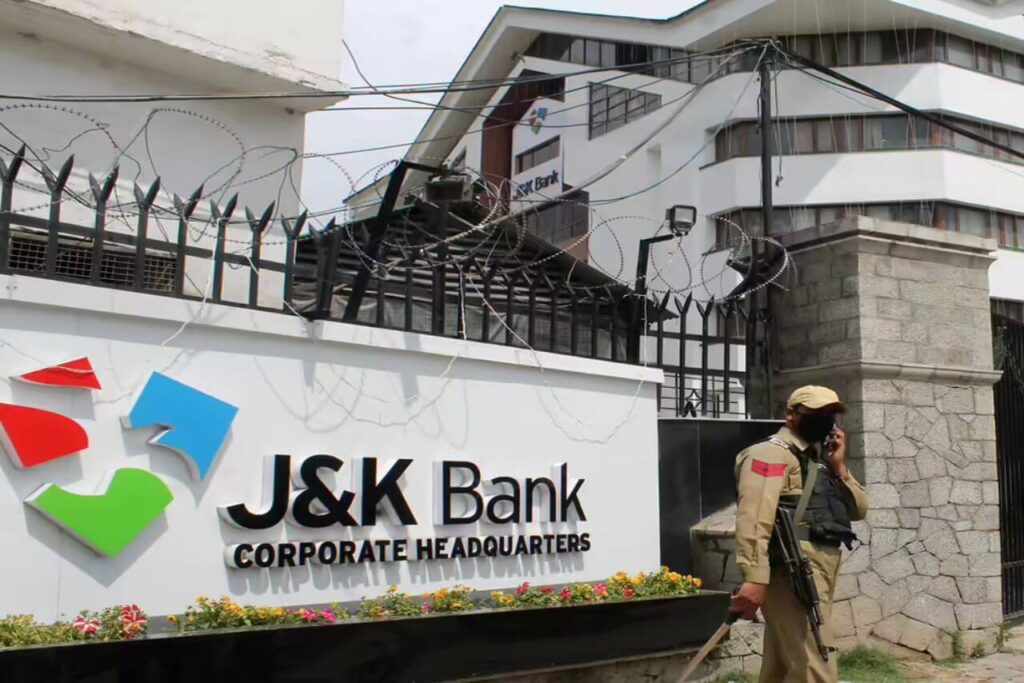
Synopsis: Jammu & Kashmir Bank Limited reported strong Q1FY27 business growth with advances surging 25.5% to Rs. 1.30 lakh crore, reinforcing its turnaround momentum as management targets Rs. 5 lakh crore total business by FY2030 while maintaining improving profitability and asset quality.
India’s banking sector is benefiting from strong credit demand, improving profitability, and healthier balance sheets, but banks are simultaneously facing increasing pressure to sustain deposit growth as competition for low-cost CASA deposits intensifies across the industry.
Amid this environment, Jammu & Kashmir Bank Limited has emerged as a major turnaround story, transforming from a stressed lender into a financially stronger institution through disciplined balance-sheet repair, operational restructuring, and carefully managed long-term growth execution.
Shares of The Jammu & Kashmir Bank Limited, with a market capitalization of Rs. 17,906 crore, were trading at Rs. 162.61, up 4.10% during Thursday’s session compared to the previous close of Rs. 156.20.
What’s the News?
The Jammu & Kashmir Bank Limited informed exchanges that provisional business figures for the quarter ended June 30, 2026 showed total business rising 20.36% year-on-year to Rs. 3,03,996 crore, compared to Rs. 2,52,581 crore in the corresponding quarter last year.
The bank’s gross advances grew sharply by 25.51% YoY to Rs. 1,30,576 crore, while total deposits increased 16.75% to Rs. 1,73,420 crore. On the other hand, CASA deposits rose a relatively slower 7.48% YoY to Rs. 72,979 crore, causing the CASA ratio to decline to 42.08% from 45.71% last year.
The update follows management’s recent investor presentation titled “Rebuilt, Strengthened & Ready to Scale,” where leadership outlined its long-term growth strategy after completing one of the strongest banking turnarounds seen in recent years.
The stock opened at Rs. 160.00, touched an intraday high of Rs. 163.65, and fell to a low of Rs. 157.65. It currently trades at a P/E ratio of 7.27x, significantly below the broader Indian banking sector average, suggesting valuation remains relatively inexpensive despite the sharp operational turnaround.
Over the past year, the stock has delivered 42.62% returns, while year-to-date gains stand at 60.92%, reflecting improving investor confidence as profitability and balance-sheet quality continue strengthening. The stock remains close to its 52-week high of Rs. 167.15, with the 52-week low standing at Rs. 97.35.
Disbursement Growth
The most notable takeaway from the quarterly update is the strength of loan growth. Gross advances surged 25.51% year-on-year, significantly outpacing 16.75% deposit growth, indicating the bank is aggressively scaling credit disbursement faster than liability growth. On a sequential basis, advances increased from Rs. 1,24,981 crore in March 2026 to Rs. 1,30,576 crore in June 2026, representing roughly 4.5% quarter-on-quarter growth.
This suggests the bank is no longer operating in recovery mode; management is actively accelerating credit deployment after several years focused primarily on balance-sheet repair. The key question for investors now is whether this pace of disbursement growth remains sustainable without weakening underwriting quality over the coming quarters.
Controlled Expansion, Not Reckless Growth
Management’s recent investor presentation suggests this growth is being executed through a structured strategy rather than aggressive loan-book chasing. Over the last few years, the bank completed a major operational overhaul centered around corporate governance reforms, business process re-engineering, technology modernization, and tighter credit monitoring systems.
Credit underwriting has now been centralized through Credit Processing Centres (CPCs), while a dedicated Corporate Loan Origination System has been introduced to institutionalize sanctioning processes.
The bank has also re-entered large corporate lending ecosystems by opening its first dedicated corporate branch in Mumbai and rejoining the Food Credit Consortium after an eight-year gap. This indicates management deliberately repaired operational systems before pursuing rapid balance-sheet expansion.
Future Guidance: Mission Rs. 5 Lakh Crore by FY2030
Management has outlined one of the sector’s more ambitious medium-term growth targets. Under its “Mission Rs. 5 Lakh Crore” roadmap, the bank aims to nearly double total business from the current Rs. 3 lakh crore level to Rs. 5 lakh crore by FY2030.
Simultaneously, management is targeting annual net profit of Rs. 5,000 crore by FY30, more than double FY26 profit levels. While current loan growth trends suggest the lending side of this target remains achievable, sustaining deposit mobilization, particularly low-cost CASA deposits, will become critical if these ambitions are to translate into profitable long-term growth.
Asset Quality
Perhaps the strongest aspect of the turnaround remains asset quality improvement. Gross NPA has fallen dramatically from 10.97% in FY20 to just 2.50% in FY26, while Net NPA declined from 3.48% to only 0.64% during the same period.
Provision Coverage Ratio has strengthened significantly from 78.59% in FY20 to 90.33% in FY26, indicating the bank is now conservatively provisioned against potential future credit stress. The steady decline in bad loans over multiple years suggests balance-sheet repair is structural rather than simply being masked by rapid loan-book growth.
ROA Crosses the Critical 1% Profitability Threshold
Return on Assets has improved dramatically over the past several years. The bank moved from a deeply negative -19.96% ROA during FY20 to a healthy 1.37% ROA in FY26, comfortably crossing the widely watched 1% profitability threshold that typically signals a financially healthy bank. More importantly, ROA has stabilized rather than rising artificially due to one-time recoveries or provisioning reversals. This suggests profitability improvement is increasingly sustainable.
ROE Improvement Reflects Genuine Operating Strength
Return on Equity has followed a similarly strong recovery trajectory. ROE improved from -19.96% in FY20 to 16.85% in FY26, supported primarily by stronger profitability rather than excessive leverage.
Importantly, capital adequacy remains comfortable. The bank’s Capital Adequacy Ratio (CRAR) stands at 16.55%, up significantly from 11.40% during the crisis period, giving the lender enough balance-sheet strength to continue supporting loan growth without requiring immediate capital raising. This distinction matters because it shows shareholder returns are improving through better operational efficiency rather than balance-sheet leverage.
Financial Impact Analysis
A deeper look at the bank’s FY26 cash flow statement introduces an important cautionary signal beneath the otherwise strong growth narrative. Despite reporting operating profit of Rs. 3,186 crore during FY26, Jammu & Kashmir Bank generated negative operating cash flow of Rs. 1,126 crore, primarily because fresh loan disbursements of Rs. 18,429 crore exceeded deposit inflows of Rs. 16,790 crore during the year.
This represents a sharp reversal from FY25, when the bank had generated positive operating cash flow of Rs. 2,723 crore, indicating balance-sheet expansion is now running faster than the bank’s deposit mobilization capacity.
On an overall liquidity basis, net cash flow stood at negative Rs. 1,928 crore while free cash flow came in at negative Rs. 1,595 crore, suggesting the bank partially relied on internal liquidity reserves to fund aggressive lending growth. While manageable in the near term given the bank’s strong capital adequacy position, investors should closely monitor whether deposit growth can keep pace with disbursement momentum over the coming quarters.
One area of concern for Jammu & Kashmir Bank Limited is slower CASA growth, which rose only 7.48% YoY, causing the CASA ratio to decline to 42.08%. Since CASA is the bank’s lowest-cost funding source, prolonged weakness could increase funding costs and pressure margins going forward.
Jammu & Kashmir Bank Limited has delivered a sharp profitability turnaround, moving from a Rs. 1,139 crore loss in FY20 to Rs. 2,363 crore profit in FY26. Improved cost efficiency, stronger net worth above Rs. 15,000 crore, and rising foreign institutional investor ownership reflect growing confidence in the bank’s recovery story.
The overall outlook for Jammu & Kashmir Bank Limited remains strong, supported by rapid loan growth, improving asset quality, higher profitability, and solid capital strength. However, slower CASA growth remains the key risk, as sustained weakness in low-cost deposits could raise funding costs and pressure future margins.
Company Overview
Founded in 1938, Jammu & Kashmir Bank Limited is one of India’s oldest private sector banks, operating over 1,017 branches across the country. The bank holds over 60% market share in Jammu & Kashmir, with the governments of Jammu & Kashmir and Ladakh collectively owning a 59.40% promoter stake.
Disclaimer: The views and investment tips expressed by investment experts/broking houses/rating agencies on tradebrains.in are their own, and not that of the website or its management. Investing in equities poses a risk of financial losses. Investors must therefore exercise due caution while investing or trading in stocks. Trade Brains Technologies Private Limited or the author are not liable for any losses caused as a result of the decision based on this article. Please consult your investment advisor before investing.
The post J&K Bank Shares Surge 4% as Q1 Advances Leap 25% to ₹1.30 Lakh Cr Amid Turnaround Momentum appeared first on Trade Brains.
Related Articles
Top 10 Stocks to Buy Today to Receive Dividends of Up to ₹110
Synopsis: Several prominent companies, including Swaraj Engines, Tech Mahindra,...
Tata Technologies Surges 7% After Securing $100 Million Global Engineering Deal from Tenneco
Synopsis: Tata Technologies Limited strengthened its global automotive expansion...

HEC Infra Projects Surges 7% After Securing ₹48 Cr Switchyard Contract from BPCL
Synopsis: A fresh Rs. 48 crore work order from Bharat Petroleum Corporation has...

Adani Energy Solutions Boards Approves ₹10,000 Crore QIP to Fund Smart Metering and Grid Expansion
Synopsis: A board-approved plan to raise up to Rs. 10,000 crore through a qualif...